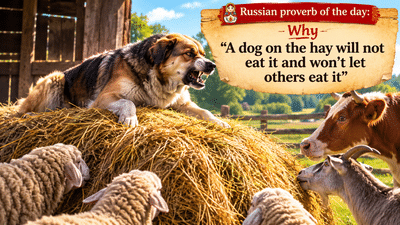
Sometimes, people hold on to things they neither need nor use, simply to stop others from benefiting from them. Whether it is an opportunity, a resource or even recognition, this behaviour can create frustration and prevent progress. The proverb, " A dog on the hay will not eat it and won't let others eat it," captures this attitude through a memorable image. A dog has no use for hay, yet by lying on it, it prevents the animals that actually need it from eating. The saying reminds us that refusing to let others benefit from something we cannot or will not use is an act of selfishness rather than wisdom.
The proverb has roots in Aesop's fable "The Dog in the Manger ," one of the best-known moral tales from ancient Greece. Over the centuries, it has become a widely used expression across many cultures to describe people who deny others access to something that they themselves neither value nor require.
Russian proverb of the day
"A dog on the hay will not eat it and won't let others eat it"
What does this proverb mean?
The proverb teaches that it is unwise and unfair to prevent others from using or enjoying something that we have no intention of using ourselves. It encourages generosity, fairness and the understanding that resources, opportunities and knowledge should not be withheld simply out of jealousy, pride or spite. The saying reminds us that true character is reflected not by what we possess, but by how willingly we allow others to benefit when we cannot.
Possessing something is not the same as valuing it
People sometimes cling to jobs they no longer enjoy, ideas they never act upon or possessions they never use, while refusing to let others make use of them. This behaviour often stems from the desire to maintain control rather than a genuine need. The proverb reminds us that ownership without purpose benefits no one and can prevent opportunities from reaching those who would truly appreciate them.
Jealousy often hurts everyone involved
At the heart of this proverb lies a warning about envy. Sometimes, people are less concerned with gaining something for themselves than with ensuring others do not have it either. Such thinking creates unnecessary conflict and resentment while achieving nothing positive. Choosing generosity instead of jealousy strengthens relationships and creates opportunities where everyone can benefit.
Sharing creates opportunities for growth
Knowledge grows when it is shared, opportunities multiply when they are offered to others and unused resources become valuable when they are put to good use. Whether mentoring a colleague, donating unused belongings or allowing someone else to take an opportunity we cannot pursue, generosity often creates benefits that extend far beyond ourselves. The proverb encourages us to think beyond possession and focus instead on purpose.
Why this proverb still matters today
In today's competitive world, it is easy to fall into the habit of guarding opportunities, information or resources simply because we do not want someone else to succeed. Yet true leadership and lasting success are built on collaboration rather than unnecessary competition. The enduring lesson behind this proverb is that holding onto something we neither need nor use serves little purpose. A wiser approach is to let others benefit where we cannot, creating a world where progress comes through generosity instead of obstruction.
-
‘I’m so sorry’ – Emi Martinez contemplates Argentina retirement after World Cup final defeat to Spain

-
Neymar skips Santos’ Copa Sudamericana triumph to join Brazilian Poker Championship action

-
Are you also waiting for an extension to the ITR deadline? Be aware of these rules, or you could face a major loss..

-
X's Android app revamped: New features and blazing-fast speed; update now live on the Play Store...

-
ABP Live Doc Talk | Blocked Arteries? Here's When You Need A Stent And When You Need Bypass Surgery