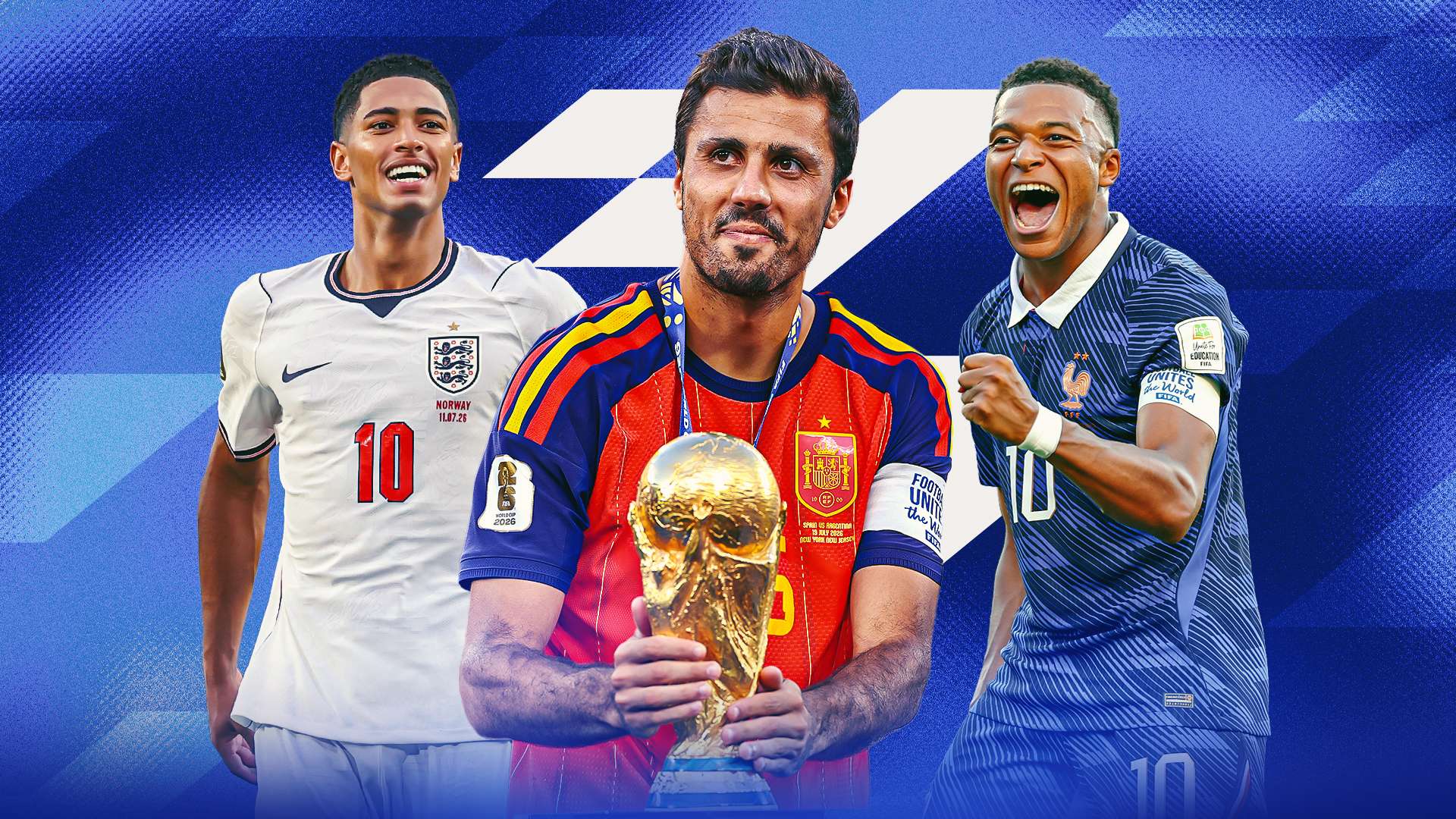
After an exhilarating five weeks, featuring a record 104 matches and 308 goals, the 2026 FIFA World Cup has officially come to a close. From a pure footballing standpoint, the biggest edition of the tournament ever held did not disappoint. Forty-eight nations competed across three host countries spread over North America, and when the dust settled, only two of the world's top-ranked teams remained: Spain and Argentina.
The final itself will be remembered more for Argentina’s intense physicality than for any moments of attacking brilliance or individual flair. Yet, it was Spain’s La Roja who triumphed, clinching their second-ever World Cup title after Ferran Torres struck expertly in extra time, leaving Lionel Messi and his Argentina teammates heartbroken.
This World Cup also produced one of the most thrilling Golden Boot races in the competition’s history. Lionel Messi battled France’s Kylian Mbappe and Ousmane Dembele, Norway’s Erling Haaland, and England duo Harry Kane and Jude Bellingham for the top scorer’s crown. Ultimately, Mbappe prevailed, not only emerging as the leading scorer of the 2026 tournament but also becoming the all-time top goal-scorer in World Cup history at just 27 years of age.
It’s no surprise to find the French superstar in GOAL’s Team of the Tournament. But who else joins him in the standout XI of the 2026 World Cup?
Goalkeeper: Vozinha (Cape Verde)
At 40 years old, Cape Verde’s Vozinha captured the hearts of fans around the world with his heroic performances during the Blue Sharks’ improbable journey to the knockout stages. While his side didn’t win a single game, Vozinha’s brilliance ensured they collected enough points from group-stage draws against Spain, Uruguay, and Saudi Arabia to progress to the round of 32 against defending champions Argentina.
He first rose to international prominence with a stunning seven-save performance in a goalless draw against eventual champions Spain, then bettered that feat with eight saves against Argentina in the knockouts as Cape Verde pushed Messi’s side to extra time before falling just short. Vozinha has since become a cult hero, even inspiring the naming of a new marine species in his honour.
Right-Back: Pedro Porro (Spain)
Few players benefited more from this World Cup than Pedro Porro. The Tottenham Hotspur defender wasn’t Spain’s first-choice right-back at the start of the tournament but seized his opportunity after replacing Atletico Madrid’s Marcos Llorente in the round of 32 clash against Austria. From that moment, he never looked back—and ended the campaign as a world champion.
Porro impressed at both ends of the pitch, nullifying Austria’s attacks while also heading home Spain’s second goal in that match. He maintained his place against Portugal and was one of Spain’s best performers, recording nine defensive contributions—the most on the pitch. He continued his excellent form against Belgium in the quarterfinals and scored again in the semi-final against France. His pinpoint cross also led to a goal in the final.
Centre-Back: Pau Cubarsi (Spain)
At just 19, Pau Cubarsi stood out as the tournament’s best central defender. His composure and maturity were key to Spain conceding only one goal en route to lifting the trophy. The Barcelona youngster deservedly won the Young Player Award.
Cubarsi successfully kept some of the world’s most feared attackers quiet—including Cristiano Ronaldo, Kylian Mbappe, and Lionel Messi. His display against Mbappe in the semi-final was particularly outstanding, as he completely neutralised France’s main threat. His passing and calmness under pressure showcased why he’s already a star for both club and country.
Centre-Back: Lisandro Martinez (Argentina)
Although Argentina’s defensive performances were patchy throughout the tournament, Lisandro Martinez embodied their grit and determination. The Manchester United defender’s intelligence and technical ability compensated for his lack of height, and his mastery of the dark arts gave Argentina an edge in tight matches.
Statistically among the top defenders of the tournament, Martinez also contributed offensively—assisting Messi with an exquisite long ball and scoring a thunderous extra-time goal in the last-32 victory over Cape Verde. Unfortunately, his final was cut short due to injury.
Left-Back: Marc Cucurella (Spain)
Before the World Cup, opinion was divided on Marc Cucurella, but by the end, there was no debate. The Chelsea full-back, who recently joined Real Madrid, was rock-solid throughout Spain’s campaign. He wasn’t dribbled past once in the five matches leading up to the final, a run that included shutting down Ousmane Dembele and Bayern Munich’s Michael Olise in the semi-final against France.
Offensively, Cucurella was equally influential. He provided an assist against Saudi Arabia in the group stage and set up two goals with precise crosses in the last-32 win over Austria for Mikel Oyarzabal.
Defensive Midfielder: Rodri (Spain)
Ballon d’Or winner Rodri delivered when it mattered most. The Manchester City midfielder orchestrated Spain’s play from deep, dictating tempo and breaking up opposition moves with ease. His consistency and precision were unmatched.
Rodri led all midfielders in duel success rate and line-breaking passes. He completed more final-third passes than any player and set a new record for the most passes by a single player in any World Cup since 1966. His dominance earned him the Golden Ball as the tournament’s top performer.
Central Midfielder: Jude Bellingham (England)
Jude Bellingham once again proved indispensable for England. The Real Madrid star scored seven goals—accounting for 35% of England’s total—and became his nation’s all-time top scorer in a single World Cup. His energy and timing in attack were crucial.
Bellingham’s two-goal performance against Mexico at the Azteca Stadium in the round of 16 will live long in memory, as will his vital strikes against Croatia and Norway. He silenced any doubts about his place in Thomas Tuchel’s starting eleven with his commanding displays.
Attacking Midfielder: Michael Olise (France)
Michael Olise carried his stellar Bayern Munich form into the World Cup. A tactical switch by Didier Deschamps—moving him into the No.10 role—brought out his best. The elegant playmaker dazzled with his creativity and flair, evoking memories of classic attacking midfielders.
His performance against Sweden in the last 32 was exceptional, as he delivered two sublime assists—one for Bradley Barcola and another for Mbappe. He finished the tournament with seven assists, setting a new World Cup record.
Right Wing: Lionel Messi (Argentina)
At 39, Lionel Messi defied age and expectation. After doubts about his participation, he not only played but dominated once again. Operating in a free attacking role, he was instrumental in leading Argentina to the final.
Messi scored six goals in the group stage, including a hat-trick against Algeria, and added six more goal involvements in the knockouts, including two decisive assists in the semi-final win over England. Though he fell short in the final, his brilliance reaffirmed his status as the greatest of all time.
Striker: Erling Haaland (Norway)
Erling Haaland made his World Cup debut in style. The Manchester City striker was unstoppable, helping Norway reach unprecedented heights. He scored twice in each of Norway’s first two games, netted a late winner against Ivory Coast, and delivered a stunning brace to shock Brazil in the round of 16—arguably the biggest upset of the tournament.
Haaland’s performances ensured Norway’s place in football history. Fans will hope it won’t take another 28 years for them to return to this stage.
Left Wing: Kylian Mbappe (France)
Kylian Mbappe reaffirmed his title as the “King of the World Cup.” Though France fell in the semi-finals to Spain, the captain achieved his personal milestone by becoming the tournament’s all-time top scorer at 27. With Messi nearing retirement, Mbappe’s dominance is set to continue.
He was outstanding throughout, scoring braces against Senegal, Iraq, and Sweden, adding assists against Norway, and netting against Paraguay and Morocco. He completed his Golden Boot-winning campaign with two more goals in France’s bronze medal loss to England.
Even if it wasn’t the ending France wanted, Mbappe’s individual brilliance ensured his place in footballing immortality.
-
InMobi Ropes In Four Bankers To Helm Its $1 Bn IPO

-
Dhokla Recipe: Make soft and spongy Dhokla with your own hands at home, every bite will taste like restaurant.

-
Top 5 Bollywood actresses and their luxury car collection
-
‘With the support of Aam Aadmi Party…’ Nishikant Dubey revealed such a secret about Abhijeet Dipke, politics heated up
-
Even the most stubborn ear problems will come out within minutes, 4 safest and effective natural remedies to clean ears at home without using matchsticks.