China's rare earth exports to Japan paused in June
20 Jul 2026
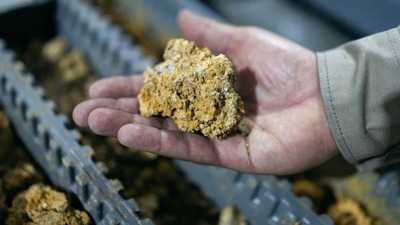
China suspended exports of key rare earth elements and strategic minerals to Japan for another month in June.
The move highlights China's continued use of its control over global supply chains as a geopolitical tool.
Chinese customs data showed no exports of gallium, dysprosium, terbium, or yttrium to Japan last month, extending a months-long disruption that has alarmed Japanese manufacturers and raised concerns over supply security.
Japan's dependence on Chinese supplies
Supply dependence
Japan is home to the world's largest rare earth magnet industry outside China.
However, it heavily relies on Chinese supplies of processed rare earth materials for electric vehicles, semiconductors, aerospace, robotics, and defense equipment.
The export restrictions have been in place since diplomatic relations soured after Japanese Prime Minister Sanae Takaichi's remarks on Taiwan in November.
China's selective easing of restrictions
Export strategy
China had first imposed export controls on heavy rare earth elements and magnets in April 2025.
It then tightened restrictions further in January 2026 and introduced two more rounds of curbs in February, targeting major Japanese industrial conglomerates.
Despite the ongoing restrictions, China's overall exports of rare earth magnets increased to 5,649 metric tons in June from 4,730 tons in May.
This suggests Beijing is selectively easing shipments while maintaining pressure on specific countries like Japan.
Impact on US
Supply influence
China's export controls are also affecting the United States, with no yttrium exports sent to the country for two consecutive months.
The US is also seeing reduced shipments of rare earth magnets from China.
Despite a trade truce between Washington and Beijing last year, exports remain below historical levels.
US Trade Representative Jamieson Greer recently admitted that China's compliance with rare earth export commitments has been "not perfect."
Efforts to diversify supply chains
Diversification
China produces over 90% of the world's rare earth magnets and controls processing capacity for many strategically important minerals. This gives Beijing huge leverage over global supply chains.
The United States, Japan, and other Western allies are spending billions to build alternative mining, refining, and magnet manufacturing capabilities.
However, analysts say meaningful diversification will take years, leaving manufacturers vulnerable to future export restrictions and geopolitical tensions.
-
Bill containing provisions for strict action against paper leaks to be introduced in Parliament: PM Modi

-
'Cheating Is Not Okay': Sachin Tendulkar Shares Heartfelt Message Amid Students' Protest, Calls For Honesty And Merit

-
'What A Phenomenon!': Shashi Tharoor Hails Vaibhav Sooryavanshi After He Silences Critics With Record Fifty Against Zimbabwe

-
Over 150 Detained In Mumbai On Day 4 Of Anti-NEET Protests; Police Book 55 Under Three FIRs Over Maharashtra Bandh

-
NEET Paper Leak Row Sparks Uproar In BMC House As Opposition, Mahayuti Trade Slogans