The anti-defection law rests on a simple moral intuition. A representative who converts a mandate obtained through one party into power for another betrays the voter who conferred it. Yet, four decades after the Tenth Schedule was enacted in 1985, defection has become organised. One legislator crossing the floor attracts condemnation and disqualification. A sufficiently large contingent doing so claims the protection of a “merger”.
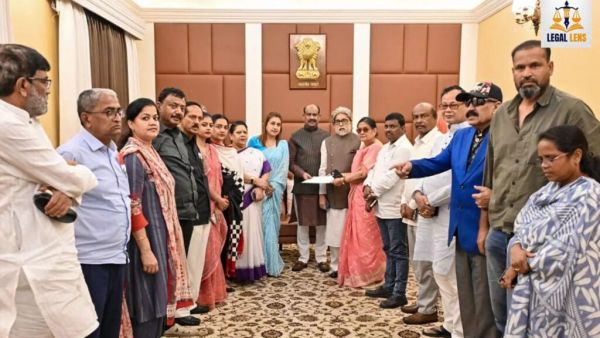
What was once opportunism by retail has become political realignment by wholesale. Whether the law retains meaning depends on how presiding officers respond to that trade. The latest test is unfolding in the Lok Sabha. On July 18, Speaker Om Birla allowed 20 rebel Trinamool Congress (TMC) MPs to sit separately, after they announced their passage into the Nationalist Citizens Party of India (NCPI). He has reportedly stopped short of recognising them as NCPI members.
Also read: Sushmita Dev exclusive: ‘TMC rebels have taken a huge risk’
The TMC has filed 20 petitions seeking their disqualification. The same evening, the Speaker approved the merger of six Shiv Sena (Uddhav Balasaheb Thackeray) MPs with the Shinde-led Shiv Sena.
The distinction between seating and recognition is critical. A seating arrangement is an administrative measure necessary for conducting the business of the House. Recognition of a new parliamentary affiliation may prejudge the constitutional question of whether the MPs have validly left the TMC.
The Speaker was therefore justified in separating the two decisions. But that limited correctness will evaporate if separate seating becomes a means of granting the rebels the political benefits of defection while their legal status remains conveniently undecided. The controversy tests whether the Speaker will function as the neutral custodian of the House or as the gatekeeper through whom changes of allegiance are gradually normalised.
The voter’s mandate
The value at stake is representative accountability: the voter’s ability to know whom to reward or punish at the next election. An MP is constitutionally a representative of a constituency, not merely a delegate of a party leadership. Yet Indian elections are unmistakably party-centred. The mandate is therefore composite, produced by the relationship among candidate, party and electorate, and belonging exclusively to none of them.
The Tenth Schedule places substantial weight on the party component of that relationship. Paragraph 2 permits disqualification when a member voluntarily gives up party membership, a fact that may be inferred from conduct. The merger exception in Paragraph 4 is narrower than political rhetoric suggests. It protects members where their original political party merges with another party and at least two-thirds of the legislature party agree to that merger.
Twenty of the TMC’s 28 Lok Sabha MPs comfortably cross the numerical threshold. But numbers alone do not answer whether the original political party has merged. A parliamentary majority within a party may be politically important. It does not automatically become the party itself.
Madhav Khosla and Steffen Ganghof, in their study “Democracy and Defections”, explain that anti-defection rules alter the structure of representation by transferring power from individual legislators to political parties. If the law treats parties as essential instruments of electoral accountability, a temporary numerical majority among MPs cannot be allowed to erase the independent existence of the political organisation.
But strengthening parties also strengthens their leaderships. The constitutional problem is to restrain opportunistic floor-crossing without extinguishing legitimate dissent.
What the Speaker must decide
The Speaker performs two different functions in this controversy. Under the Directions by the Speaker, he may recognise associations of members as parliamentary parties or groups and allocate facilities for their functioning. Under Paragraph 6 of the Tenth Schedule, he adjudicates whether a member has incurred disqualification. In that second role, Kihoto Hollohan v Zachillhu (1992) makes him a tribunal, acting quasi-judicially and answerable to judicial review.
Also read: TMC split and fight for symbol: Who gets the twin flowers?
The two hats must not be swapped. Allotting separate seats falls within the first, administrative sphere, and need not determine the MPs’ final legal status. The difficulty lies in the political meaning generated by procedure.
The Union parliamentary affairs minister invited the rebel group to the all-party meeting preceding the Monsoon Session, where Sudip Bandyopadhyay was described as its leader and Kakoli Ghosh Dastidar as chief whip. The opposition Indian National Developmental Inclusive Alliance bloc walked out in protest.
Though the invitation came from the government, not the Speaker, such acts cumulatively project the rebels as an established parliamentary entity. Procedure can confer legitimacy before law confers status, and an ostensibly interim arrangement can produce irreversible consequences.
Kalyan Banerjee, the TMC’s counsel and MP, made precisely this objection: seats were redrawn while the petitions stood undecided. This is why timing matters. The petitions allege that the MPs voluntarily gave up their membership by joining the NCPI. If that is established, Paragraph 2 is attracted unless the merger exception applies.
The rebels’ best authority is the Goa Bench ruling in Girish Chodankar v Speaker, Goa Legislative Assembly case (2021)which read the two-thirds test as sufficient; that reading still awaits a definitive word from the Supreme Court. The Speaker must decide on disclosed evidence, by a reasoned order. Administrative arrangements should not outrun adjudication.
The lesson from Shiv Sena
The rebels’ claim, at bottom, is numerical. The TMC’s answer is institutional: its leadership authorised no merger, and only the leader and whip appointed by the political party can represent it in the House.
The Supreme Court’s Constitution Bench judgment in Subhash Desai v Principal Secretary, Governor of Maharashtra case (2023)arising from the Shiv Sena split, strongly supports that institutional distinction. The Court held that the political party, rather than a majority of its legislature party, appoints the party’s leader and whip. A faction of legislators cannot identify itself with the political party merely because it commands a legislative majority.
Also read: Opposition stages walkout from all-party meet over invitation to rebel TMC MPs
The comparison is precise but incomplete. In the Shiv Sena case, the struggle over the whip was tied to the survival of a government and a floor test. The TMC dispute concerns the reorganisation of an opposition party after electoral defeat; no government hangs on the answer. Yet the constitutional principle survives the factual difference: the legislative wing and the political party are institutions, not interchangeable expressions.
The Sena story has now acquired a second chapter, and it explains why perceptions of partiality matter. Six of the Sena (UBT)’s nine MPs, exactly the two-thirds fraction, were merged into the Shinde-led Shiv Sena overnight. Ambadas Danve protests that a full party may merge, not a group of its legislators.
That is the same unresolved question of Paragraph 4 which the TMC petitions raise. Yet one contested merger was cleared in hours, while the parallel question stands deferred. This asymmetry creates the perception of a thumb on the scale. Like questions must travel at like speed before the same adjudicator.
When claims that benefit the treasury benches are cleared overnight, while those that would injure them await legal opinion, the adjudicator appears to weigh outcomes rather than evidence. For an authority that Kihoto treats as a tribunal, even-handedness must be seen, not merely professed. Kapil Sibal’s warning about manufactured supermajorities draws its force from precisely this appearance.
The Speaker must also avoid deciding which faction is the “real TMC”. That dispute over the party’s name and symbol belongs to the Election Commission under the Symbols Order. His narrower task, whether the MPs’ conduct attracts disqualification, still requires him to examine the organisational position rather than count heads alone.
The price of delay
The broader failure is institutional. The Tenth Schedule makes an inherently political office the adjudicator of disputes that alter the balance of political power. Judicial review arrives only after the consequences have matured; courts cannot reconstruct the alliances, votes and perceptions formed during months of delay.
In Keisham Meghachandra Singh v Speaker, Manipur Legislative Assembly case (2020)the Supreme Court held that Speakers should ordinarily decide disqualification petitions within three months, and asked Parliament to consider an independent tribunal in the Speaker’s place. It reiterated that discipline in the Telangana defections case last year. Delay is not an incident of these proceedings; it is their currency. Every week of deferral lets the defection mature into accomplished fact.
Also read: Courts or streets? What will Mamata choose after rebels ‘seize’ TMC HQ | Capital Beat
West Bengal shows where this road ends. The Assembly Speaker recognised an expelled MLA, Ritabrata Banerjee, as Leader of the Opposition on a representation by 58 of the TMC’s 80 MLAs. The Calcutta High Court refused interim relief on June 18 and takes up the writ petition on July 28. Recognition came in days; adjudication will take months.
The answer cannot be to treat every departure from a party as democratic betrayal. Parties split, ideologies change and leaders lose legitimacy. Democratic politics must permit realignment. But realignment acquires legitimacy through transparent organisational processes or a renewed appeal to voters, not through the arithmetic required to preserve legislative seats.
The Speaker has, for now, correctly declined to recognise the rebels as the NCPI bloc. His real constitutional test begins after that restraint. He must decide the petitions promptly, distinguish the original political party from its legislature wing, publish his reasoning, and ensure that interim procedure does not settle the very dispute he must adjudicate.
Legislators who claim that their party has lost its mandate should be prepared to seek one of their own. A democracy is weakened when law suppresses dissent. It is equally diminished when legislative numbers are allowed to replace electoral consent.
-
Chelsea confirm record £117m signing of Morgan Rogers from Aston Villa

-
Chelsea seal record £117m deal for Morgan Rogers as England star departs Aston Villa to become costliest British footballer in history

-
InMobi Ropes In Four Bankers To Helm Its $1 Bn IPO

-
Dhokla Recipe: Make soft and spongy Dhokla with your own hands at home, every bite will taste like restaurant.

-
Top 5 Bollywood actresses and their luxury car collection