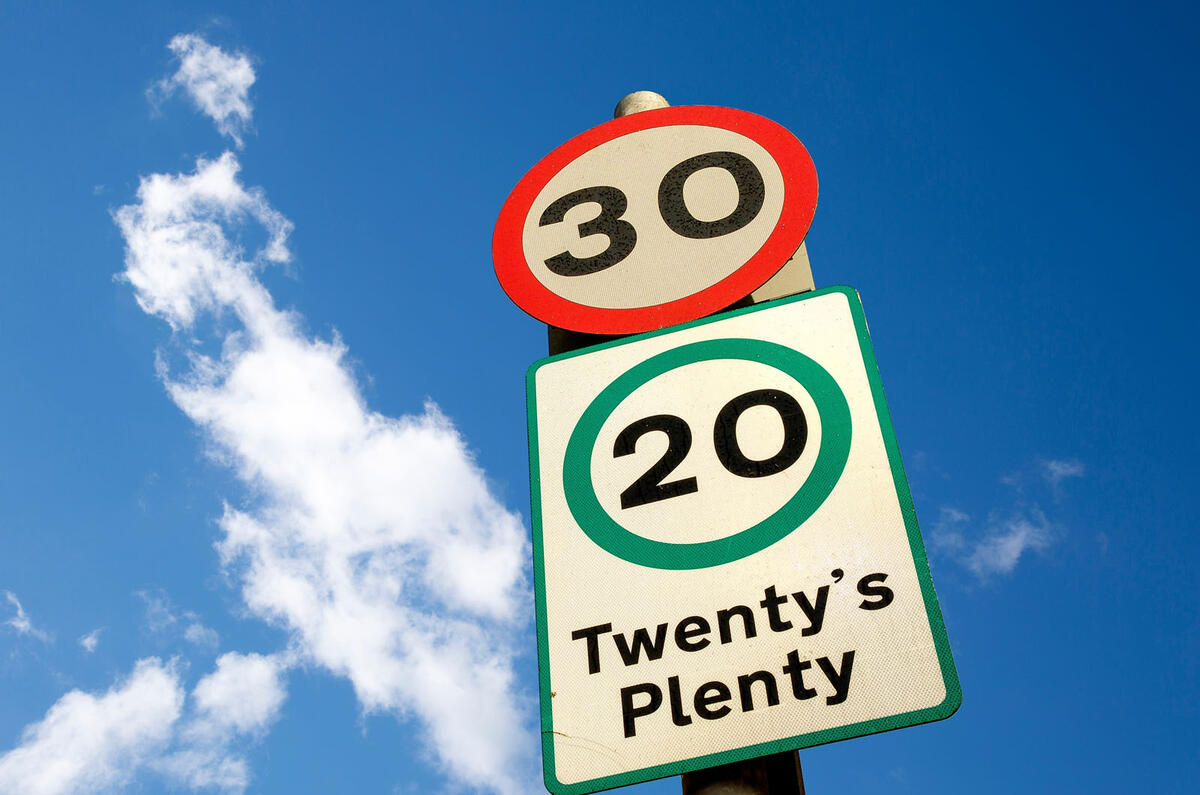
Members of Parliament are considering the introduction of a nationwide 20mph default speed limit across England, but critics argue that they are being excluded from the discussion and question the validity of the evidence supporting similar initiatives.
Earlier this month, the Transport Select Committee invited road safety specialists to review data on 20mph limits and assess whether England should follow Wales in reducing the standard restricted speed limit from 30mph to 20mph.
The session included representatives from Transport for London, which manages speed reductions on major roads in the capital; 20’s Plenty for Us, a campaign group advocating for 20mph limits in towns and villages; and both the Welsh government’s 20mph Task Force Group and its 20mph Steering Group.
However, a spokesperson from a leading transport association expressed dissatisfaction with the committee’s selection of experts.
“There is no balance in the parliamentary discussion,” said Declan Pang, director of policy and public affairs at the Road Haulage Association (RHA), which represents operators of HGVs, coaches, and vans.
“My name appeared on the list of witnesses circulated by the committee before the session, but I was not actually invited to attend.”
He added, “The RHA does not support a blanket application of 20mph speed limits on major and arterial roads, as they are often implemented without proper consideration, which undermines driver confidence in the rules.”
Brian Gregory, policy director at the Alliance of British Drivers, criticised the panel, suggesting that it was composed largely of anti-car campaigners from political and academic backgrounds. “Their aim seems to be to make car use more inconvenient,” he stated.
“We are all road users, and we should be collaborating to improve road safety. Unfortunately, the government’s current policies are dividing different groups, making it easier to push through unreasonable measures.”
Gregory also questioned the criteria used to justify 20mph zones and, like Pang, warned that drivers are unlikely to obey limits they consider unreasonable. “Speed limits need to be determined scientifically, but that is not happening,” he said.
“In many areas, instead of setting limits at the 80th percentile—the speed at or below which 80% of drivers travel under free-flowing conditions—they are being set at the 50th percentile. This effectively criminalises half of the drivers, including those statistically identified as the safest.”
“When a speed limit does not align with motorists’ perception of what is appropriate, compliance will only occur through excessive and heavy-handed enforcement,” he added.
Impact of Wales’ 20mph policy
Opponents of a default 20mph limit often point to Wales, which implemented the lower limit in 2023, affecting around 35% of its roads and sparking broad criticism. In 2024, the Welsh government decided to restore the 30mph limit on some roads.
However, new data suggests the policy is starting to yield benefits: serious or fatal collisions fell by 19% in 2024, and casualties on 30/20mph roads dropped by more than 25%.
Reviewing the Welsh results, Sue Nicholls from 20’s Plenty for Us said that both the Welsh initiative and similar schemes elsewhere have successfully reduced deaths and serious injuries on the road.
“Including two years of data from Wales, we now have substantial evidence from London, Edinburgh, the Scottish Borders, and Cornwall—areas that have introduced comparable schemes—showing a significant reduction in casualties,” she explained.
She added, “The data shows that every 1mph reduction in average speed results in a 6% reduction in collisions. In Wales, casualty numbers fell sharply following the introduction of 20mph limits, while in England, they have remained largely unchanged.”
20mph limits expanding across English towns
Several communities in England have already begun rolling out 20mph zones as part of the government’s latest road safety initiative.
Launched in January, the strategy aims for a 65% reduction in fatalities and serious injuries—and a 70% reduction among children—by 2035.
The village of Ash in Surrey is among the latest areas to propose adopting a 20mph limit. A spokesperson for the county council stated: “Feedback from the initial stage of public consultation showed that, across all groups, more respondents supported the proposal than opposed it. Support was particularly strong among residents living on the affected roads, and families with school-going children expressed the highest levels of approval.”
Despite this, Gregory remains sceptical, arguing that emotional appeals rather than scientific reasoning are driving the push for lower speed limits.
“Road safety should be addressed through reason and data, not emotion and slogans like ‘speed kills’,” he said. “Authorities introducing new limits must evaluate casualty rates in relation to traffic volumes, but this analysis is rarely done.”
“Regardless of what supporters of the 20mph default claim, the main causes of road accidents remain ‘failure to look’, ‘looked but did not see’, and ‘misjudging the path or speed of other road users’,” he concluded.
-
Manchester United move ahead of Arsenal in pursuit of French midfielder Manu Kone as player targets Premier League move

-
Manchester City to auction Pep Guardiola’s office items, including his desk lamp and coffee cup, after his exit

-
23 km and growing: Israel’s new earthen wall cutting Gaza in half

-
Three members of Hyderabad family of five killed in California

-
WATCH | Rahul, Priyanka Gandhi Detained Outside PM Residence