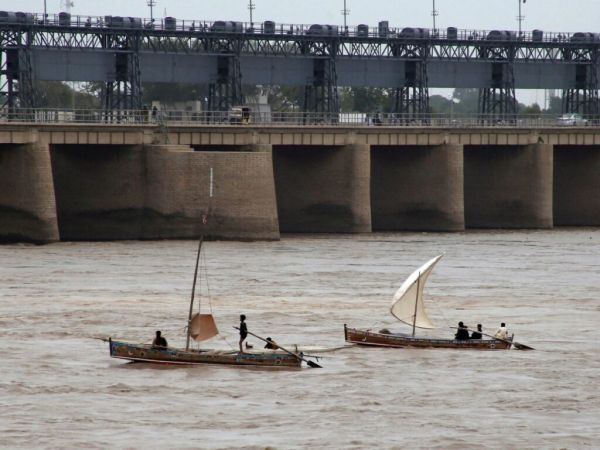
The Indus Waters Treaty is unlikely to become operational in its existing form again, with any future agreement on sharing river waters depending entirely on Pakistan taking permanent and verifiable steps to end cross-border terrorism, government sources told PTI on Monday. The sources said India does not see the decades-old agreement simply returning to normal and made it clear that if cooperation is restored at any point, it will happen under a different framework instead of the present treaty. They maintained that Pakistan’s continued support for terrorism remains the biggest barrier to any future arrangement.
Security concerns shape future of Indus Waters Treaty, say government sources
According to the reports, the issue is no longer limited to water sharing but is closely linked to national security. They said the future of the Indus Waters Treaty will depend on whether Pakistan dismantles terror infrastructure and takes credible, irreversible action against cross-border terrorism.
“It would be accurate to say that the Indus Waters Treaty in its present form will not function again. If provisions to river water sharing have to be reactivated, they have to be done in a different form, not in the present form. And only if Pakistan abjures terrorism,” a government source said, reportedly.
The sources also claimed there has been no meaningful change on the ground. “On the contrary, we continue to receive reports that proscribed individuals and entities sanctioned by the UN Security Council’s 1267 sanctions committee continue to appear at public events in Pakistan, continue to be able to have platforms that they can use to propagate their messages,” a source said.
As per reports, another source added, “The evidence that our agencies have in terms of their activities just across the Line of Control also suggests that there are no credible steps that have been taken so far to control terrorist activities.”
India’s stand on Indus Waters Treaty exit remains unchanged for now
While taking a tough stand on terrorism, the government clarified that India is not actively planning to withdraw from the Indus Waters Treaty at present. However, the sources said the country retains the sovereign right to exit any international agreement if it is found to be against India’s interests. “It (exiting the IWT) depends on the actions that Pakistan takes going forward,” a source said, as per reports.
The present position comes months after India placed the treaty in abeyance following the April 2025 Pahalgam terror attack, in which 26 civilians were killed. India has blamed The Resistance Front (TRF), which it describes as a proxy of the Pakistan-based Lashkar-e-Taiba (LeT), for carrying out the attack. The suspension formed part of a wider diplomatic and economic response against Pakistan. In May, India also launched Operation Sindoor, targeting what it described as terrorist infrastructure in Pakistan.
Pakistan’s water claims and Indus Waters Treaty disputes challenged by India
Reports say that Government sources rejected Pakistan’s claim that keeping the Indus Waters Treaty in abeyance has led to water shortages. They argued that Pakistan loses a significant share of the water already available to it because of poor storage infrastructure, widespread leakages and unresolved disputes between its own provinces.
According to the sources, Islamabad is creating a “false narrative” by blaming India for problems rooted in its domestic water management.
Reportedly, the government also accused Pakistan of repeatedly using the treaty’s dispute-resolution provisions to delay Indian hydropower projects. They said projects including Salal, Tulbul, Baglihar, Kishenganga, Ratle and Pakal Dul have all faced objections regardless of their size or technical details. The sources said Pakistan even challenged a small 200-kilowatt hydropower project meant to provide electricity to a remote tribal area.
They further alleged that Pakistan routinely escalated technical issues to third-party forums, prolonged bilateral discussions and simultaneously pursued proceedings before both the Neutral Expert and the Court of Arbitration despite the Indus Waters Treaty providing a graded dispute-resolution process.
Background of Indus Waters Treaty and long-running project disagreements
Signed on September 19, 1960, after nine years of negotiations under the World Bank’s aegis, the Indus Waters Treaty governs the sharing of the Indus river system between India and Pakistan. India has rights over the Ravi, Beas and Sutlej rivers, while Pakistan has rights over the Indus, Jhelum and Chenab. The agreement also allows India to build run-of-river hydroelectric projects, including Kishenganga and Ratle, on the western rivers before they flow into Pakistan.
The sources recalled that Pakistan first sought the appointment of a Neutral Expert over the Kishenganga and Ratle projects in 2015 before withdrawing that request in 2016 and seeking a Court of Arbitration instead. The World Bank later appointed both a Neutral Expert and a Court of Arbitration. India participated in proceedings before the Neutral Expert but declined to recognise the Court of Arbitration. According to the reports, Pakistan has increasingly used these mechanisms to delay India’s development projects rather than promote cooperation under the Indus Waters Treaty.
Khalid Lateef is a Sub-Editor at NewsX Digital, specializing in Indian politics and global affairs. He also covers viral trending stories and major crime developments.
The post ‘Will Not Function Again’: Why India Says Indus Waters Treaty Cannot Return As It Is appeared first on NewsX.
-
Frenkie de Jong diagnosed with knee ligament injury as Barcelona & Netherlands star says he played through pain during World Cup

-
Happy World Tequila Day! Where To Have The Best Tequila Cocktails In Delhi-NCR

-
Doctor Shares Why She Left Mumbai After Years Of Crowded Trains, High Costs And No Work-Life Balance

-
Shami, Ashwin, Jadeja…which players suffered the most under Gambhir’s coaching? | Gautam Gambhir Coaching Impact On Ravichandran Ashwin Mohammed Shami Kuldeep Yadav Ravindra Jadeja Rohit Sharma Virat Photoshow

-
Delhi CM Rekha Gupta Launches Project Manobal to Boost Mental Health in Government Schools