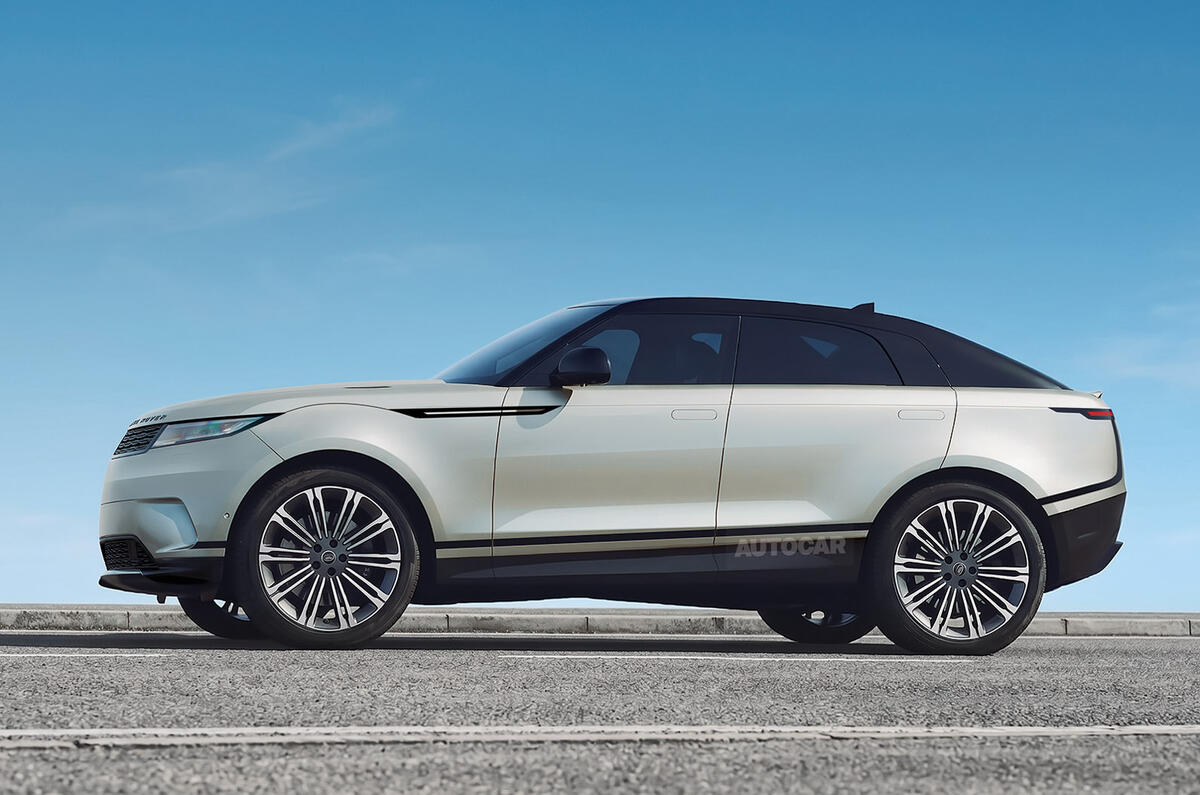
Jaguar Land Rover (JLR) has officially revealed the interior and name of an all-new fourth Range Rover model line, which will be called the Range Rover GT. Designed to bridge the gap between a grand tourer and a luxury SUV, the GT represents a bold new direction for the brand.
The Range Rover GT will be built on JLR’s latest EMA platform, a state-of-the-art architecture developed primarily for electric vehicles. Hybrid versions based on the same platform are also expected to follow later.
Despite previous speculation, the Range Rover GT—spotted testing publicly for several months—is not intended to replace the Velar. The Velar will continue to be sold with its existing petrol, diesel, and plug-in hybrid powertrains for the foreseeable future.
The GT will be a larger vehicle, similar in length to the Range Rover Sport but with a notably lower stance. Its sleek, coupe-inspired silhouette marks a significant departure from traditional Range Rover design language.
The GT’s low-slung profile and aerodynamically optimized form are expected to deliver impressive refinement and range. JLR claims it will be the “quietest Range Rover ever.” However, its reduced ride height means some off-road capability will be sacrificed. The model will still feature dual-motor four-wheel drive for strong on-road and light off-road performance.
JLR asserts that the Range Rover GT will be the most capable vehicle in its segment, engineered to perform reliably in extreme conditions—ranging from -40°C to 50°C. The company positions it as a more dynamic, long-distance touring alternative to the upcoming Range Rover Sport EV. This places the GT slightly above competitors like the BMW iX3, Mercedes-Benz GLC EV, and Volvo EX60, though JLR promises it will be “surprisingly attractively priced.”
Inside, the Range Rover GT introduces a fresh design direction for future models. Building on the ‘reductive’ aesthetic seen in recent Range Rovers, the GT’s interior adopts a minimalist yet premium approach. It features a bespoke layout with a raised digital instrument cluster, a wide landscape-oriented central display, and sustainable non-leather upholstery as standard.
The cabin has been designed to offer a calm and uncluttered environment, minimising unnecessary ornamentation and digital overload. Notably, there is no passenger display screen, unlike in models such as the Mercedes-Benz GLC, Audi Q6, or new BMW X5. This omission is intentional, aimed at avoiding redundant information for occupants.
Physical controls have been kept to a minimum. The drive selector has been relocated to a column-mounted stalk, while the climate controls are integrated into the central touchscreen. The infotainment system will run all-new software, distinct from current JLR setups, and is designed for a faster, more intuitive user experience with a “short user interface journey.”
The centre console has a flat, minimalist appearance but conceals practical storage areas such as cupholders and compartments. At the rear, the Range Rover GT will come standard with two individual seats separated by a fixed centre armrest, though a conventional bench layout may also be available.
Thanks to its dedicated EV platform, the GT offers generous rear legroom comparable to the full-size Range Rover, complemented by a panoramic glass roof that floods the cabin with natural light. Despite the sloping roofline, JLR says ingress, egress, and headroom remain comfortable for passengers.
The GT will be the first model to utilise the EMA platform, which is set to underpin future small and mid-size Land Rover and Range Rover vehicles. Originally envisioned as a flexible architecture capable of supporting multiple powertrains, EMA has since evolved into an advanced system designed for both hybrid and fully electric vehicles to align with global market trends.
The second vehicle to be based on the EMA platform is expected to be the new Defender Sport, a smaller and more affordable evolution of the iconic Defender 4x4. This model could effectively succeed the Discovery Sport and possibly even the Range Rover Evoque.
In a Q&A session, Martin Limpert, Managing Director of Range Rover, addressed a few key topics about the brand’s electric transition and future model strategy.
When asked if existing Range Rover customers will embrace electric models, Limpert said: “We believe Range Rover EVs represent the culmination of what the brand has stood for over the past 56 years. They’re more refined, more effortless, and with features like one-pedal driving and enhanced traction control, they embody modern luxury. We already have a long waiting list of customers asking when the electric Range Rover will arrive.”
On whether the GT might cannibalise sales from the Velar or Sport, he responded: “Quite the opposite. It’s a perfect complement to the family. The Range Rover Sport focuses on visceral performance—especially the electric version—while the GT is about joyful long-distance driving. It will be the most car-like Range Rover ever. The Velar remains the design-forward, youthful option, appealing to younger buyers and families.”
Discussing the brand’s smaller models, Limpert explained: “Our priority has been launching the Range Rover and Range Rover Sport Electric, which was a major milestone. The GT is the first car built on our EMA platform, so we’ve devoted substantial attention to it. That said, we refreshed the Range Rover Evoque about two and a half years ago and introduced special editions like the Belgravia and Hoxton to keep both the Evoque and Velar relevant. We have loyal customers for these cars, but we can’t do everything at once.”
-
Kaylee Hottle, ‘Godzilla’ actor, killed in car crash at 18

-
Meet Aamir Khan’s brother, who has no home, struggles for food

-
Will Fresh Centre-CJP Talks Break The Deadlock? CJP Wants A Public Meeting, Hurdles Remain

-
Delhi CJP Protest: Injured Woman Taken Off Ventilator, Hospital Gives Health Update

-
Sikkim tunnel collapse toll rises to 20, rescue operations continue