Avocados begin ripening only after they are picked. Once ripe, they generally remain at their best for just a few days before starting to deteriorate.
Here are five signs that an avocado is no longer good to eat.
|
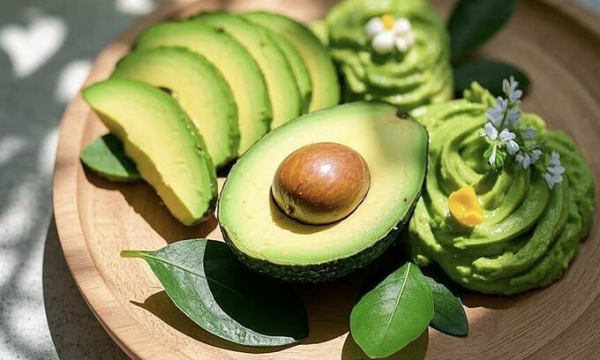
Avocados arranged on a serving platter. Photo from Xiaohongshu |
Overly soft or mushy
A ripe avocado should give slightly when gently squeezed with the palm of your hand. Avoid pressing with your fingertips, as this can bruise the flesh.
If the avocado feels very firm, it is underripe. If it gives slightly but still holds its shape, it is ripe and ready to eat.
If squeezing leaves a deep indentation, or the fruit feels mushy throughout, it is likely overripe and starting to spoil. Sunken or shriveled skin, even before squeezing, is another sign the fruit is past its best.
Dark skin
When unripe, Hass avocados, the most common variety, have bumpy, bright green skin that gradually turns dark green or brown as the fruit ripens. If the skin has turned nearly black and the fruit feels mushy, it is likely overripe and spoiled.
However, not all avocado varieties change color as they ripen. Varieties such as Zutano and Fuerte typically remain green even when ripe, so skin color alone is not a reliable indicator. Instead, check the fruit’s firmness to judge its ripeness.
Brown, black, or stringy flesh
Once you cut open an avocado, it is much easier to tell whether it has gone bad.
A fresh avocado should have light green flesh. A few small brown spots may simply be bruises and can usually be cut away. However, widespread brown or black discoloration is a sign that the avocado has spoiled.
Dark streaks or stringy flesh do not always mean an avocado has spoiled. Some avocados, especially those from young trees, naturally develop dark streaks, while a stringy or fibrous texture can result from growing conditions. If the avocado otherwise looks, smells, and tastes normal, it is generally safe to eat.
Sour smell or unpleasant taste
A ripe avocado has a mild, slightly nutty flavor and a pleasant aroma. As it spoils, it can develop a sour smell or taste, sometimes with a chemical-like edge. This is called rancidity, and it happens when the fruit’s natural fats break down after exposure to oxygen or microbes.
Smell and taste are usually the clearest clues. If something smells or tastes off, it’s best to throw the avocado away. Eating a small amount of spoiled avocado probably won’t cause serious illness, but there’s no reason to risk it.
Visible mold
White or gray fuzzy mold on the skin or flesh is a clear sign that the avocado should be thrown away. Even if mold appears in only one area, it can spread throughout the soft flesh.
Avoid smelling moldy avocados, as inhaling mold spores may trigger allergic reactions in some people.
An overripe avocado is not always unsafe to eat. If only a small portion of the flesh has browned, you can cut that part away and eat the rest, as long as it smells and tastes normal.
Throw out the entire fruit if it has mold, a sour odor, or an off taste. Those are clear signs of spoilage.
-
Social commentator Naman Shrivastava’s Instagram restricted in India

-
Salman Khan supports students, says ‘Don’t hijack this protest politically’

-
'You Can Delete All My Playlists': Arijit Singh Defends Stand On Jantar Mantar Protest

-
Ayush Shetty Shocks World No. 11 at China Open; PV Sindhu Advances

-
Family-Commissioned Autopsy of Nolan Wells Reveals Undetermined Cause of Death