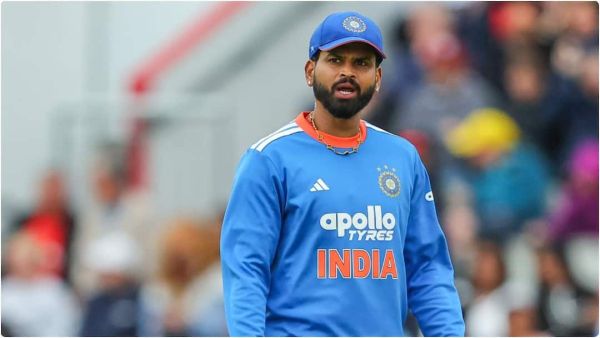
Shreyas Iyer arrived in the United Kingdom with one of the most formidable captaincy resumes in modern Indian cricket. Having orchestrated an IPL final appearance for the Delhi Capitals, driven the Kolkata Knight Riders to a title, and navigated the Punjab Kings to another final, his credentials to lead India’s T20I side seemed undeniable. However, a punishing seven-match schedule in Ireland and England drastically rewritten that narrative.
With India falling to a shock 2-0 series loss against Ireland in Belfast and suffering a brutal 4-0 defeat against England with one match washed out the reigning world champions returned home without a single victory. The disastrous outing exposed a fundamental reality: dominating an auction-built franchise league does not automatically equip a captain for the fluid, unpredictable challenges of international cricket.
Core Divide: Buying Team Balance vs. Manufacturing It
The fundamental difference between franchise cricket and international duty lies in how a squad is assembled. In the IPL, team management uses the auction to handpick specific solutions for predetermined tactical gaps whether that means buying a powerplay hitter like Priyansh Arya, a middle-overs controller like Yuzvendra Chahal, or a death-overs specialist like Arshdeep Singh. At the international level, however, a captain cannot simply bid for missing puzzle pieces.
When key figures like Hardik Pandya or Jasprit Bumrah are absent, there are no immediate market replacements. Shreyas was handed an abundance of talent featuring top-order heavy hitters like Abhishek Sharma, Sanju Samson, Ishan Kishan, and Vaibhav Sooryavanshi, along with middle-order accumulators like Tilak Varma. Yet, elite talent and tactical balance are not the same thing. The primary duty of a national captain is to transform a cluster of overlapping skill sets into a unified, functional unit.
Tactical Confusion And The Search For Structural Hierarchy
Throughout the series, the Indian team appeared trapped in a cycle of constant tinkering rather than deliberate tactical growth. Top-order slots rotated continuously among Samson, Ishan, and the young prodigy Sooryavanshi, leaving players uncertain whether they were competing for specific spots or merely filling temporary voids. This lack of structural hierarchy manifested clearly during the match at Bristol. Despite Shreyas anchoring the innings effectively, Shivam Dube was promoted ahead of Tilak Varma to exploit a spin matchup. Dube struggled to a 22-run knock off 23 balls, while Tilak’s delayed entry disrupted the middle-order acceleration, resulting in a below-par total of 158/7 that England easily chased in under 14 overs. While tactical floaters can work, they require established roles beforehand so that players understand their specific function rather than reacting in panic to the scoreboard.
Execution Failures And The Need For Define Bowling Ownership
The bowling department suffered from similar structural ambiguities. Beyond Arshdeep’s early breakthroughs, the side lacked a settled death-overs partner or a reliable middle-overs wicket-taker. At Old Trafford, after Axar Patel and Arshdeep had put England under heavy pressure, the game unraveled when Ravi Bishnoi’s 17th over yielded 29 runs fueled by back-foot no-balls and free hits allowing Jacob Bethell to steal the match.
While these execution errors were not directly Shreyas's fault, the larger issue was the lack of clarity on who owned the high-pressure overs. The collapse peaked at Trent Bridge, where England posted 201 before bowling India out for a catastrophic 76, and culminated in the final game where Jos Buttler (131) and Harry Brook (95*) dismantled the attack for 257 runs.
The Path Forward: Evolving From Manager To Master Builder
Shreyas was justified in labeling the performances "atrocious," but international leadership requires minimizing panic and offering clarity amid chaos. While responsibility must be shared with selectors, coaches, and underperforming players, the tour proved that experimentation without a clear hypothesis leads directly to confusion. Shreyas retains immense leadership potential, and seven games cannot erase years of tactical acumen. However, to succeed at the highest level, he must pivot from managing pre-built IPL machinery to actively shaping raw international talent molding players into designated roles like converting Ishan into a permanent No. 3 or positioning Dube strictly as a tactical weapon. Solving the national team puzzle requires a firmer hand, clearer communication, and building cohesion from the ground up.
-
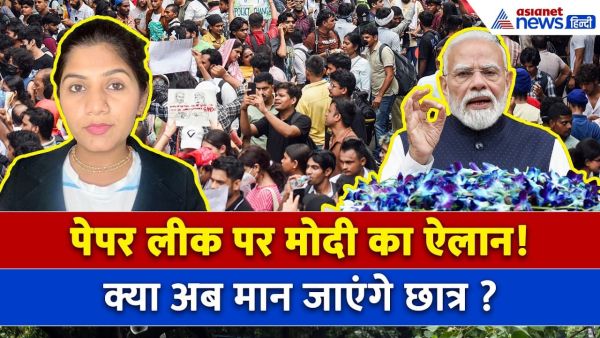
Big news of 23rd July morning: PM Modi’s biggest announcement on paper leak amid CJP Protest! | PM Modi S Major Paper Leak Plan Amid CJP Protest
-
INTC Stock Ticks Up Ahead Of Earnings: Ohio Fab Buzz Grows As Intel Reportedly Seeks New Partner
-
5 Reasons Why Thalapathy Vijay’s Jana Nayagan Could Become The Biggest Blockbuster of 2026
-
Priyanka Gandhi urges Centre to hold dialogue with protesting students
-
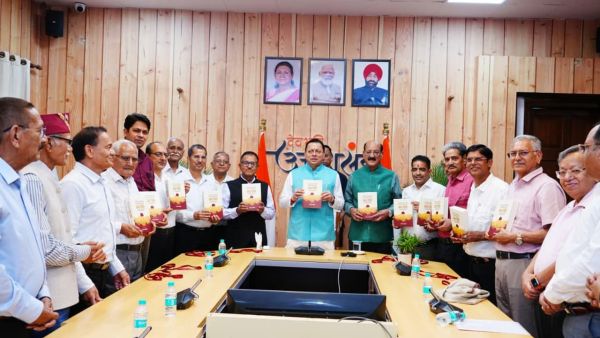
Uttarakhand News: CM Pushkar Singh Dhami launches ‘Seva Vidhi’, big guidance for government employees. Uttarakhand News Cm Pushkar Singh Dhami Seva Vidhi Book Launch Government Employees Service Rules