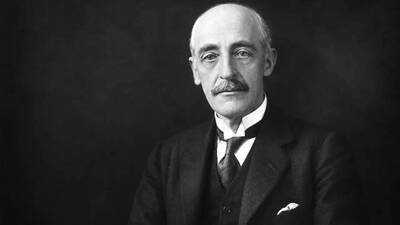
In 1959, an obituary reflected on the life of Sir Gilbert Walker, noting that his statistical approach to predicting the Indian monsoon had not achieved significant success. Despite dedicating two decades to this endeavor and analyzing weather data globally, the consensus was that he had not truly solved the problem. However, a decade later, a Norwegian meteorologist in California revisited Walker's findings and revealed that he had indeed been correct all along, though Walker never lived to hear this acknowledgment.
The Famine That Sparked Inquiry The Famine That Started The Search
The narrative begins with a disaster. Between 1876 and 1878, India experienced a catastrophic monsoon failure, leading to the Great Famine that claimed millions of lives. This climatic disruption also caused droughts in China and Brazil, resulting in a global death toll in the tens of millions. It was later identified as the most severe El Niño event recorded, although the concept was not understood at the time.
This tragedy ignited a sense of urgency. Henry Blanford, the Imperial Meteorological Reporter for the Indian government, sought explanations in atmospheric pressure records and noted unusually high pressure not only over India but across vast areas of Asia and Australia. He communicated with Charles Todd in South Australia, who observed a correlation between droughts in both regions, suggesting a connection across oceans.
A Mathematician's Challenge A Mathematician In Simla
In 1904, the task of unraveling this mystery fell to an unexpected figure: Gilbert Thomas Walker, a Cambridge mathematician with no formal training in meteorology. His expertise in statistics and a keen curiosity led him to tackle problems that others found daunting. Appointed as the Director-General of Observatories in India, he faced the challenge of forecasting the monsoon, crucial for millions.
Walker collected weather data from around the world, from Tahiti to Darwin to South America, and manually correlated it, long before computers existed. He identified twenty-eight predictors with consistent historical ties to the Indian monsoon and categorized the subcontinent into three forecasting regions.
Discovering the Southern Oscillation The See-Saw Nobody Wanted
Within those correlations, Walker uncovered a significant phenomenon: the atmospheric pressure over the eastern Pacific and the Indian Ocean moved in opposition, creating a slow planetary see-saw effect. He termed this the Southern Oscillation, demonstrating that when this see-saw tilted in a particular direction, droughts typically followed in India and Australia.
However, his findings were met with skepticism. Many meteorologists were hesitant to accept correlations derived from statistics without a physical explanation. Walker acknowledged that he could not clarify why the pattern existed, predicting that future advancements in atmospheric measurement would provide answers. He cautioned against specialists becoming isolated from each other's work, a warning that would resonate with the fate of his own discovery.
The Continuation of His Work Bjerknes Picks Up The Thread
In the 1960s, Jacob Bjerknes sought to understand the significant anomalies of the 1957-58 season. He recognized that the warm current known as El Niño, which Peruvian fishermen had named for generations, was linked to Walker's atmospheric see-saw. In 1969, eleven years after Walker's passing, Bjerknes articulated this connection and named the east-west atmospheric circulation at its core the Walker Circulation.
What The Records KeptThe India Meteorological Department continued to utilize Walker's forecasting model until 1987, despite its imperfections. His legacy endures in the Yule-Walker equations, the circulation named after him by Bjerknes, and in every El Niño bulletin issued today, as the phenomenon is formally recognized as the El Niño Southern Oscillation, with the latter part of the name honoring Walker. Although he never achieved the reliable monsoon forecast he aimed for, he laid the groundwork for understanding a global weather rhythm, leaving it for future scientists to explore.
-
Newcastle United preparing for Bruno Guimaraes exit as Arsenal continue pursuit: report

-
Hussain Sagar becomes Hyderabad’s coolest Friendship Day spot

-
43 cybercrime cases per 1 lakh population in Telangana

-
Two held for drug peddling in Hyderabad, 2 kg ganja seized
-
3 pilots ill after Hyderabad stopover, British Airways probes