By the writer: There's a particular danger that shows up not at the start of a movement, but once it begins to succeed. The protest at Jantar Mantar over the NEET-UG paper leak has reached exactly that stage. Its size is now growing faster than its original purpose can keep up with.
What started as a narrow, if urgent, demand — accountability for a compromised examination and the resignation of the education minister — has now swelled into something far larger and far less legible.
Also Read |Who is Pawan Sangle? Mumbai cop suspended after viral video threatening student protesters with fake drug cases
Also Read | 'Critical situation': Delhi traders' body directs closure of shops, restaurants in Connaught Place by 6:30 pm as CJP protests swell
Also Read | Delhi HC to hear PIL seeking NIA probe into 'Sansad Chalo' protest over NEET paper leak; plea names Kejriwal, Sisodia
Thousands now gather at the site everyday . But ask many of them why they came? The answers no longer converge on a single grievance. Some speak of the examination system. Others speak of unrelated regional demands. Still others admit, with honesty, that they simply wanted to witness a mass protest for themselves. This is no longer one movement; it is several, sharing a postal address.
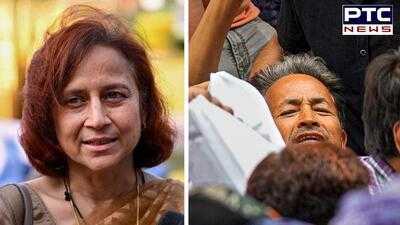
Much of the protest's direction came from activist Sonam Wangchuk. His hunger strike gave the movement a clear face and purpose. Under his leadership, the focus stayed on education reform, volunteers handled the arrangements, and the protest remained organised and disciplined instead of turning into a chaotic public gathering.
However, his forcible removal to hospital on July 18 has left a vacuum that nobody has since filled. The protest's leadership, once centred around a single stage, has gradually weakened. As you move farther from the main gathering at Jantar Mantar, it becomes hard to tell who is leading or making decisions.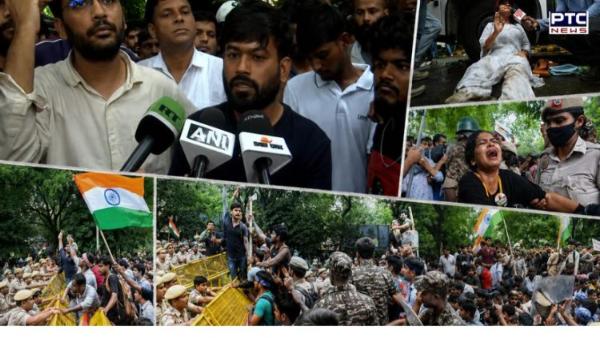
The events of July 20 mark the clearest turning point. A march toward Parliament, met with what many present describe as a disproportionate police response, did not suppress the protest . Rather, it multiplied it. Anger over the use of force brought in a wave of people who had never earlier visited the site and whose motivation was less about examination reform than about the crackdown itself.
This is common in many protests. Strict police action often does not end a movement. Instead, it can attract more people, including those whose concerns are different from the protest's original issue.
Retired Lieutenant General Satish Dua has warned that if communication within the protest breaks down, outside groups could take advantage of the situation and divert a peaceful, issue-based movement. His concern deserves serious attention rather than being dismissed.
View this post on InstagramA post shared by Lt Gen Satish Dua ???????? (@lt_gensatishdua)
The scenes from the protest site in recent days tell their own story. Different groups have exchanged provocative slogans. Nihang Sikhs have posed with swords and spears for photographs, drawing cheers from onlookers. A YouTuber was assaulted. An unplanned march through Connaught Place ended in stone-pelting and damage to police vehicles. None of these incidents has anything to do with examination reform, yet they are all taking place under the banner of the same protest.
This is not to suggest the original grievance was ever illegitimate — the anger over a leaked national examination affecting the futures of lakhs of students is entirely justified, and the demand for accountability remains a reasonable one. But legitimacy of cause does not guarantee discipline of conduct, and a protest that cannot control its own edges risks having its central message drowned out by the noise around it.
The choice aheadEvery large protest movement in India's recent memory has faced this fork in the road: either it consolidates around clear leadership and a defined set of demands, or it diffuses into a general vessel for public frustration that anyone can pour their grievance into. The Jantar Mantar protest is standing at that fork right now, and the drift so far has been toward the latter.
The authorities, too, have a responsibility. The restraint shown by security personnel after the criticism over the July 20 crackdown is the right approach, not a sign of weakness. But restraint alone is not enough. Without regular communication with protest organisers, it will be difficult to stop a leaderless crowd from drifting away from the movement's original purpose.
At the same time, the protest's organisers and the remaining CJP leadership must regain control of the movement if they truly want examination reforms. Their priority should not be louder slogans but restoring the clear leadership, discipline and focused messaging that gave the protest its strength in the beginning. Otherwise, Jantar Mantar may end up being remembered not for the cause it stood for, but for the disorder that eventually overshadowed it.
— Editorial
-
What Is Chandipura Virus? Gujarat Issues Fresh Advisory After 22 Child Deaths

-
'Every Athlete's Dream': India's CWG 2026 Medallists Excited To Meet PM Modi After Historic 39-Medal Haul

-
Mephedrone worth Rs 54 crore seized in Bhuvanagiri, four held
-
WB orders fresh probe into RG Kar rape-murder victim’s cremation
-
Telangana farmers saved $560 each through AI forecasts: Report