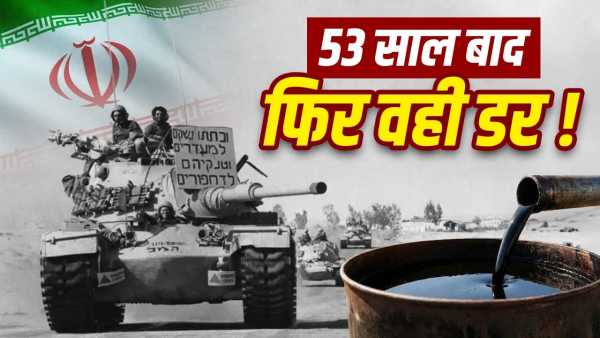
Amidst the current tense situation, the question is whether the oil crisis of 1973 can happen in the year 2026 also?
There is a saying that history repeats itself. The same seems to be happening with oil. While Iran is groaning due to the continuous American attacks, the world is moving towards facing the oil crisis. In the last one week, the prices of crude oil have been increasing all over the world. Crude oil prices have reached the highest level in the last five weeks. Crude oil prices also increased on July 23.
The question is arising whether the oil crisis of 1973 can happen in the year 2026 also? If yes then history will repeat itself. Come, let us understand this whole matter.
What was the oil crisis of 1973?
The Yom Kippur War began in October 1973. Egypt and Syria attacked Israel. Their objective was to take back the territory lost in the 1967 war. America provided military aid to Israel. After this, Arab oil exporting countries reacted differently. They imposed oil embargo on America and some pro-Israel countries. This organization is called OPEC. This was a group of Arab petroleum exporting countries. King Faisal of Saudi Arabia was one of the main supporters of this policy. Oil is no longer just a commodity. It became a weapon of foreign policy. This was the biggest thing about the crisis of 1973.
Yom Kippur WarEgypt and Syria attacked Israel. Photo: mwi.westpoint.edu
There was a big jump in oil prices
The ban began in October 1973. It lasted until March 1974, but its economic impact lasted for many years. The price of one barrel of oil increased from about $3 to about $12, i.e. the price increased almost four times. There were long queues at petrol pumps in America and Europe. In many places the sale of fuel had to be limited. Costs of factories, transportation and power generation increased. Inflation increased. The pace of development slowed down. Unemployment also increased. The economy went into disrepair.
Why was the world of 1973 more vulnerable?
At that time, big economies were very dependent on oil. America's domestic oil production had reached its limit. Its imports were increasing. Europe and Japan were also dependent on the oil of West Asia. There were very few alternative sources of energy. Solar and wind energy were in the very early stages. Lack of oil meant lack of production. Lack of production meant expensive goods. In this way the impact of the war reached every family. 1973 told the world that energy security is also national security. After this many countries started creating oil reserves. Increased emphasis on energy saving. New sources of supply were discovered.
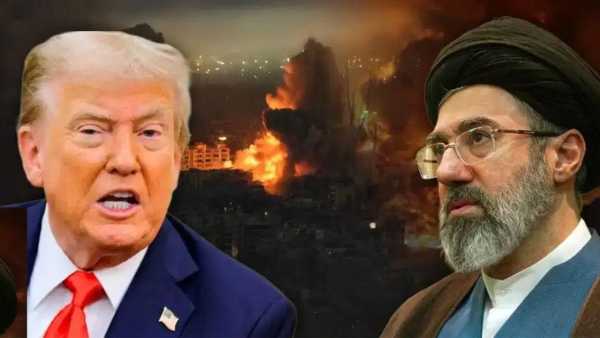
Iran-America war
Why is the 2026 Iran war important?
The conflict related to Iran in the year 2026 is not limited to just one border. Its impact is on the entire West Asia. The interests of America, Israel, Iran and many partners in the region are involved. A major aspect of the conflict is Iran's nuclear activities. Regional security and maritime trade also play an important role here. The most important question is about the Strait of Hormuz. It connects the Persian Gulf to the open sea. Very big oil and gas ships pass through this route. If danger increases on this route, the movement of ships may slow down. Insurance can be expensive. Transportation of oil and gas can be expensive. There may be an atmosphere of instability in the market.
What do 1973 and 2026 have in common?
In both events, West Asia is at the center. War and energy markets are linked. Israel's security is an important issue. America's role is important in both. There was a threat to the oil supply in both. The market reacted with uncertainty then and is reacting even now. Energy importing countries are afraid of inflation. The biggest similarity is that geopolitics is again determining the price of oil. The oil market is not driven by demand and production alone. Wars, sea routes and political decisions also change the price. There was a direct ban on oil supply at that time. Now the danger is of war, attacks and maritime blockade.
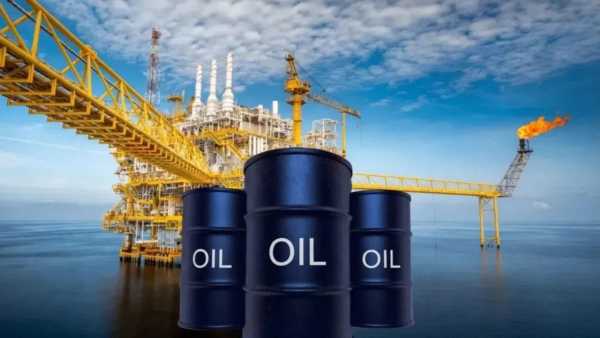
Crude Oil.
What is the main difference between the two situations?
In 1973, Arab countries deliberately used oil as a means of pressure. This was an organized oil embargo. The situation of the year 2026 is more complex. Here it is not just a matter of stopping exports. This is a matter of war, missiles, drones, maritime security and business risks. The world today has more choices than it did in 1973. Many countries have strategic oil reserves. America is no longer as import-dependent as before. The role of Canada, Brazil, Norway and other countries has also increased. Use of renewable energy has increased. Electric vehicles have also increased. Still the need for oil has not ended. Aviation, shipping, trucking and petrochemical industries are still dependent on oil. That is why the crisis in West Asia still affects the whole world.
What could be the impact on India?
India is a big importer of oil. Therefore, every major oil price increase is a matter of concern for India. If crude oil becomes expensive then pressure on petrol and diesel will increase. Transportation will be expensive. Shipping will be expensive. This will directly impact the kitchen in different ways. The rupee may come under pressure due to increase in oil import bill. The government may have to strike a balance between fuel tax and subsidy.
Controlling inflation may also be difficult for the Reserve Bank of India, that is why diversification of energy sources is very important for India. Dependence on just one region or one sea route increases risk.
The biggest lesson was learned in 1973
The lesson of 1973 is clear. It is wrong to believe that cheap oil will always be available. Three things are necessary for energy security. Adequate strategic reserves of oil, supplies from many countries and reducing dependence on oil. Energy saving is equally important. Better public transportation could help. Expansion of solar and wind energy is necessary. The use of electric vehicles should also increase. But the energy transition will not happen in a day, so availability of oil will also be important in times of crisis.
In simple words, 1973 and 2026 are not the same but there is a deep similarity between the two. War in West Asia could shake the global economy. The oil embargo in 1973 shocked the world. In 2026, the risk of war and sea routes is bringing back the same fear. History does not repeat itself exactly, but it does give a warning. 1973 gave the message that excessive dependence on oil is dangerous and 2026 warns that the global supply chain is as interconnected as it is fragile. The world must avoid war. New sources of energy will have to be developed and essential sea routes will have to be protected. Only then will the next oil crisis remain only in the history books, not in the kitchens and pockets of common people.


-
लियोनेल मेसी को अर्जेंटीना का 'मास्टर योदा' बनने और 2028 कोपा अमेरिका तक निको पाज़ को मेंटर करने का सुझाव

-
LPG News: Booking a commercial gas cylinder is now easier. Bharat Petroleum shares 4 simple methods with a step-by-step guide.
-
Ration Card: Can you only get rations from the shop named on the card? Here is what the government has told beneficiaries.

-
Made a mistake while filing your ITR? The Income Tax Department offers a second chance to rectify errors; here is the process..

-
ISRO Offers Internship Opportunities to Students; Find Out Who Can Apply