
Taxation on Foreign Stocks and Intraday Trading in India: There has been a rapid rise in the trend among Indian investors to invest in foreign markets—such as South Korea and Taiwan—alongside the US stock market. While international portfolio diversification is beneficial, it is crucial to accurately disclose foreign income and assets under income tax regulations.
Whether it involves capital gains from foreign stocks or profits from overseas intraday trading, Indian taxpayers must report these details in specific schedules when filing their Income Tax Return (ITR). Let us explain how foreign stocks and intraday trading are taxed in India and how to avoid double taxation.
How are foreign stocks and intraday trading taxed?
Under Indian tax laws (IT Act), if you are a resident taxpayer in India, your foreign earnings are subject to tax in India. Shares listed on foreign exchanges—such as those in the US, South Korea, or Taiwan—are treated as 'unlisted securities' under Indian tax laws.
Long-Term Capital Gains (LTCG): If shares are held for more than 24 months, long-term gains are subject to a flat tax rate of 12.5% without the benefit of indexation.
Short-Term Capital Gains (STCG): Profits realized on shares held for less than 24 months are taxable according to the taxpayer's applicable tax slab.
Currency Conversion: Purchase and sale amounts are converted into Indian Rupees based on Reserve Bank or prescribed exchange rates; consequently, currency fluctuations impact the tax calculation.
Overseas Intraday Trading: Since no physical delivery of shares takes place, this activity is classified as business income rather than capital gains. Such profits are taxed according to your normal tax slab. Losses incurred in this activity can be set off or carried forward.
Which ITR schedules require this information? Failure to disclose or concealing information about foreign assets can attract heavy penalties:
Schedule FA (Foreign Assets): An Indian resident (ROR) is mandatorily required to disclose details of their foreign brokerage accounts, foreign shareholdings, and related assets in Schedule FA for the relevant period, regardless of whether any income was generated from those assets.
Schedule FSI (Foreign Source Income): If you have earned any dividends or profits from those foreign assets or shares, the details must be reported in Schedule FSI.
How to avoid double taxation? Understanding FTC and Form 67
If tax (TDS/Tax Withholding) has already been deducted in another country on your foreign shares, you can avoid double taxation by claiming a Foreign Tax Credit (FTC) in India.
Benefit of DTAA: Claims can be made under the Double Taxation Avoidance Agreement (DTAA) that India has with the respective country.
Mandatory filing of Form 67: Filing Form 67 online on the Income Tax portal is a crucial step to claim the Foreign Tax Credit (FTC). It requires providing full details of the income earned and the tax paid abroad.
Schedule TR (Tax Relief): Along with Schedule FSI, a claim for tax relief must also be made in Schedule TR within the ITR.
Limit on Credit: The FTC amount will be the lower of the tax paid abroad or the tax payable on that income in India.
Essential advice for foreign investors
Tax experts believe that data sharing among tax authorities worldwide has become highly transparent. Therefore, preserve proof of taxes paid abroad (such as brokerage statements, tax assessment orders, and payment receipts) and file your ITR on time—along with Form 67—to avoid receiving any tax notices.
Disclaimer: This content has been sourced and edited from Money Control. While we have made modifications for clarity and presentation, the original content belongs to its respective authors and website. We do not claim ownership of the content.
-
लियोनेल मेसी को अर्जेंटीना का 'मास्टर योदा' बनने और 2028 कोपा अमेरिका तक निको पाज़ को मेंटर करने का सुझाव

-
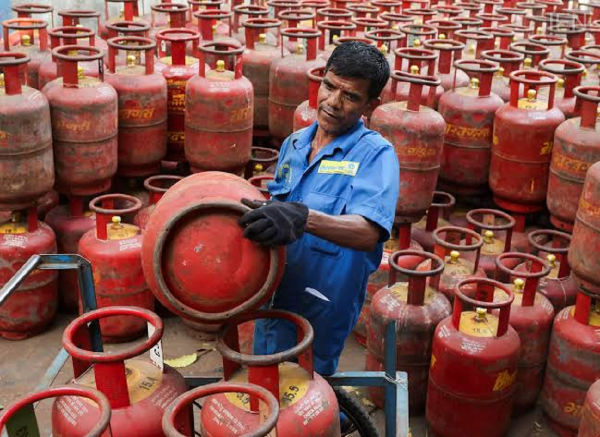
LPG News: Booking a commercial gas cylinder is now easier. Bharat Petroleum shares 4 simple methods with a step-by-step guide.
-
Ration Card: Can you only get rations from the shop named on the card? Here is what the government has told beneficiaries.

-
Made a mistake while filing your ITR? The Income Tax Department offers a second chance to rectify errors; here is the process..

-
ISRO Offers Internship Opportunities to Students; Find Out Who Can Apply