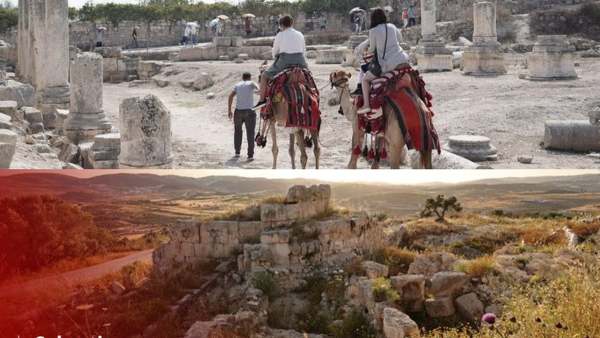
A UNESCO committee has approved the addition of Sebastia archaeological site in the Israeli-occupied West Bank and five castles in Lebanon’s Mount Amel region to the World Heritage List and World Heritage in Danger List. The decision was taken in South Korea despite Israel’s objections over alleged political use of cultural heritage.
A United Nations Educational, Scientific and Cultural Organisation (UNESCO) committee has voted to add the archaeological site of Sebastia in the Israeli-occupied West Bank and five castles in southern Lebanon's Mount Amel region to the World Heritage List and the List of World Heritage in Danger.
The decision was taken at the committee's meeting in Busan, South Korea, after reviewing both nominations on an emergency basis. It came despite objections from Israel, whose Foreign Ministry had urged UNESCO to reject the nominations, describing them as a “weaponisation of cultural heritage,” the Associated Press reports.
Sebastia, located about 10 kilometres northwest of Nablus, is identified by scholars as ancient Samaria, the capital of the biblical Kingdom of Israel. The site contains archaeological remains from the Iron Age, Roman, Byzantine and Islamic periods. According to UNESCO, Christian and Islamic traditions hold that John the Baptist was buried there.
The Palestinian delegation first submitted Sebastia's nomination to UNESCO in 2012, arguing that World Heritage status was necessary to preserve the largely undeveloped site, which remains under Israeli control and requires further conservation despite attracting tourists.
-
'Sorry you were so consumed by hate!' - Gianni Infantino lashes out at FIFA critics after 'most outstanding' World Cup

-
17-year-old Kalapathar murder: Three held in Chandrayangutta

-
Man jumps before Bengaluru metro train, services disrupted

-
Bandipur safari fare hike sparks backlash from wildlife enthusiasts

-
‘My Efforts Were Genuine’: Dhanush Breaks Silence On Controversy Over Winning 2 National Awards In One Year