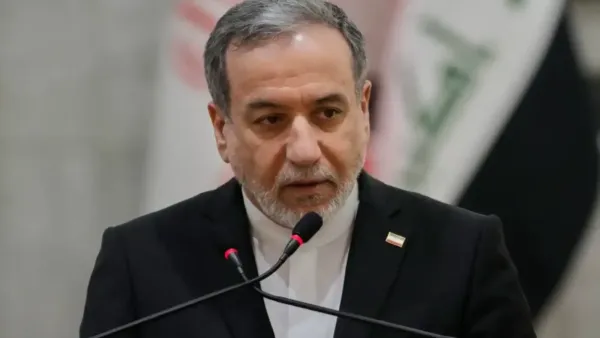
Tehran: Iran will not agree to a temporary ceasefire until its demands over the Strait of Hormuz are met, Foreign Minister Abbas Araghchi said on Friday, July 24, according to Iranian media. Speaking on the sidelines of the Shanghai Cooperation Organisation (SCO) foreign ministers’ meeting in Cholpon-Ata, Kyrgyzstan, he said Tehran would continue its current course until what it described as the legitimate demands of the Iranian people were achieved.
Araghchi said Iran remained in close consultation with Russia and China over the conflict. While Pakistan had offered proposals to help ease tensions, he maintained that the dispute with Washington stemmed from US policy rather than the absence of mediation.
The remarks came as military activity, diplomatic efforts and concerns over regional security continued to intensify across the Middle East.

Trump warns Beijing and Moscow
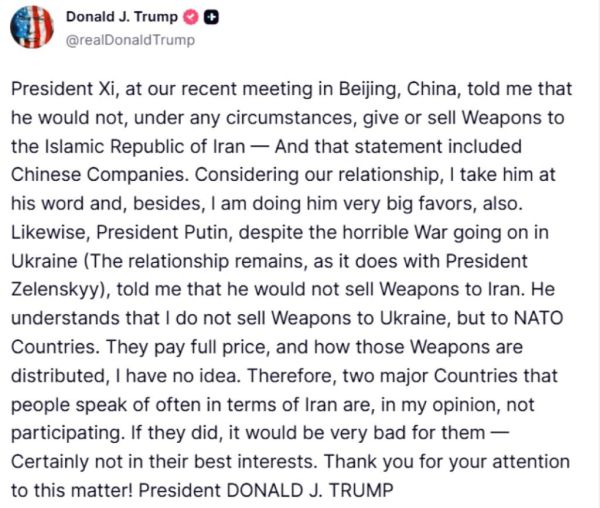
US President Donald Trump said Chinese President Xi Jinping had assured him during a recent meeting in Beijing that China would neither provide nor sell weapons to Iran under any circumstances, including through Chinese companies. Trump said he trusted Xi’s assurance, citing the relationship between the two leaders.
Trump also said Russian President Vladimir Putin had given a similar assurance that Moscow would not supply weapons to Tehran. He added that Russia understood the United States supplied weapons to NATO countries rather than directly to Ukraine. Trump said he believed neither China nor Russia was currently arming Iran and warned that doing so would be “very bad” for both countries and not in their interests.
Oman discusses Strait of Hormuz
Iranian state media reported that an Omani delegation had arrived in Tehran to discuss mechanisms for managing navigation through the Strait of Hormuz.
Separately, Omani Foreign Minister Badr Al Busaidi reiterated that the strategic waterway should remain open to international shipping and global trade.
Kuwait and Bahrain intercept aerial threats
Kuwait’s military said its air defence systems intercepted hostile drones, while Bahrain announced that it had destroyed several incoming Iranian aerial attacks.
Kuwaiti authorities said loud explosions heard across the country were caused by interception operations and urged residents to follow official safety instructions.
Jordan intercepts missiles and drones
Jordan’s armed forces said air defence systems and fighter aircraft intercepted seven missiles and six drones launched from Iran.
The military said there were no casualties or material damage.
Egypt backs Gulf states
Egypt condemned the attacks targeting Bahrain, Jordan and Kuwait, describing them as violations of sovereignty, international law and the UN Charter.
Cairo reaffirmed its support for the three countries and called for an immediate end to military escalation.
US issues travel advisories
The US embassies in Israel and Jordan advised American citizens to prepare for possible flight disruptions and monitor official security updates as the security situation evolves.
Oil prices retreat after sharp rally
Reuters reported that crude prices fell by more than three per cent on Friday after climbing above $100 a barrel in the previous session following attacks on Saudi oil tankers in the Red Sea.
Despite the decline, benchmark prices remained on course for strong weekly gains amid concerns over global energy supplies.
EU expands sanctions
EU foreign policy chief Kaja Kallas announced fresh sanctions against Iranian judges over alleged human rights violations, along with a cyber figure accused of assisting Tehran’s domestic crackdown.
Iran threatens retaliation
Iran’s Khatam Al-Anbiyaa Central Headquarters warned that every Iranian killed would be answered with the death of an American servicemember, signalling a further escalation in rhetoric.
Iran updates casualty toll
Iran’s Health Ministry said US strikes since June 27 had killed 59 people and injured 666 others. The figures have not been independently verified.
Baghdad rejects ceasefire claim
The office of Iraqi Prime Minister Ali al-Zaidi dismissed a New York Times report claiming he had conveyed a US ceasefire proposal to Tehran, calling the report baseless.
Shipping through Hormuz steadies
Reuters, citing Kpler shipping data, reported that vessel traffic through the Strait of Hormuz had stabilised over the past three days despite continuing tensions.
Houthis deny blocking Bab al-Mandeb
AFP reported that Yemen’s Houthi movement denied closing the Bab al-Mandeb Strait, saying its maritime measures targeted only Saudi-linked shipping.
UN warns of wider conflict
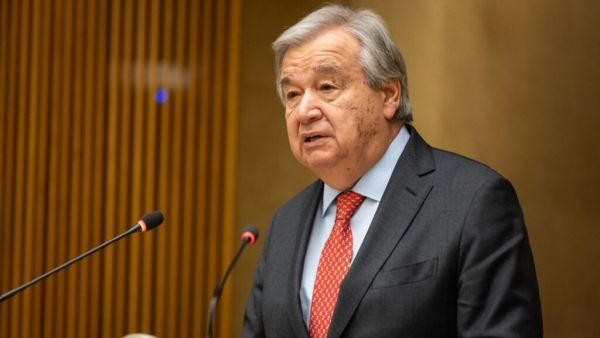
UN Secretary-General Antonio Guterres warned that attacks on commercial vessels in the Red Sea could widen the conflict and have serious humanitarian, environmental and economic consequences.
Iran calls on BRICS
Speaking at the BRICS Ministerial Meeting on Disaster Risk Reduction in New Delhi, Interior Minister Eskandar Momeni urged member states to condemn attacks on civilians, violations of sovereignty and the destruction of critical infrastructure.
Pakistan explores diplomatic initiative
Reuters, citing Pakistani sources, reported that Islamabad was exploring ways to revive stalled US-Iran talks following consultations with China.
WSJ reports Gulf strikes on Iran
The Wall Street Journal, citing information relayed by the Middle East Spectator Telegram channel, reported that Bahrain and Kuwait carried out airstrikes on Iran about two to three weeks ago with Emirati intelligence and defensive support. Bahrain, Kuwait and the United Arab Emirates have not confirmed the report.
Explosions reported in Iraq’s Kurdistan region
The Middle East Spectator Telegram channel shared images claiming explosions had occurred in Iraq’s Kurdistan region and suggested that a US Patriot air defence battery may have been hit. The claim has not been independently verified.
Araghchi says Iran emerged stronger
In separate remarks shared by journalist Sulaiman Ahmed on X, Araghchi said the recent conflict had strengthened Iran’s regional position and demonstrated the country’s resilience.
IRNA interview highlights Hormuz
In an interview with IRNA, Iranian-American journalist Christopher Helali described the Strait of Hormuz as Iran’s principal strategic leverage. The remarks reflected his personal views and not an official position of the Iranian government.
-
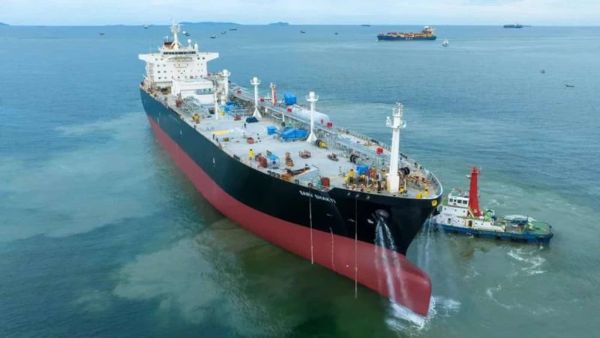
LPG tanker with 28 Indian crew attacked in Iranian waters, all safe
-
18 Delhi Metro Stations To Remain Closed From Saturday. Here's Why

-
'Thank You Friends': PM Modi's Message For Youth In Late Night Video | WATCH
-
Flipkart, Eight Roads Offload Shadowfax Shares Worth ₹1,654 Cr In Bulk Deal

-
UPI In June: Navi, super.money Gain Ground As PhonePe, Google Pay Slip Slightly