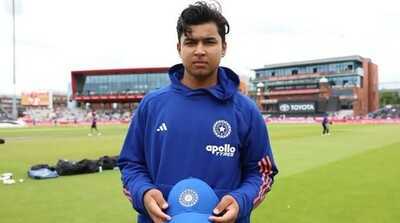
There have been several ups and downs in the last four months. Those were Vaibhav Sooryavanshi's words before the Zimbabwe series even began. He had just stepped into international cricket for the first time and , not long after that, he also met his first major setback on the biggest stage.
The failures were not many though, but at the top tier, even a few of them can start feeling massive. The expectations around Vaibhav were huge, especially because he had come in after Sanju Samson, who waited years to properly lock in his position in the Indian team. Zimbabwe’s tall quick bowlers , Blessing Muzarabani and Richard Ngarava, kept on with the same plan England had used and it worked for them too they tested him using short pitched deliveries.
Vaibhav tried a ramp shot over third man off the very first ball , but he totally missed it. Then the opening delivery of the second over unsettled him once again as a back-of-a-length ball straightened after pitching and beat his outside edge. Then the delivery came, it kinda changed everything . Ngarava bowled another short ball, but it drifted too close to Vaibhav ‘s body, so the young batter could play his famous pull shot, with almost no trouble at all.
He swivelled beautifully, and launched the ball over deep backward square leg for a massive 99-metre six. As everybody expected, Ngarava sent in a fuller one right after . Vaibhav adjusted brilliantly, stayed balanced, and he timed that late drive through extra cover , like it was rehearsed.
The very next shot though became one of the highlights of the innings. Ngarava tried yet another short ball , outside off stump , but the left-hander opened up some room and smashed it over long-off with a straight bat. That stroke had this good blend of timing and strength , it cleared one of the longest parts of the ground with ease. By that point Vaibhav had really settled into his innings.
Brad Evans then overpitched, and Vaibhav instantly cleared his front leg before hammering the ball straight over the bowler’s head. Evans followed with one on the pads, and the youngster flicked it over fine leg, for another six. Next came Zimbabwe’s premier fast bowler Blessing Muzarabani, who only gave away three runs, while getting Abhishek Sharma out in his opening spell . Vaibhav then made space, and sort of lofted a brilliant drive over sweeper cover for four, pretty clean.
After that, Muzarabani landed a slower, full delivery, but Vaibhav waited , he delayed the swing, and then he launched it straight down the ground for another big six. When he figured the short ball would arrive next, he stepped down the track and cut it over deep point for four more. Vaibhav got to his maiden international fifty by flat-batting a back-of-a-length ball over the bowler , and then he ran it for two without any trouble. He needed just 18 balls to reach that sort of amazing landmark, which might be the first of many , going forward.
The technical adjustments he Did:
Harare wasn’t new to Vaibhav. Six months earlier he’d scored a stunning century there in the Under-19 World Cup final. Still, this time was different, it felt harder. Zimbabwe’s bowling attack had more punch, and their captain Sikandar Raza had already said the pitch wouldn’t behave like the usual Harare one .
Once again, Vaibhav had to solve some fresh problem, and if you look back at the fourth ball of the second over it kind of explains the whole thing clearly. He didn’t really react the usual way, like instinctively hooking a back-of-a-length delivery that was outside off stump . Instead he stayed beside the ball and played it straight down the ground, with a full face of the bat. Earlier, in his career , he often tried to force deliveries like that towards the leg side, sort of with that same old idea.
Against Jofra Archer in Bristol, he had gone for a pull shot off a similar sort of delivery and only just managed to clear deep midwicket. Later, against Josh Tongue in Manchester, it didn’t quite come off properly , because he tried another hook shot, again outside off stump. This time though , versus Blessing Muzarabani , he avoided swinging wildly across the line. He trusted the off side instead, giving himself a wider area to work with, error wise. Even when the timing wasn’t perfect , the ball still landed safely, because it went into open spaces.
Earlier , deliveries moving away from him would often end up as top edges, mainly because he wanted to hit against the angle. In Harare, he worked with that angle instead. His mindset shifted, toward playing the line of the ball not deciding too early. And as a result, lots of his boundaries came straight, or they went through the off side even when the delivery was slightly shorter.
His elegant drive vs Ngarava and that straight six from Muzarabani really, kind of, showed this technical uplift. Instead of forcing the stroke, Vaibhav let the ball come in first then played it late which made the whole thing feel steadier, sort of. One more thing you could see in his innings was how he was willing to back away or charge down the pitch. Those little shifts meant Zimbabwe’s seamers had to scramble and adjust, rather than stay in control of the contest themselves.
From Richard Ngarava all the way to Brad Evans, the bowlers kept pushing the ball away from his body, and yeah it looked unintentional at times, but it gave him extra space to keep surviving even when his timing was not quite spot on. Their uneven lines, plus the lower bounce compared with England, worked strongly in Vaibhav’s favour.
Vaibhav Sooryavanshi’s Easy learning ability comes to the fore:
Vaibhav Sooryavanshi has basically shown, again and again, that he learns quickly and then adapts the moment new challenges appear. His development across his young career has been quite impressive. When he first popped onto the IPL stage, fuller deliveries really laid bare flaws in his bat swing and wrist setup. But within a few months, he managed to lower his backlift, keep the bat nearer to his body, and reduce that weakness a lot.
A similar trend showed up during IPL 2026 too. Gujarat Titans came into Qualifier 2 with detailed strategies against him, so Vaibhav had to stay calm, before he even thought about a counterattack. Then, against Zimbabwe, another sort of challenge arrived. This time it was that back of a length delivery drifting across him, on tracks that were tougher than the ones you typically see in the IPL. Still, once again, he managed to find the right response
It wouldn’t have been fair to judge him too harshly after what happened in England. Getting used to IPL wickets versus English conditions is hard for any young batter, mainly because of that extra bounce which feels so unfamiliar at first. Also, Vaibhav wasn’t the only batter struggling. The talk around his dismissals, well it just seemed to mirror the enormous expectations that already follow his career, from the start.
The first T20I against Zimbabwe was not just about a dazzling half-century. More importantly, it sort of showed the technical little tweaks that helped him get there, i mean really succeed. It made it clear that he had clocked his weak spots and had begun ironing them out already, even if the opposition and the overall conditions weren t anything like England.
For a batter with very limited First-Class background, Vaibhav’s way of adjusting keeps impressing, almost like it comes natural. His first international fifty might not end up as his biggest headline moment, but it could still be remembered as one of the most crucial little steps in shaping the whole journey.
-
India's 4x200m freestyle relay team finishes sixth; Australia win gold

-
Word of the day: Bollard

-
Exclusive - Juhi Mui actor Vijayendra Kumeria on his criteria for picking new roles: 'I don't enjoy repeating myself'

-
Inside Kriti Sanon's duplex sea-facing penthouse worth Rs 78 crore, which has a clubhouse, yoga desk, swimming pool and more

-
Suman Pahuja: Weight loss inspiration and diet plan