Top News

How Gen Z Protests Forced Dharmendra Pradhan's Resignation
Sneha | July 26, 2026 12:41 AM CST
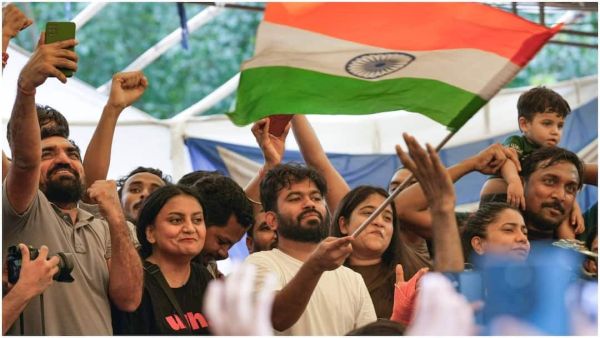
Union Education Minister Dharmendra Pradhan's resignation marked the culmination of one of India's most significant youth-led protest movements in recent years, with many observers comparing its momentum to the student-led uprisings that reshaped Nepal's politics.

What began with a controversial courtroom remark by Chief Justice of India Surya Kant eventually snowballed into a nationwide movement that united millions of young Indians online and thousands on the streets, forcing the government to concede several demands, including Pradhan's resignation.

The Remark That Started It All

The movement traces its origins to May 15, when Chief Justice Surya Kant, while hearing a case on fraudulent professional credentials, remarked that unemployed youth who could not find work often became journalists or activists and "start attacking everyone", comparing them to "cockroaches" and "parasites of society." He later clarified that the comment referred only to people with fake qualifications.

The clarification failed to contain the backlash.

Within a day, Abhijeet Dipke, a Boston University graduate and former political communications professional, launched the Cockroach Janta Party (CJP) on social media with a satirical message inviting the "lazy, unemployed and chronically online" to join. The name was both a reclamation of the "cockroach" remark and a play on the BJP's initials.

From Meme To Mass Movement

What initially appeared to be an internet satire quickly transformed into a nationwide youth movement.

The CJP's Instagram following surged into the millions within days, eventually overtaking the BJP's own account. More than 10 lakh people registered through its website, while over six lakh signed a petition demanding Dharmendra Pradhan's resignation over the NEET-UG paper leak.

The movement blended humour with political messaging. Protesters shared memes, parody videos and cosplay, while simultaneously organising demonstrations across Delhi, Pune, Jaipur, Bengaluru, Hyderabad and several other cities.

NEET Row Becomes National Issue

The immediate trigger was the alleged NEET-UG 2026 paper leak, which affected around 2.2 million aspirants. Although the government ordered a CBI probe, cancelled the examination and announced a re-test, protesters argued that accountability required the resignation of the Education Minister.

The issue soon expanded beyond the examination itself to questions of governance, youth unemployment, transparency and institutional accountability.

Street Protests Intensify

The movement gathered pace after CJP founder Abhijeet Dipke returned to India in June and began leading physical protests.

The turning point came in July when educationist Sonam Wangchuk joined the agitation with a prolonged hunger strike at Delhi's Jantar Mantar. His hospitalisation further galvanised public support.

Mass marches towards Parliament drew thousands of students, many from Gen Z, leading to repeated clashes with Delhi Police. Tear gas, lathi charges, detentions and internet shutdowns became defining images of the protests.

Human rights organisations criticised the police response, while Opposition parties extended support both on the streets and inside Parliament.

Government Responds

As pressure mounted, Prime Minister Narendra Modi addressed the issue publicly, promising tougher anti-paper leak laws and fast-track courts.

However, protesters maintained that legislative reforms alone were insufficient and insisted that Dharmendra Pradhan's resignation remained their non-negotiable demand.

Following negotiations between government representatives and CJP leaders, the Centre accepted several key demands, including withdrawing cases against protesters injured during the demonstrations.

Pradhan Resigns

Earlier Today, Dharmendra Pradhan resigned as Union Education Minister, saying he was stepping down in the larger interest of students and to prevent them from becoming "trapped in a web of confusion." President Droupadi Murmu later accepted his resignation, and Pralhad Joshi was given additional charge of the Education Ministry.

For supporters, the resignation represented the movement's biggest victory.

Shiv Sena (UBT) MP Sanjay Raut described it as "a victory of democracy", saying the government had "bowed down" before the students' movement and that Gen Z had emerged as the driving force behind the nationwide agitation.

How Is It Similar To Nepal Protest

The movement has drawn similarities with Nepal because both witnessed students and young people become the face of a nationwide political campaign that ultimately produced a significant political outcome.

The comparison, however, has its limits. Nepal's student movements were part of broader struggles over monarchy, constitutional change and democratic transition. In contrast, the Indian protests were centred primarily on the alleged NEET paper leak, examination reforms and ministerial accountability.

Nevertheless, both movements demonstrated the political influence of organised youth mobilisation.

A New Era of Gen Z Politics?

The Cockroach Janta Party transformed a viral social media moment into one of India's largest youth-led campaigns in recent memory. Combining memes, satire and digital organising with sustained street protests, the movement reshaped the national conversation around accountability and compelled the government to respond.

While many of its broader demandsinc, luding reforms to the National Testing Agency, a Students' Rights Charter and changes to the Public Examinations Act, remain unresolved, Dharmendra Pradhan's resignation has already cemented the agitation as a defining moment in India's evolving Gen Z politics.


READ NEXT
Cancel OK