Was Dharmendra Pradhan's resignation just a pawn? The horrifying truth of the BJP's grand plan hidden in the Parliament, which sacrificed a big minister. Know this deep political chessboard behind the scenes.
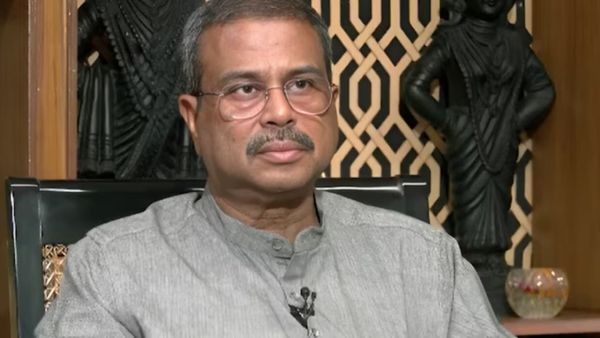
New Delhi: In politics no step is taken casually; Far-reaching goals are hidden behind every move. The recent resignation of Union Education Minister Dharmendra Pradhan has also emerged as a similar turning point in the history of the Bharatiya Janata Party (BJP). After the NEET-UG 2026 paper leak and CBSE marking controversy, the government may have been seen bowing down before the students who had been protesting at Jantar Mantar for 36 days, but the discussion in the corridors of power is something else. The question being raised is whether Pradhan's resignation was really the pressure of the student movement, or has BJP made this strategic 'sacrifice' to implement some of its biggest and secret agenda?
How did the crisis that started with the NEET controversy become the biggest challenge for the government?
NEET-UG paper leak and questions raised regarding the examination system continuously increased the dissatisfaction of the students. With the passage of time, the movement was not limited to examinations only, but became a topic of discussion on accountability, education system and broader issues related to youth. The demonstrations intensified at Jantar Mantar in the capital Delhi. As the scope of the movement increased, the activism of political parties also increased and the matter reached the Parliament. During this period, the demand for action against the government increased.
The system is collapsing like 'Jenga': When the high command was adamant
When the country's higher education system seemed to be collapsing like a house of cards or 'Jenga' blocks, initially the government had maintained complete silence. A disciplined party like BJP never wants to give in to pressure and set such an 'example' that ministers will start resigning before every movement in the future. This was the reason why when young leaders like Saurav Das and Ashutosh Ranka opened a front under the banner of 'Cockroach Janata Party' (CJP) at Jantar Mantar, it was initially ignored. But when the police and Rapid Action Force (RAF) used strong force against the protesters on July 20, the tide changed and the government was on the backfoot.
Monsoon session deadlock: When the government's credibility was at stake
The monsoon session of Parliament, which started from July 20, was no less than a nightmare for the government. The entire opposition, led by opposition leader Rahul Gandhi, was intent on stalling the Parliament. The first week was full of chaos. On one hand, the pair of senior ministers JP Nadda and Jitendra Singh were forced to hold closed-door talks with the newly arrived student leaders, while on the other hand, due to the Parliament being stalled, the government's secret parliamentary agenda, for which it had worked hard behind the scenes for months, seemed to be in trouble.
Game of hearts or numbers game? That big plan behind the scenes
BJP thinks not just of today but of tomorrow. According to the news coming from political circles, the government is preparing to present a very important and sensitive 'Delimitation Bill' in this monsoon session. This is the same bill that had failed in the special session in April due to lack of two-thirds majority – which was the first failure of a constitutional amendment bill in the history of the Modi government. But between April and July 2026, BJP very silently changed the mathematics of Parliament. After the recent defections, the NDA's strength in the Lok Sabha has increased from 293 to 318 (including 20 Trinamool rebels and 6 Shiv Sena UBT MPs). At the same time, in Rajya Sabha also, the strength of NDA has jumped from 101 to 152. Sharad Pawar and M.K. After taming powerful satraps like Stalin, this time the government wanted to pass the Delimitation Bill at any cost.
Did the delay increase the government's problems?
Political analysts believe that in the initial phase the government expected the situation to become normal. But as the protests became a topic of discussion at the national level, pressure on the government also increased. Many observers argue that if any major administrative or political decision had been taken in the beginning, the controversy would not have become so widespread. However, no such strategy has been officially confirmed by the government.
Nietzsche's 'Ego' and Strategic Steps: Why Wait for the Right Time?
When so much is at stake in Parliament, the 'civilizational goals' of the party matter more than the reputation of any one minister. Just as the government had taken a strategic step by withdrawing three agricultural laws after the year-long farmers' movement, the same was done here too. BJP knew that until the fire of Jantar Mantar cools down, Congress and the opposition will not allow a big historic bill like delimitation to be discussed in Parliament. Therefore, in this battle of prestige and big goals, the government thought it better to step back. Dharmendra Pradhan was made a scapegoat by making him the face of that system, so that the path to Parliament could be cleared. However, the question that will always echo in history is whether the decision taken at the last moment was a far-sighted strategy or a delay in giving up Nietzsche's 'Ego', which had proved the government stubborn for some time.
Was the resignation an attempt to limit political damage?
According to political analysts, prolonged public movements can become a challenge for any government at both the political and administrative levels. In such situations, sometimes the leadership takes big decisions to limit the controversy. In this context, some analysts are seeing Dharmendra Pradhan's resignation as a strategy of "damage control". On the other hand, many experts consider it to be only an administrative decision taken amid increasing public pressure.
Will the government now be able to pay full attention to the big legislative agenda?
After the resignation, the upcoming agenda of the Parliament has now become the center of political discussion. It remains to be seen whether the government is now able to carry forward its legislative program without continued disruption or whether the opposition will continue to try to corner the government with new issues. Amidst the recent changes in political equations, this session of Parliament is being considered important for both the government and the opposition.
-
Petrol-Diesel Prices Today: Check the rates in your city for July 26.
-
LPG Rates Today: Find out the current prices for 14kg and 19kg gas cylinders in your city.
-
Major WhatsApp Update for iPhone Users! Here’s How Your Messages Will Look

-
'Vande Mataram' Before Tamil Anthem? Raj Bhavan Directive Sparks Political Row In Tamil Nadu
-
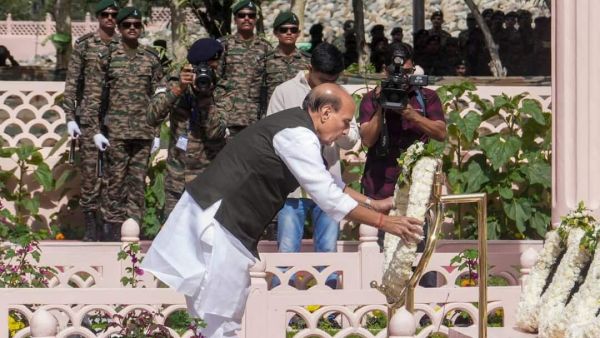
Rajnath Singh Honours Kargil Heroes, Lays Wreath At Drass War Memorial On Kargil Vijay Diwas