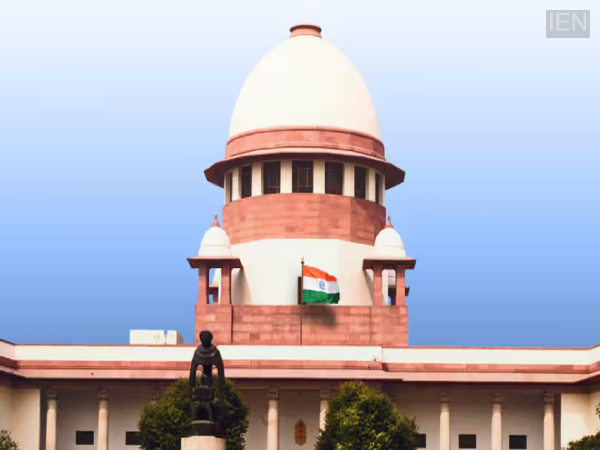
Supreme Court Order: The Supreme Court has banned the posting of court clips on social media without permission; violations could lead to punishment and fines under the Contempt of Courts Act.
Supreme Court Order: The Supreme Court has taken strict measures regarding the unauthorized posting of video and audio clips from court proceedings on social media. A bench comprising Justice Surya Kant, Justice Joymalya Bagchi, and Justice V. Mohan issued an interim order clarifying that it will no longer be easy to extract clips from court live streams and circulate them on social media. In this context, it is important to understand what is prohibited under the new order and what actions may follow a violation.
What the Supreme Court's new order says
In its interim order, the court stated that extracting, altering, disseminating, posting, reposting, uploading, or monetizing audio-video recordings of judicial proceedings without the prior permission of the Supreme Court's Secretary General or the Registrar General of the concerned High Court is prohibited. This order was issued during the hearing of a petition that raised concerns about the misuse of edited clips derived from court live streams. However, the court clarified that this directive does not apply to news reporting.
Exemption for news reporting
During the hearing, Senior Advocate Vikas Singh stated that he had no objection to court live streaming itself, but rather to the misuse of edited clips on social media. Consequently, the court has exempted standard news reporting by media organizations from this restriction. This order is currently interim, and notices have been issued to the Central Government and other parties seeking their responses.
Consequences of violating the rules
In India, the Contempt of Courts Act, 1971, governs matters related to contempt of court. Under Section 12 of this Act, contempt of court can be punished with simple imprisonment for up to six months, a fine of up to two thousand rupees, or both. If the accused apologizes to the court and the court is satisfied with the apology, the sentence may be waived. Action can also be taken under this same law for violating a current Supreme Court order, as this would be considered a direct disregard of the court's directive.
Why this information is important for the general public
Individuals active on social media must now exercise caution before sharing any clips related to court proceedings. Posting such recordings without permission could invite direct legal action; therefore, social media users need to be fully informed about this new rule.
-
Need regular monthly income after retirement? Consider SWP

-
Higher Interest than Bank FDs: What Are Corporate FDs and How to Invest?

-
ABP LIVE Doc Talk | The Biological Clock Explained: What You Need To Know Before Delaying Parenthood

-
What Is New Education Minister Pralhad Joshi's Educational Qualification?
-
CWG 2026: Mirabai Chanu Leads India's Medal Charge On Day 4 As Weightlifting, Gymnastics & Boxing Take Centre Stage