The battle with Morocco is central: can Spain break a deep-rooted World Cup curse?
Can the Spanish follow in Brazil's footsteps?
Spain had barely lifted the 2026 World Cup after beating Argentina in the final before the questions started. Could this dazzling generation crack a challenge that has beaten so many world champions before them?
La Roja dream of defending their crown. No side has managed it in more than six decades, and the task may hinge on another battle every bit as important, this one with Morocco.
A curse that has held since 1962
History offers Spain little reassurance. The last team to retain the World Cup was Brazil, champions in 1958 and 1962, and before them Italy became the first to manage it by winning the 1934 and 1938 titles.
Defending the trophy has since become one of the toughest challenges in world football.
Argentina came close in 1990. Diego Maradona led the 1986 holders all the way to the final, only for West Germany to beat them.
Brazil went one better on the misery front in 1998, reaching the final as champions of 1994 before France thrashed them three goals to nil.
France themselves stood one match from making history at Qatar 2022, reaching the final as holders of the 2018 title. Argentina beat them on penalties after one of the greatest finals the tournament has ever seen.
Argentina, holders of the 2022 crown, then repeated the scenario at the 2026 World Cup. They reached the final for a second successive time but ran into Spain, who beat them by a single unanswered goal.
Brazil of 1962 therefore remain the last team to retain the World Cup. Spain go into the 2030 tournament chasing a feat that has eluded every champion for more than 60 years.
The conflict with Morocco could change the equation
But Spain's challenge goes beyond the curse of the defending champions.
Morocco, Spain and Portugal are jointly hosting the 2030 World Cup, yet FIFA have still to decide which stadium will host the final. That question has turned into an open contest between Madrid and Rabat over recent months.
Spain are holding firm on the Santiago Bernabéu. Morocco are pushing hard with the new Hassan II stadium in Casablanca, expected to rank among the largest in the world and seen as one of the strongest cards in the Moroccan bid.
The bid may be a joint project, but the fight over the final has become one of the most sensitive issues between the three partners, given the symbolic and historic weight of the biggest match in the World Cup's centenary edition.
A furious message from the president of the Spanish federation
The stakes surfaced in the words of Rafael Louzán, president of the Royal Spanish Football Federation, who dismissed reports of Morocco's growing chances of hosting the final.
"Spain is the one leading the organisation of the 2030 World Cup", Louzán said on 15 July. He bristled at the doubts cast over that role, warning that such reports weaken the joint bid and serve none of the host nations.
He was equally puzzled by the timing. The chatter around the Moroccan bid, he noted, coincided with Spain and Morocco both reaching the 2026 World Cup, reigniting the media scrap over the 2030 final.
His message left little room for doubt: Spain are driving this project, and Madrid want that final.
Why does the final hold special importance for Spain?
Reaching the 2030 World Cup final would be one thing. Playing it in Madrid would be another entirely. Home advantage on the biggest night of all could hand Spain an extra edge as they chase a feat only Brazil have managed since 1962: retaining the title.
Lose the race to host the final, though, and that privilege vanishes. Should Morocco land it, Spain would have to play the most important match of the tournament on foreign soil even if they get there.
Spanish officials, then, may not see the bid to host the final as a purely organisational matter. It carries sporting and psychological weight too.
Morocco clings to its historic dream
Morocco, by contrast, sees hosting the final of the centenary edition as the crowning achievement of a long campaign that ended with winning the right to organise the World Cup for the first time in its history.
The Moroccan bid is banking on the new Hassan II Stadium in Casablanca. Designed to be an architectural and sporting icon, it hands the Kingdom a strong card in the race to host the final.
Recent years have only strengthened that case. The national team's historic success on the global and continental stage has fuelled Moroccan ambitions to stage the biggest match in the history of the centenary edition.
Between the curse of history and the organisational struggle
In 2026, Spain were the team that denied Argentina the chance to retain the World Cup. Come 2030, they will find themselves on the other side of the equation.
Spain face a curse that has eluded every world champion since Brazil in 1962. Madrid will also be watching one of the most important pre-tournament battles closely: the fight to host the final.
That battle may not decide the identity of the world champion, but it could hand the Spanish a moral and popular advantage in the most important match of all, should they get there.
The struggle between Spain and Morocco is no longer confined to choosing a stadium for the closing night. It has become part of the wider picture of the 2030 World Cup, perhaps even one of the factors that could influence, however indirectly, Spain's dream of breaking one of the most deeply entrenched curses in World Cup history.
Read also:
Messi, Rodri and 6 Arab stars: how did they rediscover their spark at the 2026 World Cup? The Silver Ball and a tribute to Morocco's victim: FIFA reveal the full list of World Cup awards Video: inside the United Nations, a heated row over the integrity of the Egypt v Argentina match
-
Sidhi district of MP echoed in PM Modi’s ‘Mann Ki Baat’, water conservation model of 1500 ponds praised across the country. Pm Modi Praises Sidhi 1500 Ponds Water Conservation Model In Mann Ki Baat Catch The Rain Campaign
-
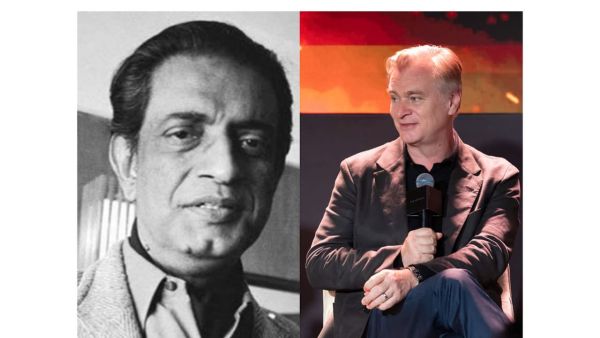
Christopher Nolan calls Satyajit Ray one of India’s greatest filmmakers
-
5-Year-Old’s Private Part Burned With Hot Knife by Teacher After He Wet His Pants
-
Nagarjuna Reveals He Expected a Daughter and Was Shocked to See Son Akhil
-
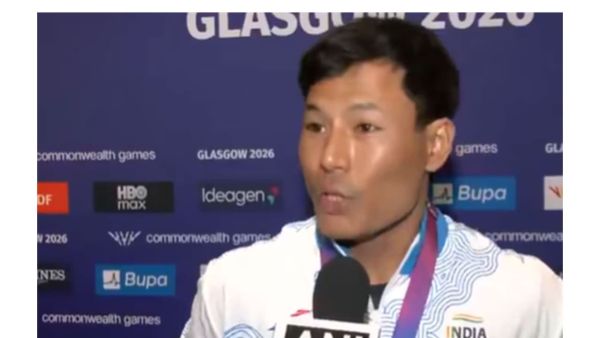
Rishikanta Singh bags India’s first silver at Commonwealth Games 2026