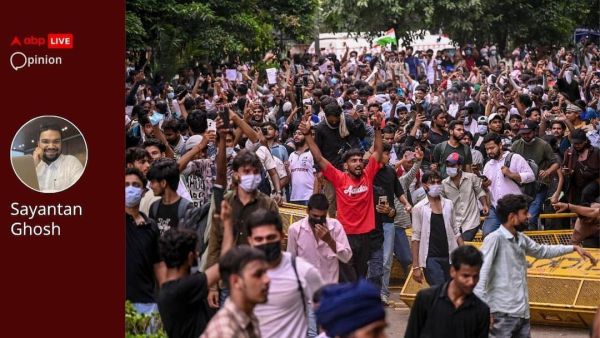
The resignation of Dharmendra Pradhan as Union Education Minister on 25 July 2026 marks a rare inflection point in Indian politics under the Narendra Modi-led BJP government. For the first time since 2014, sustained pressure from the streets compelled a sitting cabinet minister to step down. The demand did not originate in Parliament or from opposition parties alone. It rose from Jantar Mantar and cities across the country, driven largely by young people who had grown up with smartphones in their hands and entrance examination stress in their lives.
The immediate trigger was the NEET-UG paper leak in May 2026. The National Testing Agency conducted the examination on 3 May. Within days, evidence of leaks through messaging channels linked to coaching hubs in Rajasthan surfaced. The government cancelled the exam, handed the investigation to the CBI, and conducted a re-test. Yet the damage to trust was already done. Several aspirants died by suicide. Families demanded accountability. What began as scattered anger coalesced under the banner of the Cockroach Janta Party, an organic, largely leaderless youth platform that occupied Jantar Mantar for weeks. Generation Z, those born roughly between 1997 and 2012 and now aged 14 to 29, formed the core of this mobilisation. Critics have long dismissed them as self-absorbed, glued to screens, and detached from larger social concerns.
The events of the past two months challenge that caricature. These young Indians demonstrated organisational discipline, tactical clarity, and a refusal to let the movement be reduced to any single party’s agenda. Their success in extracting a ministerial resignation from a government that had previously rolled back farm laws only under prolonged agrarian pressure offers five clear lessons about politics, protest, and power in contemporary India.
Choose Your Battles with Precision
Not every grievance warrants the same intensity of response. Gen Z protesters understood that the NEET leak was not merely another administrative failure. It struck at the heart of aspirational India. More than two million candidates appear for NEET each year. For many from modest backgrounds, a medical seat represents the single most viable path out of economic precarity.
When the integrity of that examination collapses, the social contract itself is questioned. The movement refused to dilute its focus. Demands remained tightly framed around accountability for the leak, compensation for families of those who died by suicide, action against police excesses during the 20 July Sansad Chalo march, and systemic reforms in the conduct of public examinations. By concentrating energy on a concrete, high-stakes issue rather than scattering across every educational shortcoming, the protesters maintained moral clarity and public sympathy.
In a democracy crowded with competing claims, the ability to identify a battle worth fighting is itself a form of political maturity. Older generations often accuse the young of fleeting attention spans. The sustained presence at Jantar Mantar for over a month, through heat, police action, and political pressure, showed the opposite: a capacity for strategic patience once the right cause is chosen.
Separate the Cause from the Party
Support for a public cause need not translate into support for any political party. Throughout the agitation, opposition parties including the Congress and various regional outfits sought to align themselves with the protests. Student organisations linked to different ideological streams joined the site. Yet the Cockroach Janta Party and the wider youth contingent repeatedly insisted that the movement was not an anti-BJP platform. They accepted dialogue with senior BJP ministers, including JP Nadda. They did not allow the protest to become a stage for electoral mobilisation.
This distinction proved decisive. Had the agitation been perceived as an opposition proxy, the government might have dug in deeper. By keeping the demand centred on institutional accountability rather than regime change, the protesters forced the ruling party to confront the issue on its merits. In an era when almost every public grievance is immediately partisanised, this refusal to be captured is a hard-won lesson. Democratic politics functions better when citizens can hold governments to account without first declaring permanent allegiance to the other side.
Prioritise Unity Over Ideological Purity
Broad-based solidarity often matters more than perfect agreement. The Jantar Mantar camp brought together medical aspirants, engineering students, first-time protesters, parents, and even some older supporters who recognised the depth of the crisis. Differences of ideology, region, and class were visible but secondary. Volunteers organised langars, distributed water, maintained a free library, and created a functional community space. When police action on 20 July injured several protesters, the response was not fragmentation but expansion.
Demonstrations spread to other cities. The movement absorbed the shock and grew. In contrast to many past student agitations that fractured along ideological lines, this one treated internal disagreement as secondary to the shared goal of forcing accountability. Indian politics has long been shaped by identity and ideology. Gen Z’s approach suggests that on certain existential questions—examination integrity, institutional trust—the capacity to suspend secondary differences can amplify impact.
Keep the Question of Power Secondary
Movements remain strongest when the focus stays on accountability rather than electoral gain. The protesters never presented themselves as a new political formation seeking power. Even after Pradhan’s resignation, the Cockroach Janta Party announced the end of the agitation once key assurances were received, including the withdrawal of certain FIRs and commitments on compensation. This restraint is unusual. Many protest movements eventually become vehicles for new political careers or opposition consolidation.
By treating power as secondary, the youth preserved the moral force of their demand. The resignation was framed not as a political scalp but as the necessary acceptance of responsibility for a systemic failure. For a government that has projected strength and continuity since 2014, the decision to accept the resignation was itself an acknowledgement that prolonged confrontation carried higher costs than accommodation. The protesters understood that sustained pressure on a specific failure could achieve what frontal electoral challenge might not.
Speak Up and Refuse Intimidation
Democracy depends on citizens willing to ask difficult questions and refuse to be silenced. The young people at Jantar Mantar faced police action, accusations of being misled by anti-national elements, and the usual dismissals that protest is the work of the idle or the privileged. They continued. When officials claimed that the government had already acted by cancelling the exam and ordering a CBI probe, the protesters insisted that moral and political responsibility still rested with the minister overseeing the system.
When violence occurred on 20 July, they did not retreat. The subsequent surge in public attention made the cost of inaction clear to the political leadership. This insistence on speaking up is perhaps the most fundamental lesson. Institutions and parties respond to pressure. Silence allows failure to calcify. A generation that has been told it is too distracted or too fragile has demonstrated the opposite: the capacity to organise, persist, and force a powerful government to yield on a matter of principle.
The resignation of Dharmendra Pradhan will not magically restore trust in every public examination. Deeper reforms in the National Testing Agency, the coaching industry, and the broader education system remain unfinished. Yet the episode has already altered the political atmosphere. It has shown that even under a government accustomed to managing pressure, sustained, focused, non-partisan civic action can still extract accountability.
Gen Z did not invent protest. They refined it for their time—digital in organisation, precise in demand, and stubborn in the face of intimidation. In doing so, they reminded the rest of the country that democratic power ultimately rests not only in elections but in the willingness of ordinary citizens to stand their ground when the system fails them.
Sayantan Ghosh teaches journalism at St. Xavier’s College (Autonomous), Kolkata. He is on X as @sayantan_gh.
-
Make this natural makeup setting spray from cucumber, your face will remain fresh and cheerful.

-
How to make makeup setting spray from cucumber

-
Screen Time Neck Pain Relief: Is your neck stiff after using laptop and mobile for hours? These 10 easy yoga asanas will give you relief in minutes
-
Kanwar Yatra 2026: Kanwar Yatra will start from July 30, note the auspicious time of Jalabhishek.
-
Tap and Hold trend goes viral on social media, AI photo quality changes as soon as you press it