New Delhi: The world has never officially agreed on an “Eighth Wonder of the World” and perhaps that’s exactly what keeps the debate alive. More than two millennia after Greek scholars documented the original Seven Wonders of the Ancient World, and nearly two decades after the global New7Wonders campaign crowned a new list in 2007, countless natural and man-made masterpieces continue to inspire the same question: How did this not make the cut
From temples carved out of a single mountain to landscapes so surreal they resemble another planet, these places have repeatedly been hailed by historians, travellers, governments and popular culture as worthy successors to the world’s most celebrated wonders. While the title remains entirely unofficial, these extraordinary destinations have built reputations that rival the most iconic monuments on Earth.
Unofficial Contenders for the ‘Eighth Wonder of the World’ 1. Angkor Wat, Cambodia
Once the capital of the mighty Khmer Empire, Angkor Wat is frequently regarded as one of history’s greatest architectural achievements. Built in the early 12th century as a Hindu temple before gradually becoming a Buddhist site, it spans hundreds of acres and remains the world’s largest religious monument.
Many travel writers and historians consider Angkor Wat the strongest unofficial contender for the Eighth Wonder because of its immense scale, intricate carvings and remarkable preservation. It was also among the 21 finalists in the New7Wonders global voting campaign before narrowly missing the final list. The wider Angkor Archaeological Park has been a UNESCO World Heritage Site since 1992.
2. Petra, JordanHidden behind narrow sandstone canyons, Petra has captivated explorers for centuries. The ancient Nabataean city is famed for monuments carved directly into rose-red cliffs, most famously Al-Khazneh (The Treasury).
UNESCO describes Petra as one of the richest archaeological sites in the world, highlighting its sophisticated water-management system, monumental tombs and its historical role as a crossroads of ancient trade routes connecting Arabia, Egypt and the Mediterranean. Its dramatic setting and engineering brilliance have long fuelled calls for it to be considered an Eighth Wonder.
3. Kailasa Temple, IndiaAmong India’s most astonishing architectural feats, the Kailasa Temple at Ellora in Maharashtra is often described as one of humanity’s greatest engineering achievements.
Unlike conventional temples built stone by stone, the Kailasa Temple was carved top-down from a single monolithic rock, with artisans removing an estimated 200,000 tonnes of volcanic basalt. Historians believe the excavation was carried out during the reign of the Rashtrakuta king Krishna I in the 8th century.
Its precision, scale and mystery surrounding the construction techniques have made it a recurring favourite in discussions about an unofficial Eighth Wonder of the World.
4. Terracotta Army, ChinaHidden beneath the soil of Xi’an for over two millennia, the Terracotta Army is one of archaeology’s greatest discoveries. Unearthed by local farmers in 1974, the site contains an estimated 8,000 life-sized clay soldiers, along with horses, chariots and military officers, all created to guard the tomb of China’s first emperor, Qin Shi Huang, in the afterlife.
What makes the army extraordinary is the individuality of its figures – no two faces are believed to be exactly alike. The vast underground complex, designated a UNESCO World Heritage Site in 1987, continues to reveal new finds even today, with archaeologists believing that significant portions of the emperor’s mausoleum remain unexplored.
5. Banaue Rice Terraces, PhilippinesCarved into the mountains of northern Luzon more than 2,000 years ago by the Indigenous Ifugao people, the Banaue Rice Terraces are often described as the “Stairway to the Sky.” Built almost entirely by hand using primitive tools, the terraces showcase remarkable engineering and an intricate irrigation system that channels water from mountain forests to sustain rice cultivation.
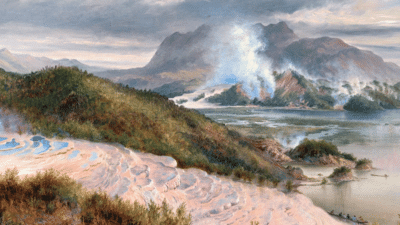
6. Pink and White Terraces, New ZealandOften called the “Eighth Wonder of the World” during the 19th century, New Zealand’s Pink and White Terraces hold a unique place in history. Formed over centuries by silica-rich geothermal waters on the shores of Lake Rotomahana, the dazzling stepped formations attracted travellers from across the globe and were considered one of the natural world’s greatest spectacles.
In 1886, the catastrophic eruption of Mount Tarawera buried the terraces under ash and dramatically reshaped the surrounding landscape. For decades, they were believed to have been completely destroyed. However, modern geological studies suggest that portions of the terraces may still survive beneath the lake bed or volcanic deposits, though this remains a subject of scientific debate. Their beauty and tragic disappearance have cemented their legendary status as one of history’s most famous unofficial Eighth Wonders.
Each contender represents a different interpretation of what truly defines a “wonder”. Some celebrate engineering genius, others honour natural spectacle, while a few remain shrouded in mysteries that modern science still struggles to fully explain.
-
Has your gas booking DAC code been deleted? Here's how to recover it
-
Ram Charan Recovers from Successful Hand Surgery After Injury on Set

-
The Traitors Season 2 Set to Premiere on August 13 with Exciting New Contestants

-
Murali Sreeshankar and Sajan Prakash Shine at Glasgow Commonwealth Games

-
Gurindervir Singh's Disappointing Exit and India's High Jump Hopes at Commonwealth Games 2026