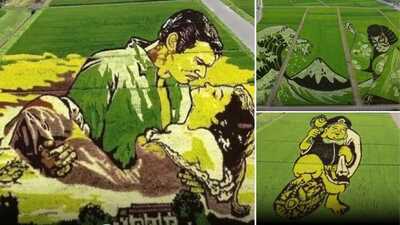
New Delhi: Japan is home to many extraordinary attractions, but few mix agriculture, art and community quite like Tambo art. Also known as rice paddy art, this remarkable tradition transforms vast rice fields into breathtaking murals using carefully selected varieties of coloured rice plants. Every year, rural communities create intricate designs ranging from iconic paintings and historical figures to anime characters and popular culture icons, attracting thousands of visitors from across Japan and around the world.
Behind every masterpiece lies months of meticulous planning, precise planting and constant care, making each display as much a celebration of teamwork as artistic talent. Beyond their visual appeal, these living canvases honour Japan’s deep-rooted farming heritage while helping boost tourism in quieter countryside regions. If you are planning a trip to Japan, exploring a Tambo art village offers a rare opportunity to witness creativity, culture and agriculture coming together in one unforgettable landscape.
All about Tambo art and iconic spots Japan’s Tambo art meaningTambo art, also known as rice paddy art, is a unique form of land art created by planting different varieties of coloured rice to produce giant images across paddy fields. Every year, villages unveil fresh designs featuring everything from masterpieces such as The Mona Lisa and Girl with a Pearl Earring to popular characters including Luffy from One Piece and R2-D2 from Star Wars.
Once planted, the fields require daily watering during Japan’s hot summer months and regular weeding to keep the colours vibrant throughout the season. Not only farmers, but schools and volunteers work together to create the murals.
Japan’s Tambo Art origin and evolutionTambo art began in 1993 in Inakadate, a small village in Aomori Prefecture, as an innovative effort to revive the local economy. Then village workers used just three rice varieties to create a simple image of Mount Iwaki.
As the artwork became more ambitious, organisers realised that designs looked distorted when viewed from the ground. By the mid-1990s, they began using computers and perspective drawing techniques to ensure the images appeared perfectly proportioned from observation platforms.
Since the early 2000s, Tambo art has evolved into highly detailed, multi-coloured masterpieces depicting cultural icons, historical figures, anime characters and dramatic storytelling scenes, making it one of Japan’s most distinctive seasonal attractions.
Best time to visitThe ideal time to visit Tambo art is between mid-July and mid-August. During this period, the contrast between the different rice varieties is at its sharpest, allowing visitors to enjoy the artwork exactly as it was designed.
Although the fields open to visitors in early June and remain accessible until the autumn harvest in early October, the peak summer weeks offer the most striking views.
Places to visit for Tambo Art 1. Inakadate Village or Aomori PrefectureAs the birthplace of Tambo art, Inakadate Village remains Japan’s most famous destination for viewing these remarkable rice paddy murals. The village features two exhibition fields linked by a complimentary shuttle bus, allowing visitors to explore both locations with ease.
The observation deck at Inakadate Village Hall resembles a traditional Japanese castle and overlooks elaborate murals inspired by classic paintings, famous film characters and historical personalities. Meanwhile, the Yayoi no Sato site, located beside a roadside station, is known for showcasing anime, pop culture and large-scale contemporary themes.
How to get thereTake the Konan Railway Konan Line from Hirosaki Station and alight at the seasonal Tambo Art Station, located beside Venue 2.
2. Gyoda City or Saitama PrefectureTravellers staying in or around Tokyo can easily visit Gyoda City, home to the Guinness World Record for the world’s largest rice paddy art field.
Visitors can take an elevator to the 50-metre observation tower at Ancient Lotus Park or Kodai Hasu no Sato, where enormous murals depicting Japanese mythology, anime, video games and other cultural themes unfold across the fields below.
How to get thereFrom Tokyo, take a train to Gyoda Station, a journey of about one hour, followed by a local city bus to Ancient Lotus Park.
3. Asahikawa or Hokkaido PrefectureIf your itinerary includes Hokkaido, the Tambo art fields in Asahikawa offer a charming countryside experience away from the usual tourist trail.
Here, local farmers create colourful designs featuring regional mascots, wildlife and animals native to Hokkaido. The artwork can be viewed from an elevated wooden observation deck overlooking the surrounding farmland.
How to get thereThe fields are located in the Higashi-Asahikawa farming district and are best reached by rental car or a short taxi ride from Asahikawa Station.
Seasonal visual transformationThe appearance of Tambo art changes dramatically as the rice plants mature, offering visitors a different experience throughout the growing season.
- June: Fresh green rice plants begin to grow, with the outlines of the artwork gradually becoming visible.
- July to August: Rich shades of green, purple, yellow and white create bold, sharply defined images that showcase the full brilliance of each design.
- September: As the rice ripens before harvest, the fields transform into stunning shades of gold and bronze, giving the artwork an entirely different yet equally captivating appearance.
Witnessing such creativity not only fills the heart with a sense of awe and excitement but also with knowledge and inspiration for different parts of the world.
-
Has your gas booking DAC code been deleted? Here's how to recover it
-
Ram Charan Recovers from Successful Hand Surgery After Injury on Set

-
The Traitors Season 2 Set to Premiere on August 13 with Exciting New Contestants

-
Murali Sreeshankar and Sajan Prakash Shine at Glasgow Commonwealth Games

-
Gurindervir Singh's Disappointing Exit and India's High Jump Hopes at Commonwealth Games 2026