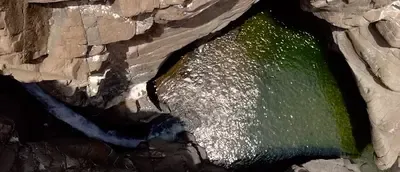
Hidden deep within Fujairah’s Hajar Mountains, clear water slips through rocky channels, springs rise from the arid landscape and a natural waterfall continues to flow even through the fiercest months of the UAE summer.
For years, Wadi Wurayah, the secluded mountain ecosystem, was largely beyond the public’s reach. Its trails, freshwater pools and rugged valleys were left undisturbed as scientists studied its wildlife and authorities worked to restore and protect its fragile habitats.
Wadi Wurayah, recently inscribed on the Unesco World Heritage List, has been open to members of the public through controlled group visits since January 2026, a top official from the Fujairah Environment Authority told Khaleej Times. However, the tours are offered only during the hiking season from early to mid-October.
Stay up to date with the latest news. Follow KT on WhatsApp Channels.
Access is not unrestricted. Visitors must register for an organised tour operated by Fujairah Holidays, allowing people to experience the reserve without placing its environment at risk.
Here is everything visitors need to know about the protected area, why it was closed and how they can explore it.
Can UAE residents and tourists visit Wadi Wurayah?Yes. Wadi Wurayah reopened to the public in January 2026, but visits are limited to controlled groups during the hiking season.
“Anybody can register through our operational partner, Fujairah Holidays,” said Asilah Abdullah Al Mualla, Director-General of the Fujairah Environment Authority.
The controlled system is intended to allow visitors to enjoy the reserve while preventing damage to its sensitive environment.
How can visitors book a trip?Tours are offered through the Fujairah Holidays website under the package titled Explore Wadi Wurayah.
The listing advertises a guided day tour and day pass, with prices starting from Dh300 per person.
The tour listing says visits are conducted on Saturdays and that spaces are limited.
Does Wadi Wurayah really have a waterfall that flows throughout the year?
Wadi Wurayah is home to the UAE’s only permanent natural waterfall.
Yes. During a Khaleej Times visit to the reserve in January 2025, researchers said more than 60 springs fed a water channel extending for over 6km before draining into the waterfall.
The waterfall is about 13 metres high and, according to geologists cited by the Fujairah Environment Authority’s research team, may have been flowing continuously for at least 10,000 years.
The water sustains an ecosystem rarely seen elsewhere in the UAE. A fish known as the Garai lives in the pool surrounding the waterfall and has adapted to survive the flash floods that periodically sweep through the wadi.
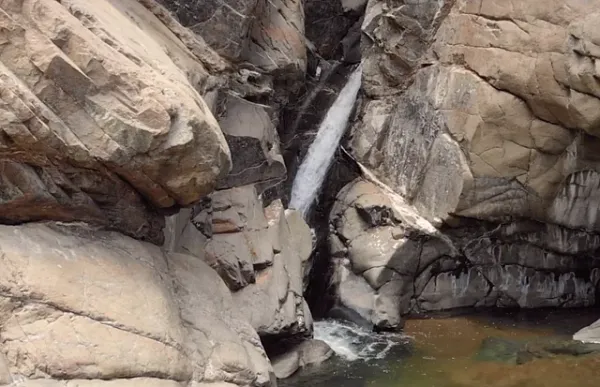
The water sustains an ecosystem rarely seen elsewhere in the UAE
What did Khaleej Times see inside the reserve?When Khaleej Times entered Wadi Wurayah in January 2025, access was still largely restricted to researchers, students and registered conservation volunteers.
A group of around 15 residents had been admitted through Emirates Nature-WWF’s Leaders of Change initiative to work as “citizen scientists”.
After hiking approximately 2.5km through the wadi, volunteers reached a freshwater pool where they carefully caught toads, measured them and released them back into their habitat.
Researchers explained that toads and dragonflies are important indicators of water quality because they are highly sensitive to pollution and changes in water temperature. Data was collected regularly to track the condition of the reserve’s freshwater system.
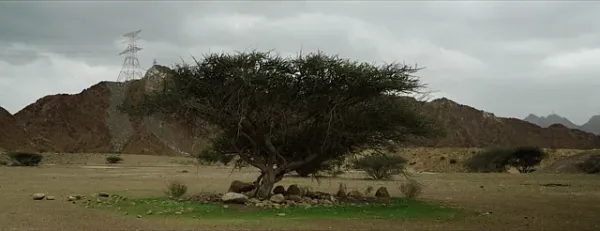
The wadi has 216 plant species
The journey also revealed how sharply the landscape changes inside Wadi Wurayah. Bare mountain slopes give way to flowing water, vegetation, freshwater pools and signs of wildlife sheltered between the rocks.
For some visitors, the trip brought back memories of a time before the area became protected.
Dr Nadia Al-Alawi recalled camping there with her family during the 1970s.
“There was a pool here and we used to jump into it,” she said during the 2025 visit. “It was such a lovely memory for us as children. I stood in front of that area and took a picture to send to my little sister.”
How did Wadi Wurayah get its name?Researchers say the name is linked to a plant known locally as Wara’a, which grows widely in the area.
Its leaves were traditionally used to build summer shelters. The presence and historical use of the plant are believed to have given Wadi Wurayah its name.
Why was Wadi Wurayah closed?The decision to close the park to tourists was taken in 2013 after authorities studied its habitats and biodiversity.
The reserve was closed only to tourists. Students, scientists and researchers continued to enter the area and conduct studies throughout the closure.
According to Al Mualla, research showed that restricting tourism had been effective in helping the ecosystem recover.
What makes Wadi Wurayah so special?Located about 45km from Fujairah city, the reserve extends across approximately 220 square kilometres of mountainous terrain.
Studies in the area began in 2006. An initial survey recorded 860 species, more than 300 springs and 60 streams, demonstrating the ecological importance of the site and strengthening the case for its protection.
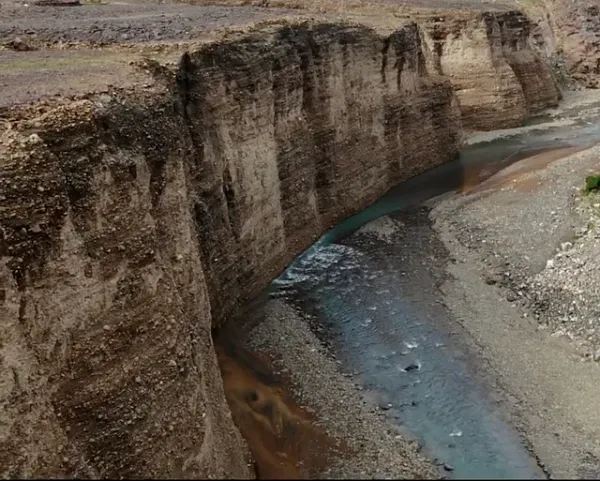
A survey recorded more than 300 springs and 60 streams in Wadi Wurayah
Today, 1,099 species have been recorded within the reserve, including:
-
216 plant species
-
114 bird species
-
20 mammal species
-
30 reptile and amphibian species
Its wildlife includes rare and endangered animals such as the Arabian tahr and Blanford’s fox, as well as the caracal.
The reserve is also home to rare plant life, including the wild orchid Epipactis veratrifolia, described by authorities as the only one of its kind in the UAE.
Its permanent springs and freshwater habitats are particularly unusual in the country’s dry mountain environment.
“The freshwater habitat in the area is unique, and the ophiolite gives it more uniqueness in the way it reacts with the freshwater to form a lasting surface-water system,” Al Mualla said.
Ophiolite refers to sections of ancient oceanic crust and upper mantle rock that have been pushed onto land. Their interaction with water contributes to the reserve’s unusual geological and ecological characteristics.
Why is the Unesco recognition significant?Wadi Wurayah’s inscription makes it the UAE’s third site on the Unesco World Heritage List and the country’s first to be recognised for its outstanding natural value.
The designation acknowledges the reserve’s biodiversity, rare ecosystems, permanent freshwater sources and distinctive geological features.
Look: From ancient forts to desert rock art, 5 UAE sites added to Islamic heritage list Palm-lined souq, watchtower, wildlife museum: 3 new reasons to visit Al Dhaid Jebel Jais opens fully to visitors, no entry permit needed-
Griezmann lifts Orlando, Casemiro makes Miami debut and more from Matchday 18

-
Has your gas booking DAC code been deleted? Here's how to recover it

-
Ram Charan Recovers from Successful Hand Surgery After Injury on Set

-
The Traitors Season 2 Set to Premiere on August 13 with Exciting New Contestants

-
Murali Sreeshankar and Sajan Prakash Shine at Glasgow Commonwealth Games