By Obnews Editorial Staff
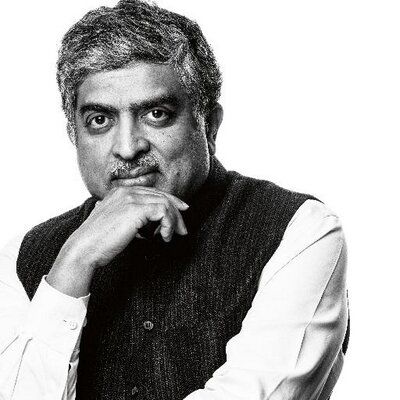
Prime Minister Narendra Modi’s decision to establish a high powered task force on examination reforms offers India an important opportunity to rebuild confidence in a system shaken by paper leaks, alleged malpractice and repeated administrative failures. Infosys cofounder and Aadhaar architect Nandan Nilekani will lead the committee, but its success cannot depend on one celebrated technocrat alone.
According to a News18 report by Shankhyaneel Sarkar, Nilekani will be joined by former ISRO chairman S. Somanath, former Intelligence Bureau director Tapan Deka, IIT Madras Director V. Kamakoti, former Education Secretary Anita Karwal and logistics expert Amrit Lal Meena. The members bring valuable experience in technology, security, science, administration and large scale operations.

However, examination reform cannot be designed only by respected experts sitting around a conference table. The committee members must jointly debate the issues, challenge one another’s assumptions and collect extensive evidence from the people who experience India’s education and examination systems directly.
The task force should consult schoolteachers, university professors, principals, examination supervisors, state education boards, testing specialists and administrators from different regions. These educators understand how examination policies work outside government presentations and technical models. They can identify practical problems involving staffing, training, question paper handling, test centre management and communication with students.
Students must be placed at the centre of the consultation. They are the ones who lose months or even years when examinations are compromised, cancelled or delayed. A paper leak is not merely a security failure. It can destroy preparation plans, create financial pressure for families and cause severe emotional distress among young people who have spent years competing for limited educational or employment opportunities.
The committee should therefore hold public and regional consultations with students from rural communities, government schools, private institutions, universities and coaching centres. It should hear from candidates who can afford expensive preparation as well as those studying with limited resources. India’s examination system cannot be considered fair if reforms are designed without understanding these different experiences.
Industry leaders must also participate. Employers, professional bodies, technology companies and workforce experts can help determine whether competitive examinations are measuring the abilities India actually needs. Many examinations continue to emphasize memorization and rapid test taking even as the economy increasingly demands critical thinking, communication, creativity, practical knowledge and digital skills.
Technology can improve security through encryption, controlled access, digital audit trails and stronger identity verification. Nilekani’s experience building Aadhaar makes him well suited to examine such solutions. However, technology cannot repair weak governance, poorly selected contractors, insider corruption or a lack of accountability.
Moving examinations online would also create new challenges. Cybersecurity threats, server failures, unreliable electricity, unequal internet access and limited digital facilities could disadvantage students in smaller cities and rural regions. Any technological reform must therefore be tested across India’s vastly different educational and infrastructure conditions before being implemented nationally.
The government must also publish the committee’s complete terms of reference, consultation process and reporting deadline. The final report should explain which groups were consulted, what evidence was considered and why particular recommendations were accepted or rejected. Public confidence cannot be restored through another confidential report that is submitted to the government and gradually forgotten.
The committee’s work must lead to measurable reforms, including stronger examination security, permanent institutional capacity, independent audits, strict vendor standards, clear responsibility for failures and transparent reporting to Parliament. There should also be a public timetable for implementing accepted recommendations.
Nandan Nilekani and the other committee members have the experience to produce meaningful change. But expertise becomes valuable only when it is combined with listening, discussion and accountability.
If the members work collectively and collect extensive views from educators, students, administrators and industry leaders, the task force could help create a more credible examination system. If they produce a technology focused report without meaningful public participation, it will risk becoming another eyewash exercise created to calm public anger without addressing the underlying problem.
India does not need another committee that merely promises reform. It needs a committee willing to listen to India before attempting to reform it.
-
Water Bottle Still Smells Bad? The Hidden Mistake You're Making Every Day

-
Malaysia Set To Host 2026 Bahrain Grand Prix At Sepang

-
'Yet Another Medal For India': PM Narendra Modi Congratulates Bindyarani Devi After Women's 58kg Bronze Medal Win At Commonwealth Games 2026 | Video

-
TET Paper Leak Case: Fugitive Accused Sonu Diwakar Surrenders, Arrest Count Reaches 15
-
Maharashtra CET Cell Withdraws Engineering Seat Acceptance Fee Hike For 2026-27 Admissions