New Delhi: India’s tiger conservation story has a new chapter. It is no longer just about saving the big cat from extinction; it is about finding enough room for a population that is, in many places, actually growing. As we mark International Tiger Day on Wednesday, July 29, this is worth pondering over.
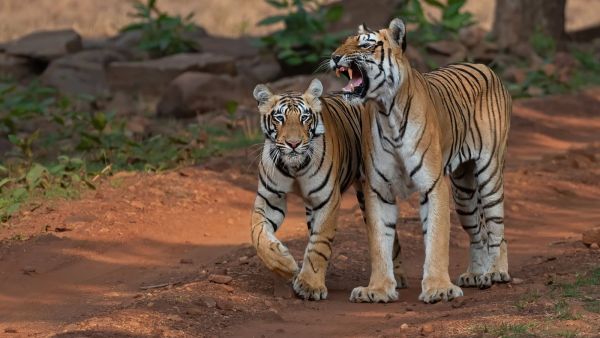
In parts of the Maharashtra-Telangana landscape, rising numbers of breeding females and cubs point to a genuinely healthy population. At the Amrabad Tiger Reserve (ATR) in Telangana, tiger numbers have climbed from 36 to 42 and females now outnumber males. “Interestingly, there are more female than male tigers in the reserve, which is a good sign,” Field Director Dr Sunil Hiremath told Telangana Today.
Why females are the real measure of success
Wildlife managers tend to focus on breeding females rather than raw tiger counts, and for good reason. A single tigress can produce multiple litters over her lifetime. A healthy female population with cubs and sub-adults, as ATR now records, signals that breeding is sustained, not just that animals are present.

Beyond female numbers, better protection on the ground, healthier prey populations and lower poaching pressure have all contributed to the improvement in numbers. Together, these factors make the difference between a reserve that holds tigers and one that grows them.
That makes the contrast with Kawal Tiger Reserve, also in Telangana, all the more striking. A recent study found that Kawal has enough prey to support 35 tigers, but breeding has been poor because of too few females and a fragmented habitat. Of the 15 tigers that dispersed into Kawal from Maharashtra over the past decade, only two were female. That has made all the difference.
A Deccan Chronicle report says Kawal has gone 13 years in a row without a resident tiger population. Encroachments and expanding podu cultivation, often without formal land rights, have eaten into the forest patches that tigers need.
“One of the biggest problems in Kawal is encroachments and expanding podu cultivation, with many not having podu pattas but insisting that they should be allowed to cultivate in the forest patches that they have cleared,” a Forest Department official told DC.
When a reserve fills up
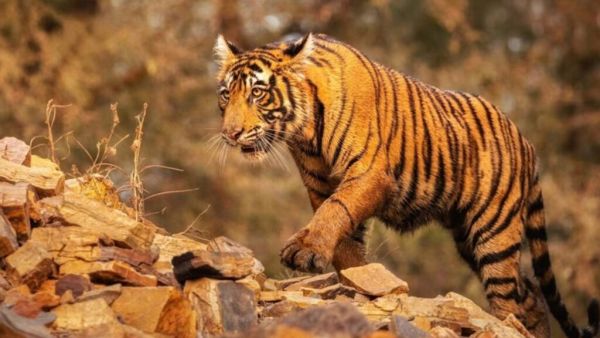
A growing population eventually runs out of room. Female tigers tend to establish territories close to where they were born. “We have observed that cubs are moving with their mother,” Dr Hiremath said. Young males, by contrast, move across long distances in search of new ground. When a reserve reaches capacity, these animals push outward and that is when they begin turning up in human-use areas.
Tadoba in Maharashtra, a stronghold since long, is now functioning as a source population, with tigers dispersing into ATR and Kawal. Earlier this year, five adult tigers from Maharashtra were sighted in Telangana. The Federal attributed the movement to population pressure and shrinking territory in Maharashtra.
This is not a sign of conservation failing. More often than not, it is evidence that it is working, with enough tigers being born and surviving to push against the boundaries of what the habitat can hold.
Corridor protection, maintaining habitat connectivity and preventing fragmentation from roads, railways and mining are the longer-term answers. Forest patches outside reserve boundaries matter too, as stepping stones for dispersing animals.
What Kawal needs
The National Tiger Conservation Authority (NTCA) has approved the translocation of tigers to Kawal from Tadoba and from Madhya Pradesh. But a senior official from the agency told DC that Kawal lacks government support, which is a prerequisite for any translocation to take hold.
The official said the effort requires three things to fall into place: a conducive environment for tigers to settle in, the creation of inviolate spaces within the reserve and prey augmentation.
Without all three, translocation alone will not hold.
The question on International Tiger Day is not whether India can save its tigers. That battle, in many reserves, has been won. The question is whether India can save enough habitat for all the tigers that conservation has produced.