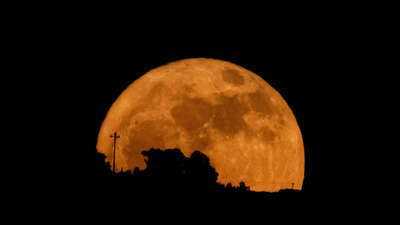
If you love looking up at a night sky, July’s Buck Moon is the one to watch. It’s not a rare supermoon or tied to any lunar eclipse, but the Buck Moon always stands out for its deep connections to nature and tradition. Whether you know your constellations or just like gazing at the stars, this month’s full moon is an easy, beautiful show anyone can appreciate.
For the unversed, the Buck Moon is not about how it looks, but about timing. July is when male deer (i.e., bucks) start growing a fresh set of antlers. The name goes back to Native American traditions, but that’s just the start.
When is the Buck Moon in 2026?
Per Time and Date, the Buck Moon reaches full shine on Wednesday, July 29, at 10:35 a.m. ET (1435 UTC). That is late morning for lots of people, so you won’t see the moon at its brightest the moment it’s technically full. But don’t worry. The moon will look pretty much “full” the night before, the night of, and the night after, which means July 28, 29, and 30 all offer great views after sunset.
Where’s the best spot to watch?The good news is, it’s visible pretty much everywhere on Earth, as long as your sky is clear. You don’t need a special spot or a ticket. Look for a place with a nice view to the east (that’s where the moon rises right after sunset). Thanks to an optical trick called the “moon illusion,” the moon seems bigger and bolder when it’s near the horizon, which is a great moment for both eyes and cameras.
Live in a city? Head to a park, rooftop, or somewhere you can see the horizon. Out in the country or near a dark-sky park? Even better, because less light pollution gives you an even brighter view.
How to get the best viewDo you need fancy gear? Nope. The Buck Moon’s beauty is simple: just look up. That said, binoculars or a small telescope reveal the moon’s craters and dark “maria.” If you’re into photography, use a tripod and catch the moon just after it rises, lining it up with trees, skylines, or mountains for dramatic shots. Try a few different exposure settings, and you’ll be surprised how much detail pops out.
The lores behind the nameAcross the world, people have called this moon by all sorts of names: Thunder Moon, because summer storms tend to roll in around this time of the year; Hay Moon, because it’s harvest time in parts of Europe; even Salmon Moon, after the fish that start moving upstream in some regions. Native Americans had their own names tied to hunting or fishing seasons. These old names were handy ways to keep track of the year’s rhythm, long before wall calendars. Whatever the name, it all points to our long relationship with seasons and with the moon itself.
This year’s Buck Moon shares the spotlight with the Southern Delta Aquariid meteor shower. Now, the full moon does make it harder to see fainter shooting stars, but the brightest ones still streak across the sky late at night. Just look up in a dark spot and hold your patience.
-
From Rs 120 crore to Rs 70 crore: Salman Khan’s salary drops

-
Hyderabad’s first Dot Cake Competition every baker is talking about

-
Rank wise list released for Telangana’s NEET candidates

-
'Modi Ji Should Apologise To Them': Rahul Gandhi Targets PM Over Apology Video

-
Amarnath Yatra Resumes Via Baltal Route After Weather Improves