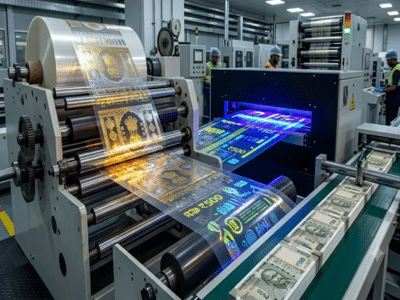
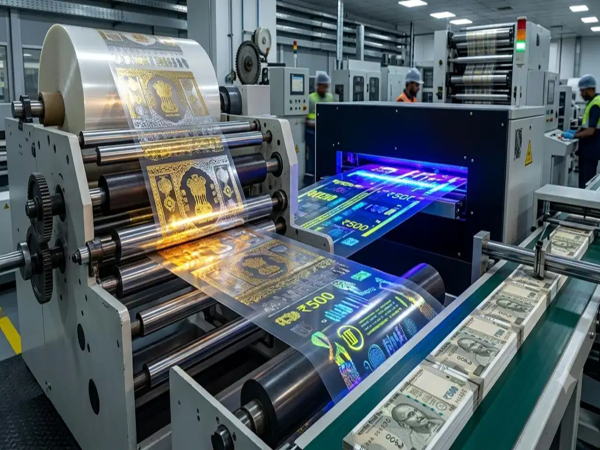
India is preparing to test polymer currency notes in ₹10 and ₹20 denominations after approval from the Government of India and the Reserve Bank of India (RBI). The move has sparked curiosity about how these plastic notes are made and why many countries are switching from traditional paper currency.
Here's a closer look at the technology behind polymer banknotes and how they differ from conventional paper notes.
The Origin of Polymer BanknotesThe concept of plastic currency was first developed in Australia by scientist David Solomon. The project began in collaboration with the Reserve Bank of Australia and took nearly two decades to perfect.
Australia introduced the world's first polymer banknote—a 10 Australian dollar note—in 1988. By 1996, it had replaced all of its paper currency with polymer notes. Since then, several countries, including the United Kingdom, Canada, New Zealand, and Singapore, have adopted similar technology. The Bank of England introduced its first polymer £5 note in 2016.
What Is BOPP Technology?Polymer banknotes are manufactured using BOPP (Biaxially Oriented Polypropylene), a transparent and highly durable plastic material.
Unlike paper, BOPP contains no fibers or pores, making polymer notes:
-
Water-resistant
-
Dirt-resistant
-
Sweat-resistant
-
More durable than paper notes
One of the most distinctive features is the transparent window built into the note, which is extremely difficult to reproduce using ordinary scanners or printers.
Advanced Security FeaturesPolymer notes include multiple security technologies to make counterfeiting much harder. These may include:
-
Transparent security windows
-
Holographic foil elements
-
Optically variable devices (OVDs)
-
Diffraction grating technology that changes colour or patterns when viewed from different angles
-
High-security printing techniques
These features help users verify the authenticity of the note quickly while making duplication significantly more difficult.
How Polymer Notes Are ManufacturedThe production process involves several stages:
Preparation of the BOPP sheet: A transparent polymer sheet is created as the base material.
Printing: Designs, colours, text, and images are printed on both sides of the sheet.
Foil application: Special security foils and holographic elements are added using precision foiling machines.
UV treatment: The printed sheet undergoes ultraviolet treatment, and a protective coating is applied to improve ink durability and extend the note's lifespan.
Cutting: Large printed sheets are cut into individual notes using industrial guillotine cutters.
Quality testing: Finished notes are tested to ensure they function properly in ATMs, vending machines, and currency-counting machines before entering circulation.
Traditional Indian currency notes are primarily made from cotton-based fibers and include security threads embedded during the manufacturing process.
Compared with paper notes, polymer notes offer several advantages:
-
Last significantly longer, often up to 2.5 times the lifespan of paper notes
-
Resistant to water, moisture, and dirt
-
More difficult to tear
-
Better resistance to everyday wear and tear
-
Enhanced protection against counterfeiting through advanced security features
Polymer banknotes combine advanced materials with modern security technology to create currency that is more durable, cleaner, and harder to counterfeit than traditional paper notes. As India begins trials of ₹10 and ₹20 polymer notes, the initiative could mark an important step toward improving the lifespan and security of everyday currency.
-
Hyderabadi Sutriyan and 6 other Indian pastas perfect for monsoon

-
Either he ordered it or is incompetent: Rahul calls for Shah’s resignation
-
Amit Shah skips Parliament, hails youth over anti-paper leak bill
-
What went wrong between Raghav Juyal and Lakshya?

-
Rejected By IIT-Kanpur, Student Hacks Website; Institute Offers Fresh Chance