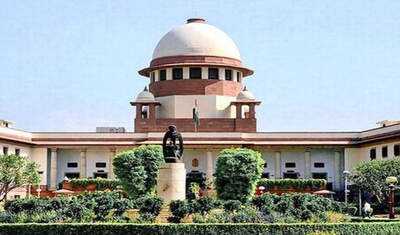
The Supreme Court has issued a directive on Wednesday requiring that the audio feed be muted during live video broadcasts when new cases are mentioned before the Chief Justice of India. This means that the general public and media will not be able to hear the appeals for urgent listings made by lawyers or the court's verbal responses. This decision follows a recent comment by the Chief Justice, who stated that mentioning essential cases is more of an 'administrative' task rather than a judicial one, and thus should not be reported. The latest order ensures that conversations occurring during the mentioning of new cases will not be audible on the court's livestream.
Read More: Supreme Court Urges Government to Consider Declaring Digital Arrest as a Separate Offense
The mentioning process allows lawyers to request immediate hearings for cases requiring urgent judicial intervention. In recent years, this process has often included high-profile public interest litigations (PILs), politically sensitive disputes, and cases of constitutional significance. During these sessions, the Chief Justice typically decides whether a case warrants immediate attention and may provide brief verbal comments when setting dates or denying urgent hearings. Several politically significant cases and public interest litigations have been presented before the Chief Justice in recent months, and the media has widely reported on the court's comments during these discussions. Such reporting has, at times, drawn attention to cases even before their formal hearings.
Read More: Supreme Court Nullifies 2021 Office Memorandum on Retrospective Environmental Clearance
By muting the audio during new hearings, the Supreme Court has effectively limited public access to this stage of court proceedings, while still allowing the video conferencing feed to continue. This measure aims to prevent the dissemination of verbal exchanges that occur during the administrative process of listing cases. This development signifies a notable shift in how access to virtual court proceedings is managed, establishing a clear distinction between judicial hearings and the administrative decisions regarding the urgent listing of cases. Although the court has not provided a detailed public explanation accompanying this directive, it follows the Chief Justice's earlier remark that such administrative discussions should not be regarded as part of judicial proceedings.
-
Three girls flee Hyderabad by train, traced via Instagram acc

-
Did Nia Sharma just confirm dating Sikander Singh?

-
CJP Founder Abhijeet Dipke Warns Of Bigger Student Agitation

-
Semiconductor Major Marvell To Invest $250 Mn in India, Double Headcount

-
Delhi High Court Resolves Petition Over Police Acknowledgment Issues