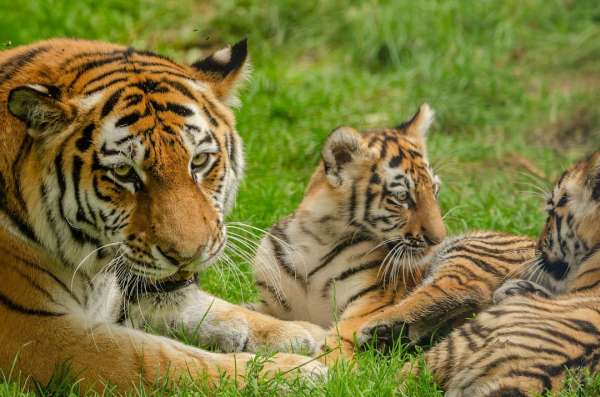
Every year on July 29, the world observes International Tiger Day to raise awareness about tiger conservation and the urgent need to protect one of the planet's most iconic predators. India is home to nearly three-fourths of the world's wild tiger population, making it the global stronghold for the majestic Royal Bengal Tiger. Revered as the country's national animal, the tiger symbolises strength, courage, and ecological balance. Here are five fascinating facts about India's Royal Bengal Tiger that highlight why conserving this magnificent big cat is more important than ever.
India Is Home To The World's Largest Tiger Population
India has emerged as the world's leading tiger conservation success story. According to the latest official estimates, the country is home to more than 3,600 wild tigers, accounting for around 75 per cent of the global tiger population. National parks and tiger reserves such as Jim Corbett, Ranthambore, Bandhavgarh, Kanha, Sundarbans, and Kaziranga have played a vital role in protecting their habitat. The success is largely credited to Project Tiger, launched in 1973, which transformed wildlife conservation through dedicated reserves, anti-poaching measures, and habitat restoration.
The Royal Bengal Tiger Is A Powerful And Unique Predator
The Royal Bengal Tiger is among the largest members of the cat family. Adult males can weigh over 250 kilograms and measure more than three metres from nose to tail. Despite their enormous size, they are agile swimmers, excellent climbers, and stealthy hunters. No two tigers have identical stripe patterns. Much like human fingerprints, each tiger's stripes are unique, allowing wildlife researchers to identify individual animals through camera traps. Their powerful night vision, exceptional hearing, and camouflage make them highly effective predators in forests, grasslands, and mangrove ecosystems.
Why Tiger Conservation Matters
Tigers are known as an umbrella species, meaning their protection helps conserve entire ecosystems. A healthy tiger population indicates thriving forests, abundant prey, and balanced biodiversity. Protecting tiger habitats also safeguards rivers, groundwater, and forests that millions of people depend on for clean water and livelihoods. However, the species continues to face challenges, including habitat fragmentation, human-wildlife conflict, illegal poaching, and climate change. Conservation efforts now focus not only on increasing tiger numbers but also on improving habitat connectivity and encouraging community participation in wildlife protection.
Five Amazing Facts About The Royal Bengal Tiger
- Every Royal Bengal Tiger has a unique stripe pattern, making each individual easily identifiable.
- Tigers are excellent swimmers and can comfortably cross rivers and water bodies while hunting or moving between territories.
- A tiger's roar can be heard from up to three kilometres away under favourable conditions.
- Unlike many other big cats, tigers are generally solitary animals, meeting mainly during mating or when females raise cubs.
- The Royal Bengal Tiger is India's national animal, replacing the Asiatic lion in 1973 as a symbol of the country's rich wildlife heritage.
Protecting India's Pride
International Tiger Day is more than a celebration of a magnificent species it is a reminder of our shared responsibility to protect wildlife and preserve natural habitats. India's remarkable conservation achievements demonstrate that sustained efforts, scientific management, and public awareness can help endangered species recover. As forests continue to face growing environmental pressures, every step towards conservation contributes to securing the future of the Royal Bengal Tiger and the rich biodiversity that depends on healthy ecosystems.
-
Telangana Inter topper ends life after humiliation by lecturer

-
Secret Saudi cables reveal plot to stoke sectarian rift in Yemen

-
Bhojshala row: SC hearing on alternate namaz site on July 30

-
Gill regains No. 1 ODI ranking, Sooryavanshi surges in T20I

-
Allu Arjun slammed for telling fans to ‘stalk girls they like’