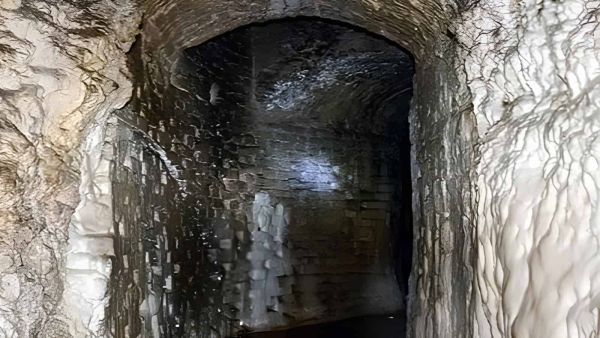
Bhopal: A team of experts from the Bhopal-based Maulana Azad National Institute of Technology (MANIT), along with water management specialists, has launched an initiative to conserve and rejuvenate Burhanpur’s historic Kundi Bhandara, a 400-year-old underground water management system also known as “Khooni Bhandara.”
The system was built by Abdul Rahim Khan-e-Khana, a notable military leader and statesman at the court of Emperor Akbar, during the Mughal era to supply drinking water from the Satpura range to Burhanpur and nearby army camps.
Initial assessment completed
At the initiative of the Directorate of Archaeology, Archives and Museums, the technical team, led by Rutuja Chavan, assistant professor in the Civil Engineering Department at MANIT, conducted an extensive site inspection. The experts assessed the condition of the underground water system, evaluated its water flow mechanism and carried out preliminary studies to identify opportunities for technical restoration, structural improvement and rejuvenation.

According to Chavan, the assessment marked the first step towards the scientific conservation and revival of the Bhandara’s underground water structures and inter-connected supply network. Based on the findings, a comprehensive technical survey, formal documentation and a detailed conservation roadmap will be prepared.
The initiative aims to scientifically understand the hydraulic mechanism of the Bhandara, preserve its historical authenticity and heritage value and identify suitable engineering interventions for its sustainable revival. The project will subsequently move to detailed technical modelling, structural analysis and conservation work.
About the builder
Rahim (1556–1627), known formally as Abdul Rahim Khan-e-Khana, was a famous poet, military leader and statesman in the Mughal Empire. One of the Navratnas (nine gems) in the court of Emperor Akbar, he rose to prominence after his father, Bairam Khan, Akbar’s trusted guardian and military commander, died.
Akbar raised him in the royal court and bestowed the high title of Khan-e-Khana in 1584. He also served Emperor Jahangir for many years and is best remembered today for his wise Hindi couplets (dohas) on love, friendship and human values.
Though a Muslim, he wrote in Hindi, Persian and Sanskrit, including poems expressing devotion to Lord Krishna, and translated Babur’s memoirs, the Baburnama, from Chagatai Turkish into Persian.
-
पूरन की नाबाद 58 रनों की पारी ने MI London को The Oval पर Sunrisers के खिलाफ सात विकेट से दिलाई जीत

-
Pooran's 58* Steers MI London to Seven-Wicket Win Over Sunrisers at The Oval

-
Home Loan: Opting for a low down payment? Here are the downsides

-
How much internet speed is needed for daily tasks? Here’s the breakdown

-
Old features in new phones? Budget Androids might disappoint