Theatre has changed the way I see my roles: Chitrangada Satarupa
ETimes | July 30, 2026 10:39 PM CST
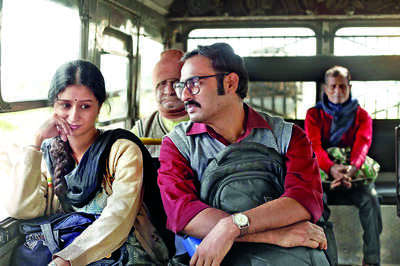
From growing up in a culturally rich neighbourhood in Baguiati and finding her calling at the Academy of Fine Arts to navigating Mumbai’s theatre circuit and embracing motherhood , the Main Actor Nahin Hoon actor has charted a path on her own terms. In a chat with CT, she reflects on the people, places and choices that shaped her.
Today, we’re shooting at places that are significant to you – Academy of Fine Arts & Park Street. What do these places mean to you?
I grew up watching plays at the Academy with my mother, and that’s where my love for theatre began. I remember realising during one of those visits that I wanted to be on stage. Later, when I joined Bratyajon, I was told I’d have to earn my role, and I was happy to wait. I eventually stepped into Ruddhasangeet, and that changed everything. While performing in over 50 shows, the Academy became my second home, where I learnt the nuances of stagecraft. Park Street is nostalgic in a different way. During college, my friends and I spent many evenings there. Even after moving to Mumbai, every trip home felt incomplete without a meal at my favourite Chinese spot.
You grew up surrounded by art and literature. How much did that environment shape you?
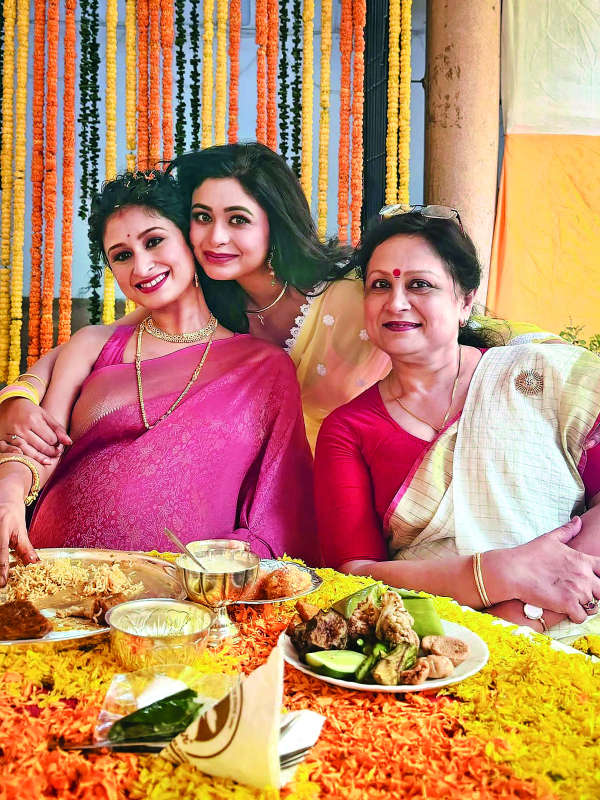
Cinema entered my life much before theatre because both my parents were associated with films. But what truly drew me was performing – whether through dance, acting or school productions. After my parents separated, my sister, (Ritabhari Chakraborty) and I were raised by our mother ( Satarupa Sanyal ) and our maternal grandparents in Baguiati. She made sure we grew up surrounded by art in its many forms. We also grew up in a culturally rich neighbourhood, where we were encouraged to create and ideate rather than simply perform. We had a community magazine and festival called Khola Mela, where we wrote poems and stories and staged original performances instead of merely reproducing existing scripts. Those experiences nurtured my creativity.
How did Mumbai change you?
When I moved to Mumbai, I thought theatre was behind me. Since it rarely pays enough in a city like Mumbai, I expected to focus on auditions, modelling and films.
Then I met Manav Kaul. Ironically, I’d approached him hoping to work in one of his films, but he cast me in a Tagore-based play instead. I said yes immediately. That became my safe space in Mumbai. After days of feeling invisible in audition queues, theatre reminded me why I wanted to become an actor. Working with Kalki Koechlin and Swanand Kirkire was an education in itself, and soon, theatre was once again at the centre of my life. My move to films happened almost by accident. While touring with Colour Blind, I sent a self-test, with Kalki filming it and a friend reading the cues. I got the part. It was in an episode of Anurag Basu’s Stories by Rabindranath Tagore, and its improvisational approach felt incredibly liberating.
What brought you back to Kolkata?
I never really disconnected from Kolkata. I kept returning for work and family. When I became pregnant, staying in Kolkata made sense because I had a strong support system. Around the same time, director Saurav Palodhi approached me with the script of Onekdin Por .
What drew you to Onekdin Por?
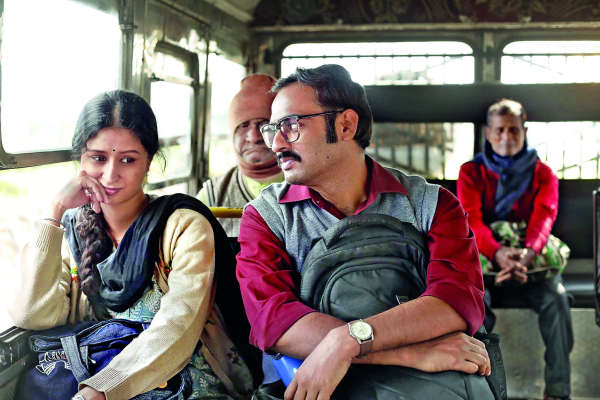
The script. I’ve never chosen projects for glamour or screen time. I ask myself three questions: Is the character interesting? Is the script engaging? And do I believe in what the film is trying to say? I don’t have to agree with every character I play, but I need to believe in the filmmaker’s vision. Saurav has a clear voice, and I respected that. It also worked out personally, as the film was shot during my second trimester, when I could still work comfortably.
You’ve often chosen layered, unconventional roles...
I’ve simply followed stories that excite me. Every character has looked the way her life demanded. I’ve never chased glamour – my job is to inhabit each role honestly. That’s why I don’t see myself as typecast.
Looking back, what has shaped you most as an artiste?
Without question, theatre. It taught me discipline, patience and, above all, that acting isn’t about showing off – it’s about listening, responding truthfully and serving the story. For me, success is about choosing meaningful work, continuing to learn and ending the day knowing I’ve been honest to my craft. I’m drawn to stories about people – and that’s the kind of work I want to keep doing.
‘Motherhood has made me value time even more’
Motherhood has changed Chitrangada ’s priorities in ways she never anticipated. “Motherhood changes your priorities in ways you can’t fully imagine beforehand,” she says. “Even when I’m on set, a part of my mind is always with my child.” While work remains important, she says motherhood has made her more mindful about the projects she takes on, as every commitment now means spending time away from her family and child.
Different, not lesser
Chitrangada rejects the notion that theatre needs validation from cinema, saying each medium has its own audience and value. “Cinema naturally reaches more people, but that doesn’t make theatre any less significant,” she says, citing practitioners like Jyoti Dogra, who command immense respect despite limited mainstream recognition. She believes theatre and cinema are “different ecosystems”, with neither superior to the other, and rejects the idea that theatre is merely a stepping stone to films. “For many actors, theatre itself is the destination.”
More than a surname
Adopting her mother’s name as her surname wasn’t an act of defiance but a personal choice for Chitrangada. The idea took shape when she and her husband, then her boyfriend, were discussing what surname their future children would carry. “That conversation made me pause and reflect. If I felt so strongly about acknowledging the person who had raised me, I didn’t have to wait for the next generation — I could make that choice for myself.” She adds, “It wasn’t an act of rebellion. It was simply my way of acknowledging my mother. I don’t believe our identities always have to come through our fathers. Carrying my mother’s name felt like the most honest reflection of who I am.”
Today, we’re shooting at places that are significant to you – Academy of Fine Arts & Park Street. What do these places mean to you?
I grew up watching plays at the Academy with my mother, and that’s where my love for theatre began. I remember realising during one of those visits that I wanted to be on stage. Later, when I joined Bratyajon, I was told I’d have to earn my role, and I was happy to wait. I eventually stepped into Ruddhasangeet, and that changed everything. While performing in over 50 shows, the Academy became my second home, where I learnt the nuances of stagecraft. Park Street is nostalgic in a different way. During college, my friends and I spent many evenings there. Even after moving to Mumbai, every trip home felt incomplete without a meal at my favourite Chinese spot.
You grew up surrounded by art and literature. How much did that environment shape you?
Cinema entered my life much before theatre because both my parents were associated with films. But what truly drew me was performing – whether through dance, acting or school productions. After my parents separated, my sister, (Ritabhari Chakraborty) and I were raised by our mother ( Satarupa Sanyal ) and our maternal grandparents in Baguiati. She made sure we grew up surrounded by art in its many forms. We also grew up in a culturally rich neighbourhood, where we were encouraged to create and ideate rather than simply perform. We had a community magazine and festival called Khola Mela, where we wrote poems and stories and staged original performances instead of merely reproducing existing scripts. Those experiences nurtured my creativity.
How did Mumbai change you?
When I moved to Mumbai, I thought theatre was behind me. Since it rarely pays enough in a city like Mumbai, I expected to focus on auditions, modelling and films.
Then I met Manav Kaul. Ironically, I’d approached him hoping to work in one of his films, but he cast me in a Tagore-based play instead. I said yes immediately. That became my safe space in Mumbai. After days of feeling invisible in audition queues, theatre reminded me why I wanted to become an actor. Working with Kalki Koechlin and Swanand Kirkire was an education in itself, and soon, theatre was once again at the centre of my life. My move to films happened almost by accident. While touring with Colour Blind, I sent a self-test, with Kalki filming it and a friend reading the cues. I got the part. It was in an episode of Anurag Basu’s Stories by Rabindranath Tagore, and its improvisational approach felt incredibly liberating.
What brought you back to Kolkata?
I never really disconnected from Kolkata. I kept returning for work and family. When I became pregnant, staying in Kolkata made sense because I had a strong support system. Around the same time, director Saurav Palodhi approached me with the script of Onekdin Por .
What drew you to Onekdin Por?
The script. I’ve never chosen projects for glamour or screen time. I ask myself three questions: Is the character interesting? Is the script engaging? And do I believe in what the film is trying to say? I don’t have to agree with every character I play, but I need to believe in the filmmaker’s vision. Saurav has a clear voice, and I respected that. It also worked out personally, as the film was shot during my second trimester, when I could still work comfortably.
You’ve often chosen layered, unconventional roles...
I’ve simply followed stories that excite me. Every character has looked the way her life demanded. I’ve never chased glamour – my job is to inhabit each role honestly. That’s why I don’t see myself as typecast.
Looking back, what has shaped you most as an artiste?
Without question, theatre. It taught me discipline, patience and, above all, that acting isn’t about showing off – it’s about listening, responding truthfully and serving the story. For me, success is about choosing meaningful work, continuing to learn and ending the day knowing I’ve been honest to my craft. I’m drawn to stories about people – and that’s the kind of work I want to keep doing.
‘Motherhood has made me value time even more’
Motherhood has changed Chitrangada ’s priorities in ways she never anticipated. “Motherhood changes your priorities in ways you can’t fully imagine beforehand,” she says. “Even when I’m on set, a part of my mind is always with my child.” While work remains important, she says motherhood has made her more mindful about the projects she takes on, as every commitment now means spending time away from her family and child.
Different, not lesser
Chitrangada rejects the notion that theatre needs validation from cinema, saying each medium has its own audience and value. “Cinema naturally reaches more people, but that doesn’t make theatre any less significant,” she says, citing practitioners like Jyoti Dogra, who command immense respect despite limited mainstream recognition. She believes theatre and cinema are “different ecosystems”, with neither superior to the other, and rejects the idea that theatre is merely a stepping stone to films. “For many actors, theatre itself is the destination.”
More than a surname
Adopting her mother’s name as her surname wasn’t an act of defiance but a personal choice for Chitrangada. The idea took shape when she and her husband, then her boyfriend, were discussing what surname their future children would carry. “That conversation made me pause and reflect. If I felt so strongly about acknowledging the person who had raised me, I didn’t have to wait for the next generation — I could make that choice for myself.” She adds, “It wasn’t an act of rebellion. It was simply my way of acknowledging my mother. I don’t believe our identities always have to come through our fathers. Carrying my mother’s name felt like the most honest reflection of who I am.”
READ NEXT
-
Real Madrid tell Vinicius Junior to accept final contract offer or leave

-
Buzzer-Beater! Scotland Basketball Player Sinks Stunning Last-Second Shot To Defeat Malaysia At CWG 2026 | Video

-
PM Narendra Modi Hails Neeraj Chopra & Yashvir Singh As India Secures Javelin Double Podium Finish At Commonwealth Games 2026
-
Fact Check: Did Hardik & Krunal Pandya Get Spotted Together At Mumbai Airport?
-
Tim Cook Hails India's Record-Breaking Performance As Apple Delivers Stellar $109.4 Billion June Quarter