UEFA and FIFA are locked in a major dispute: so what would the 2030 World Cup look like if European nations were not involved?
FIFA president Gianni Infantino is planning to privatise the World Cup, and UEFA are understood to be furious about the proposal.
According to a major report by The Times Chief Sports Reporter Martyn Ziegler, FIFA intend to sell stakes in the World Cup to private investors, with discussions already opened with backers said to be close to the Trump administration.
The idea has triggered widespread criticism, with Prime Minister Andy Burnham also weighing in, saying, “Football does not belong to investors.”
In a statement issued on X, formerly known as Twitter, UEFA strongly criticised FIFA's plans, arguing that the world governing body has no right to sell football.
“This crosses a line that football's governing institutions should never cross,” UEFA said. “UEFA takes it extremely seriously. So should every National Football Association. So should every stakeholder: leagues, clubs, players, supporters, governments and everyone who cares about the future of the game. “The soul and governance of football are not assets to trade – especially with zero transparency as to who gains financially. None of us are the owners of football. It is not FIFA's to sell.”
According to the BBC, UEFA's 55 member associations are due to hold an emergency meeting later this week to discuss the proposals.
At present, there is no direct indication that UEFA are ready to take action of their own – although that could, in theory, change.
UEFA's reaction itself was described in the same report as “remarkable”, with the Nyon-based organisation rarely commenting publicly on FIFA – but any next steps will be especially interesting given the influence UEFA holds within FIFA.
Of FIFA's 211 member associations, only 55 belong to UEFA, but European football carries enormous influence, with six of the last World Cup's eight quarter-finalists having come from UEFA nations.
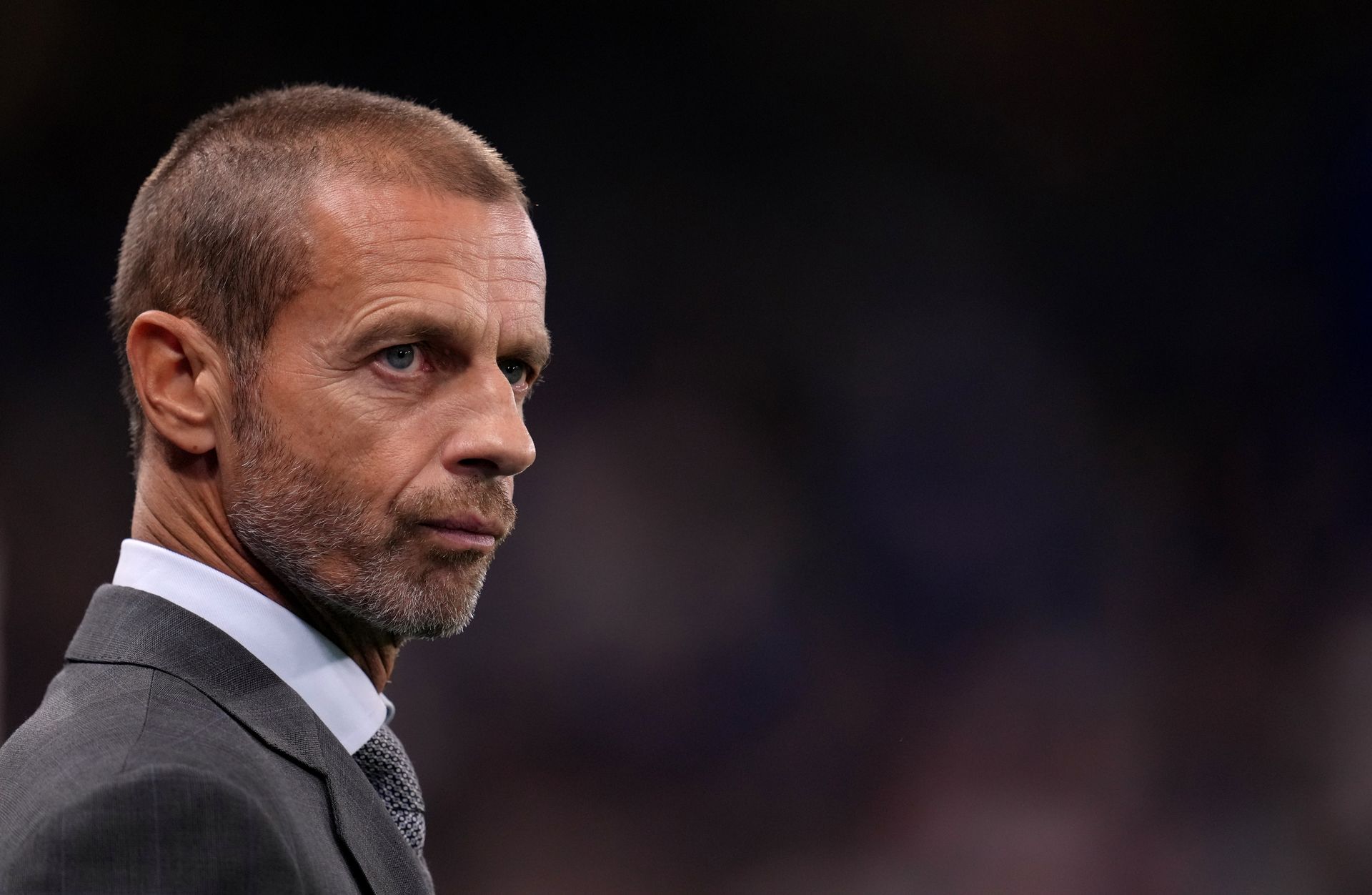
UEFA president Aleksander Ceferin boycotted the World Cup final this month as a protest against controversial moves by FIFA.
While it would be appealing to assume UEFA are acting to protect the purity of the sport, FIFA's proposed overhaul of its competitions would also seriously affect UEFA's own competitions – and that is likely to be a major factor behind UEFA's resistance.
For instance, staging the World Cup every two years would probably bring an end to the European Championship being played in alternate even-numbered years, disrupting the football calendar, while an expanded Club World Cup would add further complications.
It is reasonable to assume that an enlarged World Cup and Club World Cup would lessen the appeal of the Euros and the Champions League respectively, while placing even greater physical demands on players who are already being pushed to their limits.
Yes, they can. As independent legal entities, UEFA have the self-governing authority to break ties with football's global governing body.
But that is not where the real complication lies. FIFA is made up of individual national football federations: UEFA itself is not a member of FIFA, though the English Football Association, for example, is.
UEFA acts as the umbrella body for Europe's 55 member associations, but it is the individual national associations that choose to align with FIFA in order to take part in global competitions.
That means UEFA would need agreement from all 55 members to cut ties with FIFA, while England's FA could independently choose to resign from or suspend its FIFA membership through legal means.
In simple terms, any response would have to come in one of two forms: individual action or collective action.
The problem for UEFA is that many member associations – particularly the smaller ones – may actually support these plans. FIFA says it wants to increase global funding, and with each member association set to receive around £15 million in one-off capital, that financial offer could be too attractive for many of the 211 members to reject.
It may be easier for England, France or Germany to refuse that sort of money, at least in theory, but there are still developing football nations in Europe that would welcome such investment. That makes a united, collective stand against FIFA's privatisation deal highly unlikely.
There is also the possibility that any pact among the biggest nations would be unstable. For example, if France and Germany both agreed to boycott the 2030 World Cup, that would clearly hand England a once-in-a-generation boost to their chances of winning the tournament.
Some would say history does not come with footnotes explaining why teams won or lost. The first World Cup was by invitation only, and several European nations chose not to participate because of the cost of travelling to South America during the Great Depression. Uruguay, the inaugural champions, still proudly wear that star on their shirts. The context is irrelevant to them.
Yes, UEFA do have the legal authority to punish or even outright ban national associations that refuse to fall in line – but first all 55 members would need to pass a resolution together.
UEFA could not simply ban any club involved in the expanded 2025 Club World Cup from the Champions League, because there would have been no obvious breach of UEFA executive directives.
In an emergency, though, UEFA's statutes allow the governing body to activate its Emergency Panel. That panel is made up of the UEFA president, Aleksander Ceferin, the first vice-president, the treasurer, and two members personally selected by the president. The five are “authorised to take and execute final decisions on urgent matters that fall under the authority of the UEFA Executive Committee”.
UEFA's administration could then put binding executive directives into effect. Whether matters escalate to that point, however, remains unclear.
-
Husband Paid Rs 80 Lakh From Dubai For Wife's Property. Can The Tax Department Call It Unexplained?
-
Pooran's 58* Fires MI London to Seven-Wicket Win
-
Nine dead as thousands cross into Spain’s Ceuta from Morocco
-
Nirmal Purja among climbers missing after Broad Peak avalanche
-
Iran claims drone strike on US military base in Kuwait