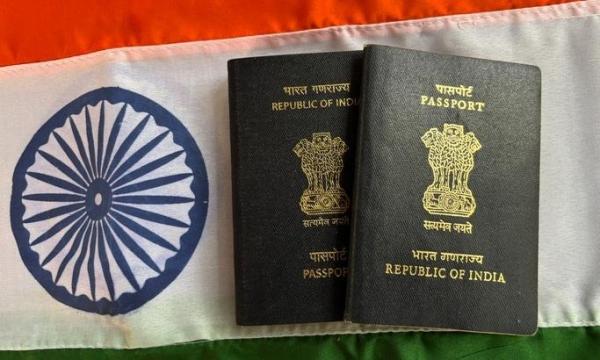
Amid the ongoing debate on whether a passport is conclusive proof of Indian citizenship, the Centre has stated that only Indian citizens are eligible to receive an Indian passport. However, it did not elaborate on whether the document is conclusive proof of citizenship.
The statement was made on Thursday (July 31) in the Rajya Sabha, in a written reply by the Minister of State for External Affairs, Kirti Vardhan Singh, in response to questions from Abdul Wahab.
What the minister said
The Union Minister in his reply pointed out that passports are issued under the Passports Act, 1967, following the prescribed verification process.
Also Read: Passport row: If a passport isn’t proof of citizenship, what is? Experts explain
“An Indian passport is issued as per the Passports Act, 1967 by the Government of India to regulate the departure from India of citizens of India. It is issued after due verification laid out by an established process,” stated the Minister, reported India Today.
“The provisions of Article 9 and 11 of the Constitution of India read with Section 9 of the Citizenship Act, 1955 do not allow dual citizenship,” he added.
Centre’s clarification
Wahab had asked whether an Indian passport is conclusive proof of citizenship, who qualifies for one, how acquiring foreign nationality affects Indian citizenship, how foreign nationals who become Indian citizens obtain passports, and whether the government plans to revisit the existing citizenship and passport laws.
Also Read: ‘MEA statement on passport bizarre, sends out confusing message’
The development comes amid continuing debate over which government-issued records can definitively establish Indian citizenship. It follows the Centre’s stand that a passport is a travel document issued only to Indian citizens after verification, while avoiding any explicit declaration that it alone establishes citizenship.
Citizenship rules
Under the Citizenship Act, 1955, an Indian citizen who voluntarily acquires the nationality of another country automatically loses Indian citizenship. The Indian passport issued to that person also becomes invalid and must be surrendered.
Also Read: Despite slipping in passport rankings, how India fares against South Asian neighbours?
The Ministry of External Affairs also said passports are issued under the Passports Act, 1967 and the rules framed under it after the prescribed verification process is completed.
Section 6 of the Act requires passport authorities to refuse applications from non-citizens, reinforcing that citizenship is mandatory before a passport can be issued.
The ministry has maintained the same position in earlier statements, including one by MEA spokesperson Randhir Jaiswal last month, who said, “an Indian passport is a document that, as per the Passports Act, 1967, is issued by the Government of India to regulate the departure from India of citizens of India”.
-
If you want glowing skin, start eating these 5 things daily, and your face will shine like a mirror.

-
The Safe Side: How Consumer Commissions can help cyber fraud victims recover losses

-
iPhone 18 Pro Trending: Expected Features, Launch Date & Price in India

-
Who Was Behind Indian Hockey’s Saffron Jersey Change? HI Chief Dilip Tirkey Drops A Bombshell

-
ICC unveils venues of 2027 ODI World Cup