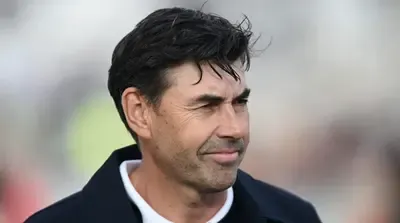
The announcement of Stephen Fleming as England's new Test head coach has put the spotlight on a long-standing problem that has plagued English cricket. For over twenty years, England have been heading abroad in the hunt for a head coach for the men's Test side. Despite having one of the most robust domestic cricket systems in the world, England have not managed to develop sufficient coaches to take the men's Test team forward.
Since Duncan Fletcher took over as coach in 1999, the English coach has been in charge of the Test team for only 5 out of the past 27 years. Peter Moores and Silverwood are the only English head coaches appointed to the Test team this century, but neither enjoyed long tenures.
The appointment of Fleming is merely the latest example that once again highlights the wider issues in the English coaching pathway rather than a problem with selecting foreign managers.
England's Record Under Homegrown Coaches Has Not Matched Overseas Success
One of the primary motivations for England to keep appointing foreign coaches is straightforward - results.
England have won 126 Tests and lost 91 Tests with foreign coaches overseas this century. With an English coach, England have won only 23 Tests but lost as many as 24 Tests. The difference is even more across the larger series.
The only time, in recent history, when one of the English coaches was given the responsibility to coach England was during the Ashes. Silverwood oversaw the team during the Australian tour, which resulted in an embarrassing 4-0 loss.
Peter Moores was another. He had a solid record as county coach, but was sacked during both of his incumbencies as England coach. Ashley Giles, who had a decent record as a county bowler, was very unfortunate in his England duties with the white ball, being axed when England missed out on the semi-finals of the 2014 T20 WC.
Due to these experiences, decision-makers have more and more assumed that proven international coaches are the safer choice than promoting home-grown candidates.
Fleming's franchise cricket record also influenced England. Playing in the IPL for so long and having to tackle world-class players on a regular basis gave him far more exposure than county coaches, who often avoid large crowds.
Also Read | Stephen Fleming Named England Test Coach After CSK Exit: What Lies Ahead
The Hundred Has Not Helped Develop Enough English Coaches
Several cricket boards have utilised their domestic franchise competitions to develop the next generation of national team coaches.
The Big Bash League is a great platform for Australian coaches to work with international cricketers. South Africa's SA20 has made it possible for local trainers to work with global players in spite of IPL link-ups.
The Hundred's progression has not been the same as the other.
Throughout the six editions of the tournament, there have only been three English men's head coaches. This season, there is only one English head coach in the event, and that was Peter Moores.
The former England assistant coach Paul Farbrace considers it to be a setback.
Farbrace recalls:
"I said: 'This is an opportunity for us to put English coaches in with some of the best players in the world and allow them to develop their coaching skills and experience and put them in for the chance of being head coach of the England cricket team. And I was shouted down."
He added:
"One of the guys in the ECB at the time said: 'Oh, I couldn't name you four who were capable of doing the job. If, in our own competition in England, we're not appointing head coaches to the roles and we're bringing in overseas coaches from all over the place, then I just find that quite disappointing for the English game."
The ECB has little influence over who is appointed on the Hundred now that private investment has altered the makeup of the ownership. It is therefore less straightforward for English coaches to have a specific course of action.
Former England Players Are Choosing Television Over Coaching
Another problem is the fact that it is difficult to turn former players into coaches, as a lot of them have decided to go into the media.
Many ex-England captains, including Sir Alastair Cook, Michael Vaughan and other leading players, have shifted from playing to television and broadcasting. Coaching is not the default career option for former internationals, with significant opportunities through broadcasters like Sky Sports.
Would mention some other countries like New Zealand. Stephen Fleming, Brendon McCullum and Daniel Vettori moved into coaching after a successful playing career and gained recognition as coaches around the world.
England's managing director for men's cricket, Rob Key, has attempted to buck this trend by recruiting Ian Bell, Andrew Flintoff, Moeen Ali and Graeme Swann to England's development ranks.
Moeen feels Rahul Dravid's progress is just the perfect example. Dravid spent a considerable time coaching the India Under-19s and India A team before being appointed India's senior coach, thus working closely with the future stars just before he sat down in the hot seat.
There is nothing like a long-term coaching pathway in England.
Also Read | Brendon McCullum Breaks Silence After England Test Coach Exit, Says Sorry for Australia and India Defeats
County Coaches Deserve Greater Opportunities
Many of the county coaches who have been successful feel they are entitled to several more opportunities within the England set-up.
Surrey's head coach, Gareth Batty, has been hugely successful, coaching Surrey to numerous County Championship wins and simultaneously coaching as an assistant coach with Mumbai Indians London in the Hundred.
However, even with those updates, Batty has never been voiced over to coach England Lions or be part of the national coaching pathway.
Batty said:
"The fact is that you can have success and it still not be talked about particularly nationally for you – it's just the way it is. I've not had anybody showing an interest in me getting involved in any England stuff, pathway stuff. You're doubling your hours for being a player, probably. I think that's the first step: understanding, identifying the ones who want that graft, embrace the graft, and can actually be part of a system moving forward. I don't see that in place."
He added:
"I think coaching is very different to playing, and I personally believe it's a very different career. And red-ball cricket is something that people are not involved in lots of at the minute."
His comments merely highlight a broader concern that success in county cricket by itself now no longer cuts it.
Perhaps Stephen Fleming will also be another good choice for England. His stats speak for themselves, and he has won a lot of titles and supervised many famous players in cricket history.
Nevertheless, his appointment also opens up an awkward dilemma for the England cricket fraternity. A nation blessed with one of the most highly developed domestic administrative systems should surely be churning out coaches who are fit to guide the England team.
Unless England nurtures a tougher coaching framework, offers its coaches more opportunities to emulate in the elite events and ensures the emergence of future coaching czars through county and England Lions set-up, overseas appointments are likely to be the order of the day whenever the prized post is up for the taking.
-
Tejaswin becomes first Indian to win a decathlon medal in CWG with a bronze

-
Last Chance to Apply for Assistant Town Planner Positions in Madhya Pradesh

-
Zepto To Now Re-Attempt IPO By May 2027: Report

-
Mirabai Chanu Nominated for Arjuna Award by Union Minister Prataprao Jadhav

-
Jaismine Lamboria Advances to Gold Medal Match at Commonwealth Games 2026