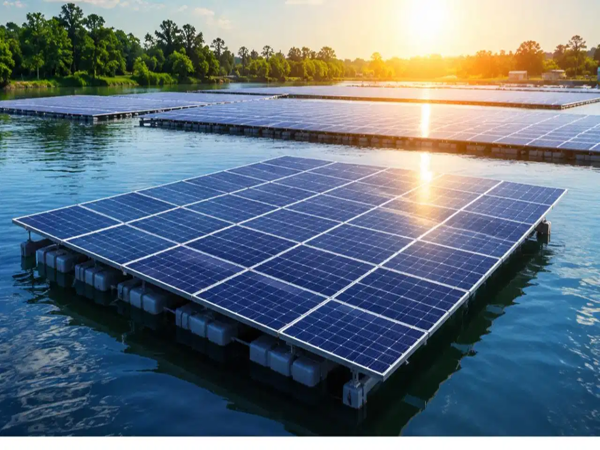
Pradhan Mantri Surya Sarovar Yojana: We have all seen solar panels installed on open grounds or rooftops. However, the method of generating electricity is about to undergo a complete transformation. The Central Government has taken a major decision in the energy sector. Chaired by Prime Minister Narendra Modi, the Cabinet has given the green signal to the ‘Pradhan Mantri Surya Sarovar Yojana’. The government has allocated a budget of ₹5,070 crore for this scheme.
The biggest advantage of this scheme is that large tracts of land or fields will no longer be required for electricity generation; instead, floating solar panels will be installed on the surface of ponds and water bodies. This will not only conserve precious land but also strengthen the power grid, ensuring uninterrupted electricity supply for the general public.
Power plants on water; target set at 5,000 MW
Currently, floating solar projects in the country generate only around 700 MW of electricity. The government's new scheme aims to raise this figure to 5,000 MW. A key feature of this initiative is the integration of large battery systems (energy storage) with these projects. This means that even during adverse weather or in the absence of sunlight, a minimum of two hours' worth of electricity (totaling 10,000 MWh) will remain stored, ensuring that the power supply to households is not interrupted. The government plans to approve and implement these projects between the financial years 2026-27 and 2030-31.
Government to provide financial aid worth crores to project developers
Installing solar panels on water is neither a small nor an easy task; it involves significant investment and risk for companies. Therefore, to ensure the scheme's success, the government is providing substantial financial assistance. For every floating solar project that becomes operational, the government will provide direct financial aid of ₹1 crore per megawatt.
Additionally, various assessments must be conducted before the projects can be launched. Factors such as water depth, local environmental conditions, and the suitability of the site for a plant need to be assessed. The government will provide separate funding of up to ₹50 lakh for each project to cover these initial investigations and preparatory activities.
What are the benefits for the public and the country?
This scheme is not limited to a single state but covers the entire country, with impacts visible across multiple fronts.
Land conservation: Previously, setting up large solar plants required vast tracts of land. Now, by utilizing large factory ponds and water bodies, conflicts and competition over land acquisition will be eliminated.
Environmental benefits: The scheme is effective in reducing pollution; it is expected to cut carbon emissions (pollution) by approximately 10 million tonnes annually.
New employment opportunities: This scheme will accelerate the domestic manufacturing of solar panels, cells, and floating solar systems. The entire associated value chain is expected to generate full-time employment for around 16,000 to 17,000 people.
Disclaimer: This content has been sourced and edited from TV9. While we have made modifications for clarity and presentation, the original content belongs to its respective authors and website. We do not claim ownership of the content.
-
Premier League family legacy rolls on as Rio Ferdinand's son signs professional deal

-
Friendship Day 2026: Can’t Meet Your Bestie? Try These Fun Digital Celebration Ideas!

-
Italian Conman Built Fake Roman Amphitheatre, Fooled, Charged Tourists For Over A Decade
-
CWG 2026: 10 Indian boxers including Lovlina eye gold on Saturday

-
Trump considers air strikes on Iranian energy infrastructure: Report