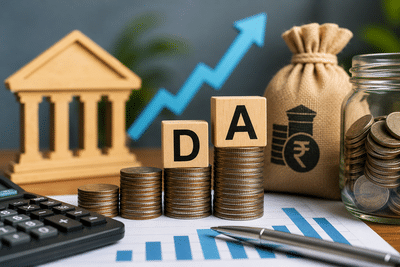
DA Hike 2026: Dearness Allowance (DA) plays a crucial role in the salaries of central government employees and the pensions of retired personnel. It is designed to reduce the impact of inflation by providing additional financial support as the cost of living rises. Since DA revisions directly affect monthly income, government employees and pensioners closely monitor every announcement regarding the latest increase. Here's a detailed look at how Dearness Allowance works, how it is calculated, and the key differences between Variable Dearness Allowance (VDA) and Industrial Dearness Allowance (IDA).
What Is Dearness Allowance (DA)?Dearness Allowance is an additional payment provided by the government to eligible employees to help offset the rising cost of living caused by inflation.
It is paid as a percentage of an employee's basic salary and is revised periodically based on changes in inflation indicators.
For retired government employees, a similar benefit is known as Dearness Relief (DR), which is revised alongside DA.
The primary objective of DA is to help maintain employees' purchasing power despite increasing prices of goods and services.
How Is Dearness Allowance Calculated?The calculation of Dearness Allowance is linked to inflation data.
For central government employees, DA is determined using the All India Consumer Price Index (AICPI), which measures changes in the cost of essential goods and services over time.
Under the 7th Central Pay Commission, the government follows a prescribed formula that considers the average AICPI data over a specified period before announcing a revision.
DA is generally reviewed twice every year:
- January
- July
The revised rate becomes applicable after the government issues an official notification.
Why DA Matters for Government EmployeesSince Dearness Allowance is calculated as a percentage of the basic salary, any increase directly raises the monthly earnings of eligible employees.
The benefits include:
- Higher take-home salary
- Better protection against inflation
- Improved purchasing power
- Increased retirement benefits through Dearness Relief for pensioners
As inflation rises, periodic DA revisions help reduce the financial burden on employees and retirees.
What Is Dearness Relief (DR)?Retired government employees do not receive Dearness Allowance. Instead, they receive Dearness Relief (DR).
DR serves the same purpose as DA by helping pensioners manage the impact of rising living costs.
Whenever the government revises DA for serving employees, a corresponding revision in DR is generally announced for eligible pensioners.
Difference Between VDA and IDADearness-related allowances are not identical for every category of employees.
The two commonly discussed forms are Variable Dearness Allowance (VDA) and Industrial Dearness Allowance (IDA).
Variable Dearness Allowance (VDA)VDA is generally associated with employees whose wages are linked to minimum wage revisions and certain categories of government employees, depending on applicable rules.
Key features include:
- Linked to inflation
- Revised periodically
- Intended to protect real wages against rising prices
IDA is primarily applicable to employees working in many Public Sector Enterprises (PSEs/PSUs).
Its key characteristics include:
- Based on industrial wage structures
- Revised more frequently than standard DA in many cases
- Intended to compensate industrial employees for inflation
The revision schedule and calculation methodology for IDA differ from those applicable to central government DA.
Is Dearness Allowance Taxable?Yes. Dearness Allowance forms part of an employee's taxable salary.
This means:
- DA is added to total salary income.
- Income tax is calculated according to the applicable tax regime and slab.
- Employees should consider DA while planning their annual tax liability.
Tax treatment may vary in specific situations depending on applicable income tax provisions.
Does DA Affect Other Salary Components?An increase in Dearness Allowance can influence other salary-related calculations in certain cases.
Depending on applicable government rules and service conditions, revisions in DA may affect:
- House Rent Allowance (HRA) calculations
- Retirement benefits
- Pension-related computations
- Other allowances linked to basic pay or DA
The exact impact depends on the employee's organisation, service rules, and government notifications.
Why Employees Closely Watch DA AnnouncementsEvery DA revision has a direct financial impact on millions of government employees and pensioners.
A higher DA can:
- Increase monthly income
- Improve household budgeting
- Help offset inflation
- Strengthen long-term financial planning
For this reason, announcements regarding DA revisions are among the most anticipated updates for government employees each year.
The Bottom LineDearness Allowance is an important salary component designed to protect government employees and pensioners from the effects of inflation. It is calculated using inflation data, revised periodically, and paid as a percentage of basic pay. While VDA and IDA serve similar purposes, they apply to different categories of employees and follow separate revision mechanisms.
Understanding how DA is calculated, how it affects salary and pensions, and how it differs from other inflation-linked allowances can help employees better plan their finances and interpret future DA revision announcements.
-
Exciting Kickoff for Delhi Premier League 2026 at Arun Jaitley Stadium

-
New Law Enforces Swift Justice for Exam Paper Leak Offenders

-
Swami Ramdev Critiques Student Protests, Advocates Skill Development

-
Chandrababu Naidu Praises Modi's Leadership Amid Global Political Challenges

-
Takhellambam Inunganbi: A Resilient Journey in Indian Judo