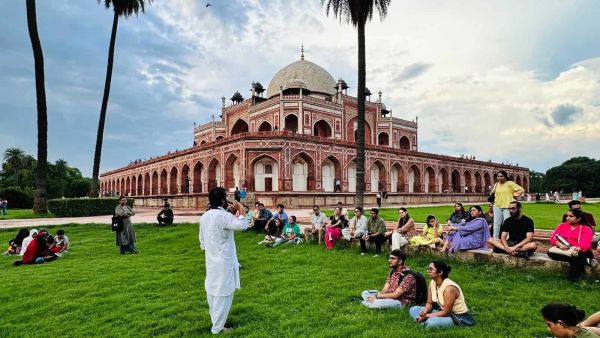
New Delhi: A black crust formed on the sandstone of Humayun’s Tomb in Delhi by years of exposure to air pollution is accelerating the deterioration of the United Nations Educational, Scientific and Cultural Organization (UNESCO) World Heritage Site, a joint study of IIT Roorkee and IIT Kanpur has found.
Published in the International Journal of Architectural Heritage, the study examined black crust samples collected from different parts of Humayun’s Tomb using laboratory techniques to analyse their chemical composition, mineral content and microscopic structure.
The researchers found that the black crust is mainly made up of gypsum — a mineral formed when sulphur dioxide in polluted air reacts with calcium-rich dust and moisture, the study showed.

Thickest black layer in rain-sheltered parts
The gypsum layer traps soot, dust and tiny metal particles from vehicle emissions, construction activities, road dust, biomass burning and industrial pollution, gradually forming a dark coating on the sandstone, it mentioned.
The study found that the thickest black crust developed in rain-sheltered parts of the monument, where pollutants accumulate over long periods, while more exposed surfaces had comparatively thinner deposits because rain naturally washes away some of the pollutants.
According to the researchers, the black crust is more than a surface stain. The chemical reactions that form the crust gradually weaken the sandstone, making it more vulnerable to weathering and long-term deterioration.
Periodic removal of black crust recommended
They said the findings provide scientific evidence linking air pollution to the deterioration of Humayun’s Tomb and could help authorities plan conservation measures for the monument.
The study recommended periodic removal of the black crust using scientifically tested conservation methods, continuous monitoring of pollution around the monument and evaluation of protective coatings before their use.
It also suggested reducing pollution at the source through cleaner transport and lower-emission fuels to slow the formation of the damaging deposits.
Study findings can help priorities preventive measures
The researchers said the findings could help conservation agencies prioritise preventive measures and develop site-specific strategies to protect Humayun’s Tomb from further pollution-related deterioration.
Humayun’s Tomb, built in the 16th century by Empress Bega Begum in memory of Mughal emperor Humayun, is regarded as India’s first grand garden tomb.
The red sandstone and white marble monument introduced several architectural features that later influenced Mughal monuments, including the Taj Mahal.
The UNESCO World Heritage Site is one of Delhi’s best-known historical monuments and attracts visitors from across the world.
-
485 caught for drunk driving over the weekend in Hyderabad

-
Bangladesh HC grants bail to Chinmoy Krishna Das, release unlikely

-
Ram temple donation theft: Slipper hurled at Pappu Yadav

-
BJP backs Karnataka govt’s stand on Cauvery water dispute

-
Top 10 | ABP LIVE Evening Bulletin: Top News Headlines from 2 August 2026 - Evening