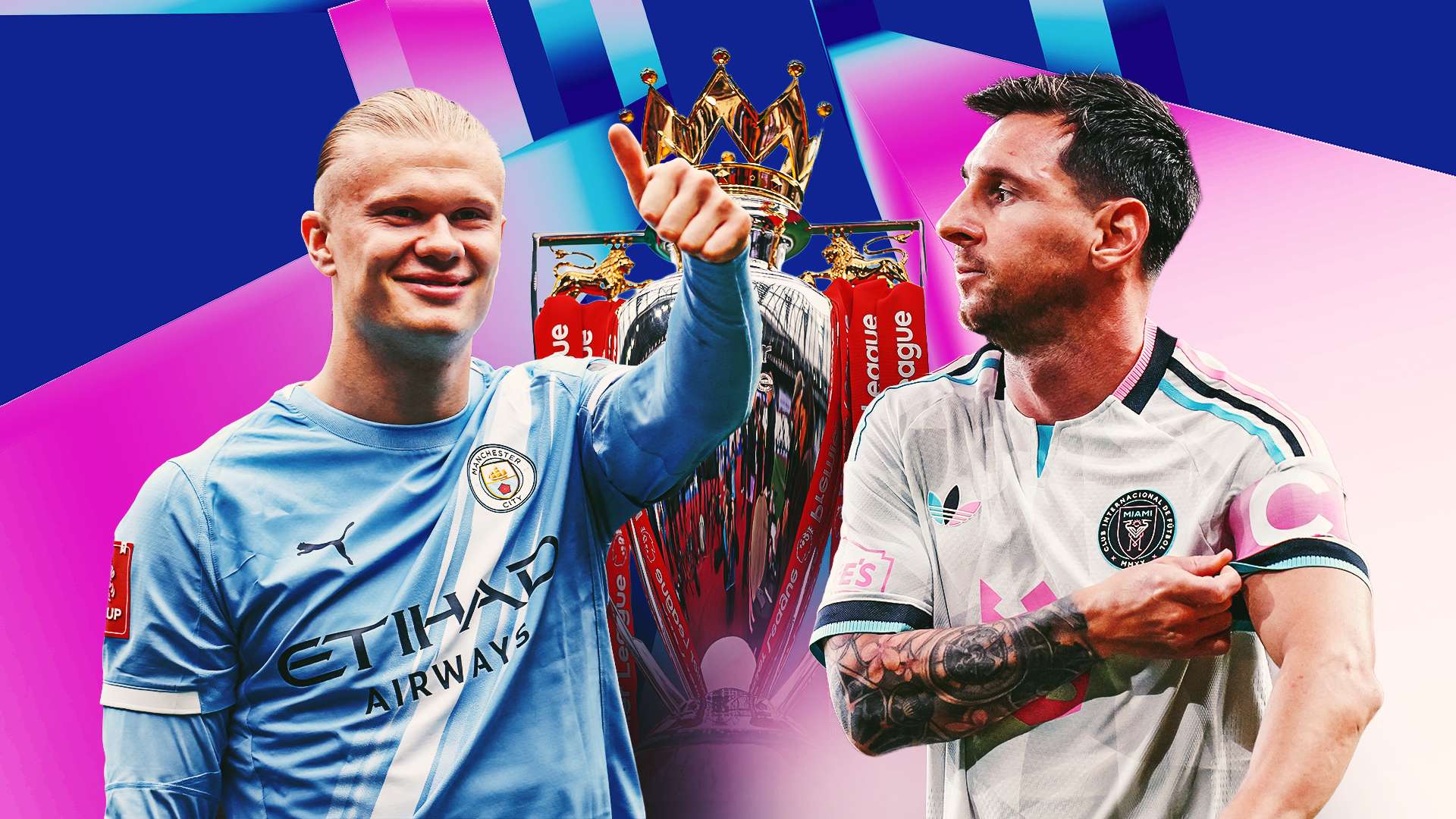
From Erling Haaland’s raccoon to dreaming of Vinicius Jr at Arsenal: five ways to become a proper football nerd after the 2026 World Cup
From choosing a club that will almost certainly break your heart to moaning about refereeing calls, GOAL has put together some useful advice on how to become a serious football fan.
So, you want to become a football fan, do you?
You watched the World Cup and got beyond the initial buzz. You found out that Erling Haaland is really into taxidermy raccoons, and you admired clips of the Tartan Army TAKING OVER! random cities across the United States. You may even have picked up a basic understanding of the tactics involved in all this.
Well, first of all, welcome. This sport is not really gatekept any more, mainly because it simply cannot be. Football is mainstream now. That means there is no room for “hipsters” writing about watch parties for second-division Danish clubs in Brooklyn and acting superior about it. So yes, for those of us who were already here and are a bit snobbish about it, this may take some getting used to.
Truth be told, there is no single correct way to support football. That is part of the beauty of a game followed all over the world. Everyone engages with it differently, even if some versions are deeply irritating - looking at you, American fans who tried to do Norway’s Viking Row. Still, through a sort of tasteful indoctrination, GOAL has assembled five tips to turn you into a fully legitimate and zero per cent performative fan of the sport.*
* Results not guaranteed
Pick a club (but make sure it is a good one)
This is the obvious first step. You cannot really be a true fan of any sport without having a completely unnecessary hill to die on every week. Your emotions need to be tied, somehow, to the fortunes of 11+ men whose actions you have absolutely no control over from one week to the next. That is where the fun lies. In the past, you had to defend the club you chose. The good news is that it is now 2026, we are all adults, and there is a bit more freedom in that regard.
We cannot make the choice for you. But here are a few pointers:
- They really should be in the Premier League (no disrespect to any other major league, but it is simply the easiest product to access)
- They cannot be part of the “big 6”. That means Arsenal, Chelsea, Liverpool, Man City, Man United and Spurs are all out. If success is more or less guaranteed, it spoils the fun and makes you look like a bandwagon fan - which is about the worst thing you can be
- They should not be in relegation danger, at least not in your first year. So that rules out Hull, Ipswich, Coventry, Leeds, Nottingham Forest and maybe Bournemouth
- They cannot be Newcastle (Google it)
- They cannot be Everton (this writer’s personal agenda)
So, in no particular order, your options are basically: Aston Villa, Brentford, Brighton, Crystal Palace, Fulham and Sunderland. There is honour in backing any of those clubs, and there is enough jeopardy too. Fulham, historically, have also welcomed American players. Brighton have a reputation for developing young talent and have a manager with an American background.
Or you can be cool and support Brentford. Also, Lionel Messi is playing in the United States if you want to keep things local.
Become obsessed with transfers that are never going to happen
Right, time for a basic football dictionary lesson. A “transfer” is when a player is exchanged for money. The “price tag” attached to that transfer is often fairly arbitrary, but it moves with the market. This differs from American sports. In basketball, a team might trade one player for another and perhaps some draft picks. In American football and baseball, free agency is huge, with clubs signing out-of-contract players for hundreds of millions of dollars.
In football, trades are much less common, apart from in MLS. Players are usually moved for money. That creates huge “transfer sagas” and a constant rumour cycle in which players are linked with other clubs for, usually, enormous fees. A lot of the time, those rumours are flimsy, fuelled either by agent talk or simply invented on social media. These days, football reporting is actually quite strong, and fake stories tend to get exposed quickly.
But almost every year, your club will be “linked” with a player it is never actually going to sign. Deep down, you will probably know the move is not happening. Either your club will not pay enough, or the player will not want to join in the first place. Arsenal fans are living through that right now with the impossible dream of signing Real Madrid’s Vinicius Jr. Even so, the whole point in these situations is to get your hopes up and convince yourself that your team is about to make the blockbuster signing that changes everything.
Start blaming the refs
This is perhaps the most familiar emotion for an American fan - or, really, for a fan of any background.
Disliking referees is one of the most universal feelings in sport. No matter what happens, whether your side loses by three touchdowns or thrashes a rival by 40 points, the referee somehow still has to become one of the main characters. This writer is actually strongly pro-referee. Officials do an incredibly difficult job every week under huge pressure, and they are judged on the 1-in-1,000 calls they get wrong rather than praised for all the decisions they get right.
But having a go at officials is basically a universal custom - even when a match is refereed perfectly. There is always some tiny injustice to point at, whether it is a challenge that probably was not a foul or a VAR mistake. Just remember: there is always an agenda against your team, whether you are Premier League champions or fighting relegation. The refs are not there to do a job; they are there to ruin your day - and destroy your club.
The trick is not to be abusive or nasty. Instead, aim for a slightly passive-aggressive tone. Try these out:
Well, I’ve seen them given
He’s given the referee a decision to make
[Insert club] would have gotten a pen there
Bonus points if you can work out a connection between a referee’s birthplace and one of the teams in the match they are officiating. This matters because a lot of referees happen to come from Northern England, which is enough to convince many supporters that the entire refereeing set-up in the U.K. is pro-Man United (only sort of true).
Buy a jersey of a team you have never watched and do not support
Let us be clear: you should obviously own a shirt of the club you support. GOAL recommends away kits because they tend to be a bit cooler, but you cannot always be picky. For instance, if you are a Brighton fan, buy a Brighton shirt.
But that is entry-level football fandom. If you want to reach the next stage, it becomes important to own jerseys of clubs you have no real connection to, provided they are not rivals. For example, this writer supports an unnamed Premier League club from the North of England. Because of that, they would never buy a shirt of any other Northern English club under any circumstances. Buying another Premier League kit would be a huge shock, to be honest.
And yet, to prove your credentials, it is necessary to invest in shirts worn by teams elsewhere, ideally clubs with much smaller fanbases than your own. The older the shirt, the better - within reason. The sweet spot is usually between 2008-2020. It is a way of showing that you know a lot about the game, even if you do not.
Good examples for Premier League fans include:
- Mid-table Italian league clubs with Kappa kits
- Pretty much any Liga MX club
- Real Sociedad, Athletic Bilbao, Rayo Vallecano, Real Betis
You do not need to know even one player from the team. In fact, that might make the shirt even cooler.
Start hating international breaks
Once you begin following football more seriously, you will realise there is simply too much of it. The Premier League season is 38 matches long. Add European competitions and domestic cups - the FA Cup is a bit like March Madness, but not really, and you will fall in love with it - and teams end up playing around 50 matches a year. That is far too many. Everyone is tired and injured. But becoming a football fan means ignoring the strange reality that you are watching grown men wear down their bodies in real time.
Thankfully, there are breaks from time to time. Three to four times each season, there are “international breaks”, when players leave their clubs to play exhibition matches for their national teams while the club season pauses. Of course, not every player gets selected, but you can safely assume that the best players from your side will fly off somewhere to represent their country - a bit like the World Cup, but sh*t!
Sounds like a pleasant break, right? WRONG. These interruptions do not just disrupt your weekend routine, they also raise the injury risk. Every international break, it seems, some fairly important footballer picks up some sort of knock. It all feeds into international tournaments such as the World Cup or the Copa America, but once you properly understand this sport, you will hate these breaks. Trust.
-
Is it game over for Gianni Infantino? UEFA speeds up move to unseat FIFA president after World Cup stake-sale U-turn

-
India's rich cultural tapestry takes centre stage as Commonwealth baton heads to Ahmedabad

-
Controversial Pakistan Spinner Usman Tariq Reveals Sunil Narine's Advice After Tim David Questioned His Bowling Action In The Hundred | VIDEO

-
Kai Rooney, Jacey Carrick among 15 Manchester United scholars as Michael Carrick attends signing ceremony

-
Jose Mourinho speaks on Endrick, Dumfries and absent World Cup stars after Real Madrid’s 2-2 draw with Fiorentina