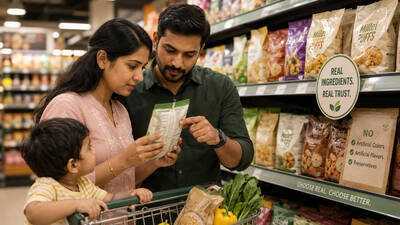
There was a time when parents chose children's snacks based on familiar brands, colourful packaging or price. Today, many are making a different decision altogether: they are turning the packet over.
Reading ingredient labels has become a routine part of grocery shopping for a growing number of families, with parents scrutinising grain types, sugar sources, cooking oils and additives before placing a product in their basket. As this behaviour becomes more common, it is reshaping India's packaged food market and rewarding brands that prioritise transparency over marketing claims.
The difference is often visible only on the back of the pack. Two snacks may appear nearly identical on the shelf, yet one may rely heavily on refined starch, palm oil and artificial additives, while another is made with millets, vegetables or protein-rich ingredients and avoids ingredients many parents are actively trying to reduce. It is this distinction that increasingly influences buying decisions.
Brands such as Troovy and Slurrp Farm have built their offerings around this shift in consumer behaviour. Rather than relying solely on front-of-pack claims, they focus on ingredient-led formulations, using familiar grains, carefully selected oils and recipes that deliberately exclude artificial colours, flavours and preservatives.
This reflects a broader change in how parents evaluate nutrition. Instead of simply looking at calorie counts or protein content, many are beginning with a more fundamental question: What is this product actually made of? The approach differs from that adopted by youth-focused snack brands such as SuperYou and Max Protein. Their products are largely positioned around performance nutrition, highlighting higher protein content, controlled calories and macronutrient targets that appeal to fitness-conscious consumers.
Parent-focused brands, on the other hand, are placing greater emphasis on the quality and recognisability of ingredients. The objective is not only to deliver nutritional value but also to offer products whose formulations are easy for families to understand and trust. In many ways, it is the difference between designing a product around the nutrition panel and designing it around the ingredient list. While younger consumers may be drawn to protein numbers or calorie counts, parents are increasingly reading every line of the ingredient declaration before considering those nutritional figures.
Regulation also plays an important role in this conversation. India's Food Safety and Standards Authority (FSSAI) regulates nutrition and advertising claims, but "clean label" is not a recognised certification or a defined nutrient claim. It is not a badge that companies can obtain. Instead, its credibility depends on thoughtful formulation, transparent disclosure and ingredient choices that stand up to consumer scrutiny.
As awareness around food choices continues to grow, the brands most likely to earn long-term loyalty may not be those with the loudest marketing campaigns, but those whose products inspire confidence once shoppers flip the packet over. In an era of informed parenting, trust is increasingly built one ingredient list at a time.
-
Newcastle United confirm signing of Lukas Hornicek

-
US used 2,000-pound bomb on Iran family home, killing 3: Report

-
19 ministers inducted into CM Shivakumar-led cabinet in Karnataka

-
Chana Dal Cooking Tips: Common Mistakes That Keep Dal Hard And How To Avoid Them

-
Why Maruti Suzuki Victoris Is Our 2026 Car Of The Year