3 August 2026
Would Vinicius Junior joining Arsenal be the biggest signing in Premier League history? We have ranked the current top ten and reached a conclusion.
Yes. It absolutely would. It would be enormous, even bigger than these game-changing transfers.
“What we have done is bring in a really top player, one of the best players in the world. He is world class – a fantastic footballer.”
Admittedly, that is not the Sir Alex Ferguson quote about Juan Sebastian Veron which first springs to mind, but the Scot’s reaction at the unveiling of a British-record signing summed up the mood from a happier era at Manchester United.
Having won three Premier League titles in a row, Ferguson felt his side had reached “a point when they have to be challenged”. It had been nearly two years since Mikael Silvestre arrived as their most recent outfield addition, so it was little surprise that “everyone sat up in the dressing room” when Veron came in.
As Mike Phelan later recalled: “He walked across and the training session stopped. All the players were like, ‘Wow, it’s Veron!’ – Scholes, Giggs, Keane, the lot. They all shook his hand. He made such an impact.”
Not on the pitch itself, of course. Ferguson never truly found the best way to use Veron’s qualities, especially not alongside the more naturally dominant Roy Keane, and so a “f**king great player” was seen only in flashes at Old Trafford before moving on to Chelsea.
As the story goes, Sol Campbell was desperate to win the Premier League title at White Hart Lane, so he joined Arsenal.
Barcelona had put a huge contract offer on the table, Inter were interested and there was also talk of moves to Real Madrid, Bayern Munich or Liverpool. But it was Arsenal who, after a run of secret midnight meetings in David Dein’s garden to stop news of the dramatic switch leaking out, completed what felt like the coup of the century.
Even without the added context of Campbell crossing the fierce north London divide, it was a monumental moment. One of the Premier League’s best defenders moving upwards to join a title contender on a free transfer represented a major change in the balance of power involving several clubs.
“There were literally gasps. The media were so surprised,” said Arsenal’s senior media officer, who had been tasked with gathering a press pack convinced they were there for the grand unveiling of £6m Richard Wright.
The middle chapter of one of football’s great palindromic careers had felt inevitable for some time. Andriy Shevchenko became the golden obsession Roman Abramovich simply had to satisfy, whatever the cost.
Chelsea were first linked with him in that wonderfully eclectic first summer after the takeover in 2003. The rumours continued the following year, with the owner’s personal wish said to be the decisive factor. Then in 2005, even after Shevchenko’s major humiliation at the hands and jelly legs of Jerzy Dudek, Milan still felt compelled to reject a world-record offer for their talisman.
It was still huge – a British-record transfer – when Chelsea’s persistence finally paid off 12 months later. It cost them £30.8m, a staggering wage packet, and basically the first reign of Jose Mourinho.
Shevchenko remains the player who made his Premier League debut after winning the Ballon d’Or. It is the presumed long-running frustration of Vinicius that even if he joins Arsenal, that still will not change.
The “complete fanny” who probably still wakes up in cold sweats at the thought of the bad weather, “disgusting” food and “porcelain” women he encountered in Manchester never really settled in the north west of England.
To be fair, it was quite a cultural adjustment: Angel Di Maria had spent the previous four years living in Madrid, then after Old Trafford moved on to Paris, Turin, Lisbon and his home city of Rosario.
And he perfectly captured an era of lavish, ego-massaging and counter-productive excess which Manchester United have only recently started to leave behind.
The man of the match in the most recent Champions League final was a dreadful fit under new manager Louis van Gaal; the Real Madrid regular must not have read his emails.
But at least, as Ed Woodward once boasted: “Di Maria saw a 12-times increase on Google searches on the day of his transfer from Real Madrid.” And that, apparently, is what really matters.
A Premier League club that had survived relegation by only a handful of points the previous season, signing one of the stars of that summer’s World Cup ahead of numerous other suitors?
Such is the absurdity of Tottenham that this sort of unlikely history could yet repeat itself more than three decades later, depending on the precise identity of Roberto de Zerbi’s “bomba” signing. The nearest equivalent to Jurgen Klinsmann in 1994 might be Harry Kane, which feels fitting.
But in truth there is no obvious comparison. Klinsmann was a world champion, a UEFA Cup winner with Inter and a Bundesliga Golden Boot winner at Stuttgart, and “one of the best players in the world” according to manager Ossie Ardiles, when he joined a club provisionally docked 12 points and banned from taking part in the FA Cup the following season.
For all the noise about the Premier League’s financial muscle, only twice since football was invented in 1992 have English clubs broken the world transfer record.
Paul Pogba, largely because of Paris Saint-Germain’s extraordinary Neymar madness a year later, may forever remain the last.
It is fair to say Manchester United perhaps got swept up in the frenzy of proving they could do it, rather than properly considering whether they should. The very idea of beating Real Madrid to a player, of completing a deal beyond the reach of Arsenal or Liverpool, became almost as important as Pogba himself.
Manchester United needed a statement, a marquee name, a vanity project and proof of their pulling power. There is huge regret over how it all turned out ten years on, but it remains some feat that they managed to pull it off – at enormous expense – in the first place.
Premier League signings from Real Madrid do not always succeed. But they always arrive with a certain glamour, and never more so than when Arsenal irritated Cristiano Ronaldo by taking away his chief creator.
Mesut Ozil had been a central figure in the Real Madrid side for three seasons, making more than 50 appearances in each one after earning his move to the Bernabeu by humiliating Gareth Barry on the World Cup stage.
Then Arsenal swooped in, smashed their transfer record and signed a genuine superstar.
After failing to land Luis Suarez and Gonzalo Higuain that summer, Arsenal bounced back with a move that felt almost impossible to believe at the time, their standing having dipped badly.
Ozil never quite showed he could raise it again, but it is hard to imagine a signing ever being celebrated so wildly outside a club stadium again.
Has an entire football club ever collectively displayed such tiny-penis energy?
Ole Gunnar Solskjaer later admitted it was “probably a wrong choice” to bring Cristiano Ronaldo back to Manchester United, but he was used in a joyless campaign also featuring Ferguson, Rio Ferdinand, Patrice Evra and Bruno Fernandes, aimed specifically at appealing to the world’s most expensive and awkward narcissist.
Manchester United, actually in a decent place in the summer of 2021, sacrificed all of that at the altar of Ronaldo purely to stop him joining the Etihad.
An absurdly embarrassing transfer was at the same time absolutely massive; Ronaldo’s return had been a Premier League fantasy for more than a decade, made real more through panic than planning, but still a major coup.
By signing Ronaldo, Manchester United secured the biggest cult of all time. Sorry for the typo.
Sir Bobby Robson once said he “told the board” to sign either Alan Shearer or Ronaldo during his only season as manager of Barcelona in 1996/97. The Barcelona hierarchy promptly made the latter the most expensive player in the world, a status he reclaimed 12 months later when he moved to Inter.
Shearer briefly took that title away as the filling in a Ronaldo sandwich when he turned Manchester United down for the final time and joined Newcastle.
With inflation, the transfer would be worth well over £200m in today’s money. It was a statement of almost absurd ambition, a level of investment without precedent which, as manager Kevin Keegan said, proved “we are the biggest thinking team in Europe now”.
Not the best, of course; nothing was going to stop Newcastle finishing second behind Manchester United in that era.
“This is a real statement of intent as to the ambitions of this club,” said Mark Hughes.
“The biggest challenge was getting people to come to Manchester City. It was very, very difficult to get people to sign for the club at the time,” chief executive Garry Cook added.
“During that week, we created a list of marquee players around the world and we tried to identify anyone we could bring to the football club because, if you don’t, the football club doesn’t get taken over.”
Robinho was the one who took the bait, hurt by the feeling that he was no longer wanted at Real Madrid, and loosely courted by Chelsea until Manchester City, fresh from their takeover just hours earlier, forced the move through.
It was the transfer that changed everything. Robinho never adapted to the Premier League, but that was almost beside the point. As a symbolic signing, a mid-table Manchester City beating elite rivals to a Real Madrid player established them as a genuine force and got the wheels turning for an era of dominance.
-
Jos Buttler Makes Bold Vaibhav Sooryavanshi Prediction After Breaking T20 Runs World Record
-
BCCI Standardises Bronco & 2K Fitness Tests To Fix Player Breakdowns Post England Tour
-
MS Dhoni Had One Strict Rule Nobody Dared Break, Rahane Says 'No One Was Allowed'
-
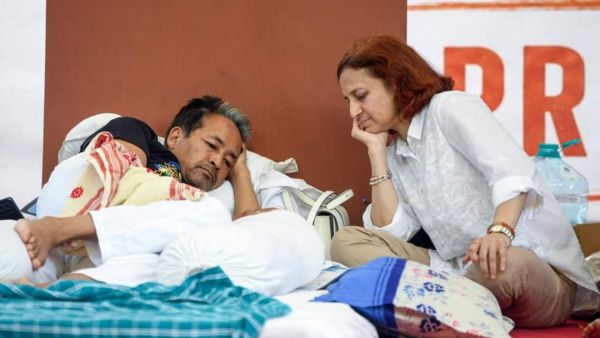
'Wife Tried To Get Rahul Gandhi To End My Fast, But Got No Positive Response': Sonam Wangchuk
-
India's EV Sales Surge 46-Fold To 2.3 Million Units In 2025; Market Seen At $191 Billion By 2034