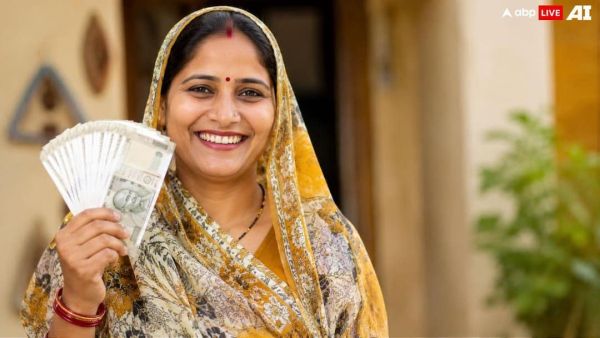
Women in Delhi can now begin applying for financial assistance under the newly approved Delhi Lakshmi Yojana, with the Delhi government launching the registration portal as it prepares to roll out the flagship welfare scheme.
Approved by the Cabinet led by Chief Minister Rekha Gupta on July 28, the scheme promises Rs 2,500 per month to eligible women through the Direct Benefit Transfer (DBT) mechanism. The Delhi government has earmarked Rs 5,110 crore for the initiative in its 2026-27 Budget.
Announcing the rollout, Gupta said the portal would become operational from August 1 and expressed hope that, following verification of applications, the first instalment could be credited by Raksha Bandhan, according to NDTV.
As registrations begin, here is a closer look at who qualifies, who is excluded, the documents required and how beneficiaries can apply.
Who Can Apply Under Delhi Lakshmi Yojana?
The scheme has been designed for women who meet a set of eligibility conditions laid down by the Delhi government.
Applicants must be permanent residents of Delhi and fall within the 21 to 60 years age bracket. Residence in the national capital must be supported by valid proof while submitting the application.
Another key condition relates to household income. The applicant's annual family income must not exceed Rs 3 lakh, making the scheme primarily targeted at economically weaker households.
The government has also restricted the benefit to one eligible woman per family.
Apart from financial criteria, applicants must not have a criminal record, and no member of their family should have a criminal record.
Who Is Not Eligible?
The Delhi government has also identified several categories of women who will not be eligible to receive the monthly assistance.
Women who are income taxpayers, GST return filers, government employees or pensioners have been excluded from the scheme.
According to Business Standard, women with more than three living children will also not qualify, even if they satisfy the other eligibility conditions.
The report further states that beneficiaries will also be ineligible if they belong to a family:
- With a member employed by the Central Government, State Government, a Public Sector Undertaking (PSU) or any government organisation
- That owns a four-wheeler
- With annual electricity consumption exceeding 2,400 units
- Already receiving benefits under any government pension or regular financial assistance scheme
Documents Required For Registration
Applicants will need to keep several documents ready while completing the online application process.
According to the Delhi government and official guidance, these include:
- Aadhaar card for identity verification
- Proof of residence in Delhi
- Aadhaar-linked bank account details for Direct Benefit Transfer (DBT)
- Passport-size photograph
- Active mobile number
- Income-related documents, wherever applicable
- Recommendation letter issued by the applicant's local MLA or MP
Submitting complete and accurate documentation is expected to be an important part of the verification process before benefits are released.
How To Register
The Delhi government has outlined a digital application process for the scheme.
Applicants need to visit the official Delhi Lakshmi Yojana portal, register using their personal details and mobile number, and complete the online application form.
The form requires applicants to furnish identity, address, income and bank account details before uploading the prescribed supporting documents, including Aadhaar, residence proof, bank details and the recommendation letter.
After submission, applicants are advised to retain the acknowledgement or application number to track the status of their application.
How Will The Rs 2,500 Be Paid?
The monthly financial assistance will be transferred directly into beneficiaries' bank accounts through the Direct Benefit Transfer (DBT) system. Eligible women will be able to choose between two payment options.
Under the first option, Rs 1,500 will be deposited into a recurring deposit (RD) or fixed deposit (FD), while the remaining Rs 1,000 will be credited to a Digital Rupee wallet, which can be used only for goods and services approved under the government's prescribed list.
Alternatively, beneficiaries may opt to have the entire Rs 2,500 deposited into an RD or FD. The government has said this option is intended to encourage long-term savings and capital creation.
The recurring deposit will have a three-year lock-in period, after which the accumulated amount, along with the interest earned, will be credited to the beneficiary's bank account.
While the registration process has now commenced, payments will be released only after applications are scrutinised and verified by the government.
-
Hyderabad advocate murder: Police granted custody of Mahboob Alam
-
Fatal accident by Hyderabad teen puts underage driving in focus
-
Does Iran still need nuclear weapon after Hormuz leverage?
-
Exclusive: How Malavika Mohanan bagged Iran’s Majid Majidi film

-
Bigg Boss 20 first promo: Salman Khan hints at SRK’s entry