Nguyen Quy Bao, 18, graduated from the Foreign Language Specialized School, a selective high school under Vietnam National University, Hanoi.
Tsinghua is covering his tuition in full for the first year, worth 30,000 yuan (US$4,430). It will reassess the award annually against his results.
The university ranks 14th in the world in the QS World University Rankings 2027, released in June, second among mainland Chinese institutions behind Peking University. It sits 12th in the Times Higher Education 2026 table, and first in China.
Bao belonged to the first cohort of applicants required to sit the China Scholastic Competency Assessment, a standardized entrance exam established by the China Scholarship Council with the Ministry of Education. Its first global sitting was held on Dec. 21, 2025, and 306 Chinese universities require it for the 2026 undergraduate intake.
Mathematics is compulsory for every candidate, physics and chemistry depend on the intended major, and Chinese-taught programs carry a separate Professional Chinese paper. Each subject paper runs 48 multiple-choice questions in 60 minutes, scored out of 100 and sat online under camera proctoring.
No past papers existed. Bao worked through the Chinese school curriculum himself and ordered a Chinese revision series to Vietnam. He sat math and physics.
The math paper drew mainly on Vietnamese grade 11 and 12 material, he said, though it ranged across sets, solid geometry, probability, calculus and functions.
Physics was harder, with kinematics accounting for around 30% of questions and the rest covering electric and magnetic fields, waves and optics.
“The exam asks about everything in the high school curriculum, which made it pretty tough,” he said.
|
Nguyen Quy Bao. Photo courtesy of Nguyen Quy Bao |
Applications to Chinese universities also require transcripts, language certificates, an essay, a self-introduction video and the exam results.
Bao held a GPA of roughly 9.6 to 9.8 on Vietnam’s 10-point scale and scored 7.5 on IELTS. He passed HSK 6, the highest of the six standard levels in China’s official Chinese proficiency test, below its advanced 7-to-9 tier.
His essay opened on the foam boats. It then moved to an online Tsinghua research summer camp, where he worked as a team assistant on a project applying artificial intelligence to autism spectrum disorder diagnosis, running literature searches and drafting the introduction.
“Mechanical engineering at the school integrates knowledge of robotics, AI and biomedical engineering, which fits perfectly with the research path I want to follow,” he wrote.
He had visited Suzhou and Shanghai on two cultural exchange trips in his 10th and 11th grade years.
“Chinese people are very enthusiastic about supporting international students, from teachers to shop assistants. That experience made me even more confident about studying abroad,” he said.
At interview, faculty largely left his intended field alone and ran through questions on society, culture, history, economics and finance. The university required candidates to keep the questions confidential.
“The professors wanted a comprehensive view of society. I answered without stumbling much, so I think my confidence went some way toward convincing them,” Bao said.
Nguyen Mai Chi, who advised him on his application, said he settled on a direction early and then sought out competitions and activities to build experience.
About 23,500 Vietnamese were studying in China as of 2023, roughly double the 2020 figure, according to Chinese Embassy data cited by the British Council.
The same report recorded around 146,000 HSK sittings in Vietnam in 2025, more than in any other country.
Vietnam’s Ministry of Education and Training counted more than 250,000 Vietnamese studying abroad in 2025, with China among the seven most popular destinations.
-
Telangana HC junks plea challenging KTR’s election to Sircilla
-
Who Should Avoid Face Packs? Know The Potential Skin Problems They May Cause

-
Mahindra XUV 7XO Rival Incoming: MG Hector Hawk Plug-In Hybrid Debuts Soon

-
RSS Chief Mohan Bhagwat To Inaugurate Rs 2 Cr Sports Complex, Auditorium In Buldhana District
-
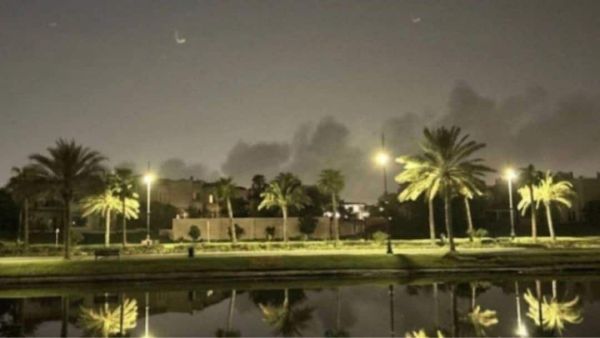
Explosions Rock Dubai's Jebel Ali Industrial Area; Thick Smoke Seen Amid Iran War: WATCH