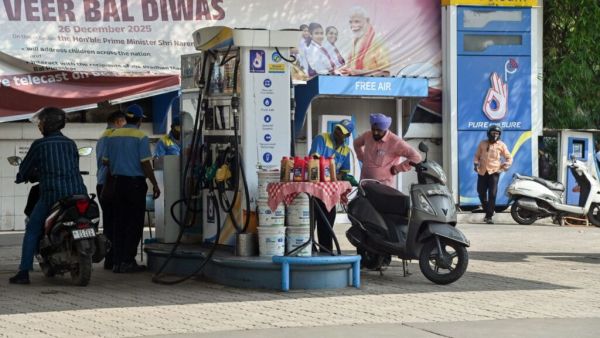
The Supreme Court has made a significant suggestion to ensure timely compensation for those injured in road accidents and improve road safety. The court has directed the central government and the Insurance Regulatory and Development Authority of India (IRDAI) to launch a pilot project in which petrol pumps will not dispense petrol or diesel to vehicles without valid insurance. If implemented, this rule could create significant problems for drivers of uninsured vehicles.
A bench of Justices Sanjay Karol and Prashant Kumar Mishra noted that a large number of uninsured vehicles ply the country’s roads. Consequently, in the event of a road accident, victims face significant delays in receiving compensation, often facing lengthy court proceedings. The court noted that the Motor Vehicles Act requires all vehicles to be insured, but this rule is not being fully enforced.
56% vehicles are uninsured
In its order, the Supreme Court stated that approximately 56 percent of vehicles in the country operate without valid insurance. In light of this, the court recommended that petrol pumps check vehicle insurance and deny fuel to vehicles that are not valid. The court also noted that the Ministry of Petroleum and Natural Gas has expressed no objection to this proposal in principle. The court believes this will encourage people to insure their vehicles on time.
The court directed the central and state governments to link Automatic Number Plate Recognition (ANPR) cameras installed on roads and highways to insurance databases and the VAHAN portal. This will automatically identify uninsured vehicles and enable the issuance of e-challans. Traffic police have also been directed to provide handheld devices and mobile apps that can be used to check vehicle insurance on the spot.
The Supreme Court made several other suggestions.
The Supreme Court has ordered that third-party insurance for new private cars must now be taken for four years, instead of three. For new two-wheelers, this period has been extended from five to six years. The court has also directed insurance companies to clearly inform customers which insurance is mandatory and which is optional.
Additionally, the Supreme Court has expressed concern over the delays in road accident compensation cases. The court has directed all state police to expedite the filing of Detailed Accident Reports (DARs) in old cases. All relevant parties have been asked to submit compliance reports by August 14th and a progress report during the next hearing on August 18th.
-
Why hold the city ransom?: Delhi HC on Jantar Mantar protests
-
Man aboard Konark Express arrested with 18 kgs of ganja
-
Govt shifts to technical talks with Meta on deepfakes, CSAM

-
Watch: Did Lock Upp 2 winner Shreya Kalra confirm her wedding?

-
Pooran Blitz Fires MI London to Seven-Wicket Win Over Sunrisers at The Oval