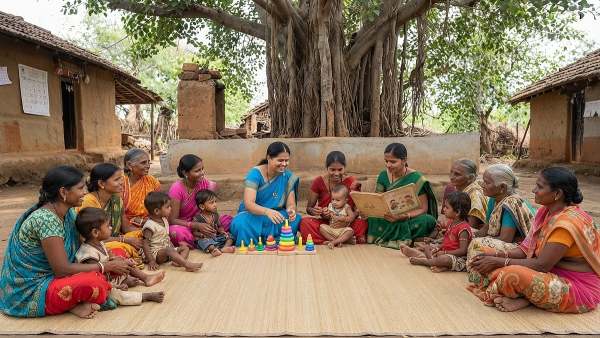
From Aarambh to Anganwadi networks, a grassroots model is transforming the first 1,000 days of child development
The first thousand days of a child's life—from conception until the age of two—represent one of the most critical windows for brain development, nutrition, emotional bonding and lifelong health. While scientific evidence has long highlighted the importance of this period, translating research into large-scale community action has remained a challenge. Maharashtra, however, is demonstrating that with by strengthening existing government systems, early childhood development (ECD) can be integrated into routine public service delivery at scale.
The Aarambh model
At the heart of this transformation is Aarambh, an innovative parenting program being implemented by the Government of Maharashtra with support from UNICEF and the Mahatma Gandhi Institute of Medical Sciences (MGIMS), Sevagram. Rather than creating new or parallel structures, Aarambh works through the Integrated Child Development Services (ICDS), the health system and community institutions to ensure that every child receives nurturing care during the earliest years of life. The model is rooted in the WHO-UNICEF Nurturing Care Framework and recognizes that good nutrition alone is not enough; children also require responsive caregiving, early learning opportunities, health services and safety to reach their full developmental potential.
Convergence at the grassroots
-
Sindhu, Satwik-Chirag Lead India's Challenge At BWF World Championships 2026

-
'Apple Is Getting This Wrong': OpenAI Alleges As It Releases Chats & Emails With iPhone Maker In Massive Legal War

-
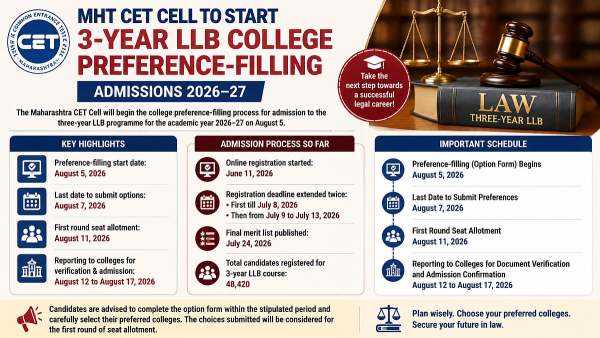
MHT CET 3-Year LLB Admissions 2026: College Preference Filling Begins August 5
-
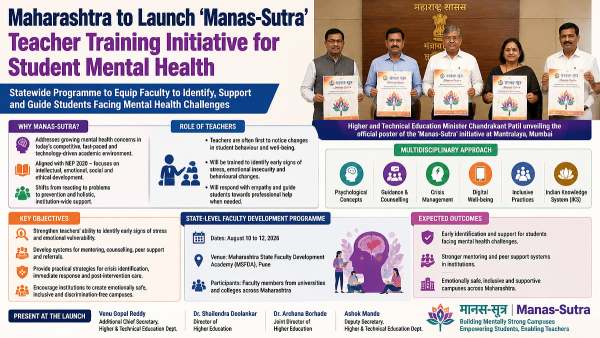
Maharashtra To Launch ‘Manas-Sutra’ Initiative To Train College Teachers In Student Mental Health Support
-
Red Sea Ship Attack: Indian-Flagged Vessel Sinks Off Yemen, All 13 Indians Rescued; MEA Condemns Incident