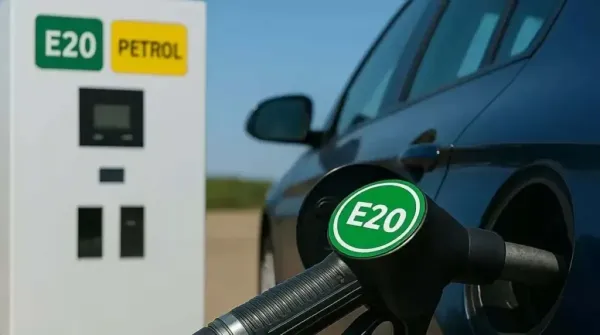
During the hearing, a bench of Justice Sanjay Karol and Justice Prashant Kumar Mishra noted that a large number of vehicles in the country still ply the roads without insurance. This prevents victims or those injured in road accidents from receiving timely compensation. The court directed the insurance regulator IRDAI and the Ministry of Road Transport and Highways to jointly develop a foolproof system where fuel can be dispensed at petrol pumps only after an online vehicle insurance verification. The use of Automatic Number Plate Recognition (ANPR) cameras is also suggested as a promising option.
Citing the 2024-25 report of the Parliamentary Standing Committee on Finance, the Supreme Court stated that approximately 56 percent of vehicles in the country today are uninsured. This staggering figure represents approximately 165.4 million vehicles, while the total number of registered vehicles in the country is approximately 304.8 million. The court clarified that under Section 146 of the Motor Vehicles Act, third-party insurance is absolutely mandatory for every vehicle, but the rules are being flouted. If uninsured vehicles are barred from receiving petrol and diesel at petrol pumps, such vehicle owners will be easily identified and forced to insure their vehicles in a timely manner. It is a matter of relief that the Ministry of Petroleum and Natural Gas has not raised any objections to this important proposal.
Insurance period extended for new vehicles
Additionally, the Supreme Court, citing its previous 2018 order, has made significant changes to insurance rules. Previously, it was mandatory to purchase third-party insurance for three years for new cars and five years for new two-wheelers. However, the court has now extended this period. According to the new order, it is now mandatory to purchase third-party insurance for four years for new cars and a full six years for new two-wheelers. The court has ordered IRDAI to immediately issue necessary guidelines in this regard. Furthermore, all state police have been directed to provide dedicated mobile devices or digital apps that will allow them to instantly check the insurance status of any vehicle on the spot and issue e-challans against violators.
Big instructions on toll plazas and automatic cameras too
The court also directed that to address the problem of accidents on national highways and long queues at toll plazas, a pilot project be initiated on select routes where vehicles can be identified and toll collected through an automated system without stopping at toll plazas. Furthermore, a modern system for automatically issuing e-challans for uninsured vehicles has been established by connecting ANPR cameras to the databases of the Insurance Information Bureau and the government’s ‘Vahan’ portal. The Supreme Court also reminded that the purpose of compulsory insurance is not merely to fulfill a legal formality; its primary objective is to ensure timely and fair compensation to helpless road accident victims and their families, avoiding the need for court proceedings to seek justice.
-
How to prepare for SSC? Here’s how to land a government job—get tips from experts..

-
After government school teachers, private school teachers to get cashless medical treatment facility; UP government making preparations..
-
Know the important details before planning a visit to the Red Fort and a tour of Delhi on August 15..
-
Pink Saheli Card: These women will no longer be able to travel for free on Delhi buses; know the new rule..

-
You too can visit the Amrit Udyan at Rashtrapati Bhavan for free; book online before visiting and check the schedule..