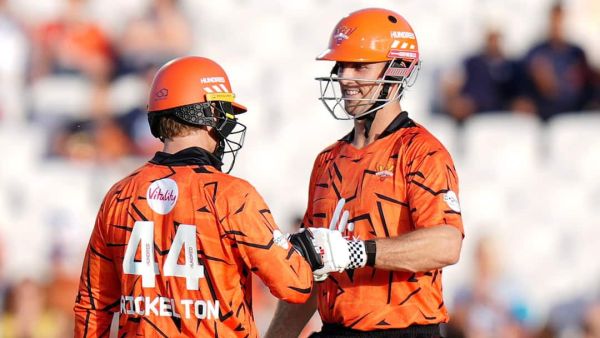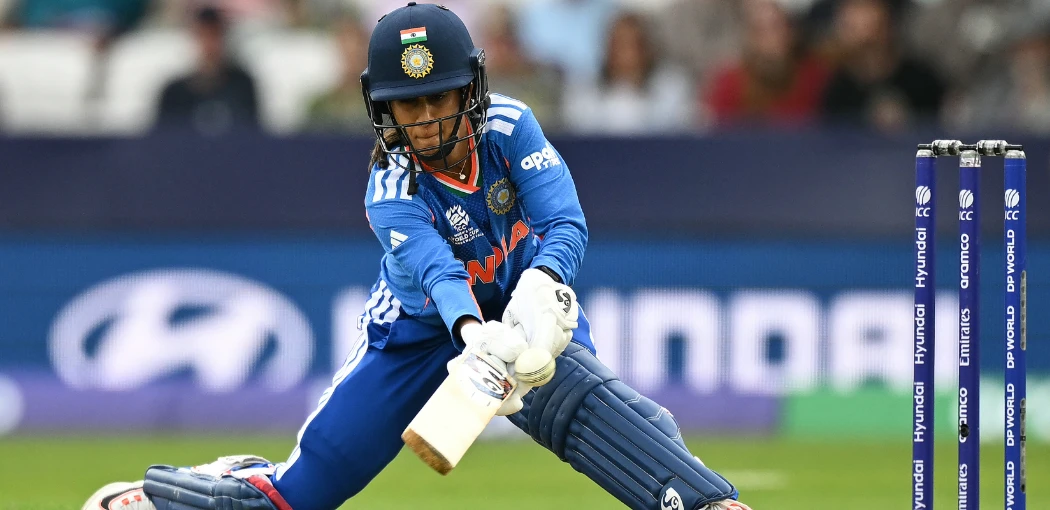
MI London's seven-wicket victory over Sunrisers at the Kia Oval on Saturday was shaped not by a flying start but by the manner in which the side responded to early setbacks. Losing three wickets for 51 runs inside the first half of their chase, MI London required composure before they could apply the finishing power that ultimately settled the contest in their favour.
Early Order Crumbles Under Carse
MI London's chase of 144 began poorly. Will Jacks and James Vince opened the batting, but Jacks lasted only three balls, caught at cover for 2 after being beaten by Brydon Carse's seam movement. Jason Roy, promoted to replace him on his 36th birthday, fared no better — edging Carse to slip for a duck two overs later. The two departures left MI London at 8 for 2, in need of a steadying influence.
Sam Curran, batting at number four, joined Vince and the pair worked diligently through a difficult period. Potts and Ellis maintained disciplined lines while Howell and Abrar Ahmed introduced spin, but Curran and Vince held their nerve. Vince contributed 17 from 18 balls before being bowled through the gate by Nathan Ellis, who nipped one in to take out off stump and leave MI at 51 for 3 after 44 deliveries. The required rate had climbed, but Curran remained at the crease.
Curran Holds the Innings Together
Sam Curran's innings was the structural foundation of MI London's victory. He batted through from the fifth over to the end, finishing unbeaten on 60 from 39 balls. His knock was not built on a single explosive passage — it evolved gradually, moving from careful management of a difficult pitch surface early on to authoritative strokeplay once conditions eased under the lights.
In the middle overs, Curran collected boundaries with controlled intention: a six launched over straight midwicket off Abrar Ahmed, an inside edge to fine leg off Matthew Potts that went for four, and a full toss from Potts dispatched over wide long on. He brought up his fifty from 34 balls with a skewed shot beyond point off Abrar Ahmed — a moment that confirmed MI London had enough firepower to see the chase through.
Throughout his innings, Curran's role adapted to his partner. When Nicholas Pooran was finding the boundary with frequency, Curran rotated strike intelligently, turning over the bowling and ensuring the run rate never placed undue pressure on either batter. When Pooran played and missed or took a dot, Curran responded with a scoring shot to compensate.
Pooran's Arrival Changes the Match
The transition in the chase happened the moment Nicholas Pooran reached the crease. Curran had set a platform; Pooran exploited it without restraint. The pair added their partnership — worth 93 runs from 40 balls — in an unbroken stand that carried MI London from 51 for 3 to victory.
From MI London's team perspective, the chase demonstrated two distinct qualities: the discipline to survive a difficult opening phase without capitulating further, and the attacking depth to accelerate decisively when conditions permitted. The tactical decision to send Roy in ahead of Pooran may invite reflection after Roy's duck, but the batting line-up ultimately proved deep enough to absorb the early damage.
MI London's bowling in the first half of the match is not detailed in the available source commentary, so any assessment of their performance with the ball cannot be made here. What is clear from the batting record is that MI London held their nerve when the match was in the balance and produced a clinical second half to seal victory with 16 balls remaining.
Skipper Curran acknowledged after the match that both he and Pooran were simply trying to remain positive and trust the conditions that would come once the floodlights were on. That reading of the match situation, and the patience to wait for it, ultimately defined MI London's chase.