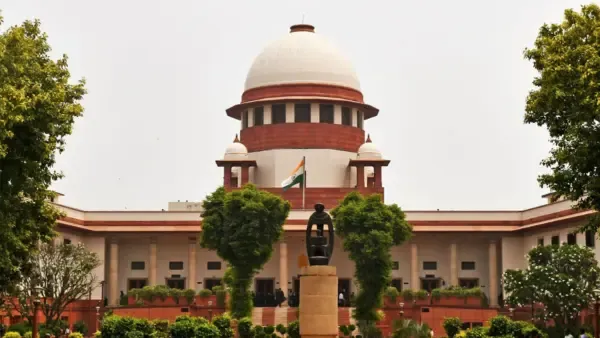
The Supreme Court (Number of Judges) Amendment Bill, 2026 was passed by both Houses of Parliament after receiving approval from the Rajya Sabha on Wednesday.
The legislation replaces an ordinance that increased the sanctioned strength of Supreme Court judges from 34 to 38.
The Lok Sabha had passed the bill on August 3 despite protests by opposition MPs. The move aims to address the rising number of pending cases and enhance judicial efficiency.
The bill was passed amid continued protests by opposition members, who raised slogans over issues including the alleged NEET paper leak and allegations related to the theft of Ram Mandir donations. The disruptions prevented any substantive debate on the legislation in the Lok Sabha.
Last week, a bill seeking amendments to the law governing birth and death registration was also passed in the Lok Sabha without debate amid similar disruptions.
All about Supreme Court (Number of Judges) Amendment Bill, 2026
The Supreme Court (Number of Judges) Amendment Bill, 2026, was listed in the Lok Sabha agenda almost every day since its introduction on July 20 but could not be taken up for consideration and passage due to disruptions.
The bill seeks to amend the Supreme Court (Number of Judges) Act, 1956, to increase the sanctioned strength of judges in the apex court from the existing 34, including the Chief Justice of India, to 38. Excluding the CJI, the number of judges would rise from 33 to 37.
In May this year, President Droupadi Murmu promulgated an ordinance to increase the strength of Supreme Court judges from 34 to 38.
The government said the increase was necessary due to the rising number of pending cases in the Supreme Court and the need to make the judicial system more efficient and effective. It stated that the move would strengthen judicial capacity, speed up disposal of cases, and help ensure timely justice for citizens.
The number of pending cases in the Supreme Court has continued to rise due to a persistent gap between the filing of cases and their final disposal. As of January 1 this year, more than 92,000 cases were pending before the court.
Even while functioning at nearly full sanctioned capacity of 34 judges since 2019, the Supreme Court registered 75,410 fresh cases in 2025 and disposed of 65,615 cases.
The government noted that the continuing gap between institution and disposal of cases highlights the challenge of managing the court's docket, particularly older pending matters and cases requiring adjudication by larger benches.
"The increase in judge strength of the court is one of the most exigent and viable solutions for tackling the pending backlog of cases in the Supreme Court," the government said.
In May, the Union Cabinet had approved the proposal to increase the sanctioned strength of the apex court. However, soon after, the government brought an ordinance to implement the increase.
An ordinance is an executive measure through which the government can make laws when Parliament is not in session. It remains valid for six weeks after Parliament reassembles unless it is approved by both Houses and converted into law.
-
Ben Jacobs names Manchester United’s three ‘most viable’ options for third midfield signing

-
Kuwait orders closure of its only Iranian private school

-
Meta admits to Centre lapses in curbing child sexual abuse content

-
Temples, mosques, gurudwaras keep Jharkhand exam protest going

-
Kya Bolti Public: CJP’s nationwide listening tour from September