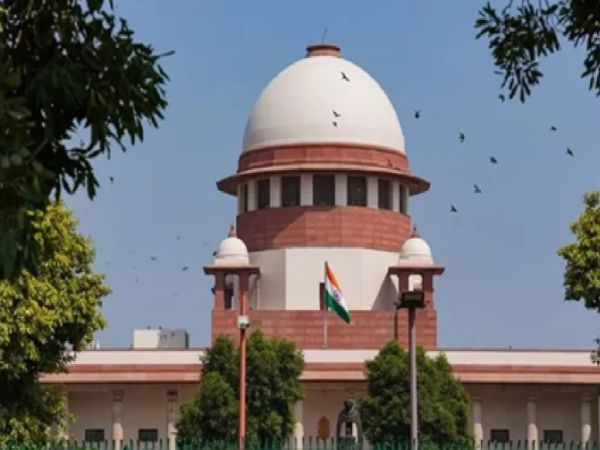
In a landmark and stringent move to tackle the rampant menace of uninsured vehicles on Indian roads, the Supreme Court has issued strict directives to enforce mandatory motor insurance. Expressing deep shock over government statistics revealing that roughly 56 percent of vehicles plying across the country operate without valid insurance, the apex court has recommended innovative enforcement strategies, including linking vehicle insurance status directly to fuel supply at petrol pumps and deploying automated camera networks for e-challans.
Supreme Court Shocked: 56% Vehicles Operating Without Insurance
A bench comprising Justices Sanjay Karol and Prashant Kumar Mishra pulled up the systemic loopholes during proceedings, noting that out of 304 million registered vehicles in India, an alarming 165 million vehicles remain uninsured, with two-wheelers forming the vast majority of defaulters. The bench emphasized that this widespread non-compliance completely undermines the foundational purpose of compulsory third-party insurance under Section 146 of the Motor Vehicles Act (MVA). Consequently, innocent road accident victims and their grieving families are forced into grueling, protracted legal battles to secure justified compensation. Official government data further highlights that 22 percent of all road accidents involve uninsured vehicles.
Innovative Solutions: Fuel Refusal at Petrol Pumps and Smart E-Challans
To enforce ground-level compliance, the Supreme Court directed the Insurance Regulatory and Development Authority of India (IRDAI), in collaboration with the Ministry of Road Transport and Highways (MoRTH), to formulate a pilot project. Under this proposed framework, vehicle fuel dispensing at petrol pumps will be strictly linked to valid insurance status, meaning vehicles lacking active insurance will be denied fuel until papers are renewed. Additionally, Automatic Number Plate Recognition (ANPR) cameras installed on highways and urban roads will be integrated with data from the VAHAN portal and the Insurance Information Bureau to automatically detect uninsured vehicles and issue instant e-challans. State traffic police will also be equipped with handheld devices and downloadable apps to verify insurance data instantly during roadside checks.
Extended Third-Party Insurance Mandates for New Vehicles
Addressing the long-term enforcement of insurance rules at the point of sale, the Supreme Court modified existing purchase norms. Moving away from the 2018 mandate—which required mandatory third-party insurance of three years for new cars and five years for new two-wheelers—the bench extended the mandatory coverage period by one year. Consequently, vehicle buyers from now on will be legally required to purchase third-party insurance for four years for new cars and six years for new two-wheelers at the time of registration.
Legal Penalties Under the Motor Vehicles Act
Under current provisions of the Motor Vehicles Act, driving or permitting the use of an uninsured vehicle is a punishable offense carrying severe legal consequences. For a first-time offense, violators face imprisonment of up to three months, a fine of Rs 2,000, or both. For subsequent offenses, the penalty scales up to imprisonment of up to three months, a fine of Rs 4,000, or both, as courts move toward absolute zero tolerance for road safety violations.
-
Young daters’ worst fears realized thanks to inflation

-
Singapore woman finds dead cockroach in soy milk from Taiwanese eatery, triggering food agency probe

-
Spider-Man tops Endgame box office record

-
New Tech Lets Drones Launch And Land From Crewless Boats With Pinpoint Precision

-
TRT vs BPH Dream11 Team Today Prediction: Stats, Analysis