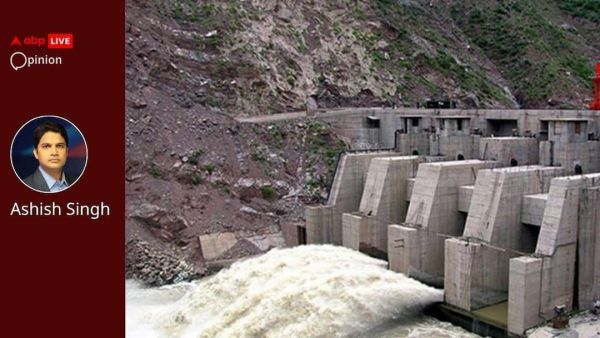
No single object captures the condition of Pakistan-occupied Jammu and Kashmir (PoJK) better than the Neelum-Jhelum Hydropower Project. It was meant to be a showpiece. A multi-billion-rupee dam, driven through the mountains of the occupied territory, built to harness the rivers whose names it carries and to send close to a thousand megawatts of electricity into Pakistan's national grid. It was launched with the language of progress. Today it stands as something closer to a monument to the opposite, and the people who live in its shadow are the ones who can see this most clearly.
The essential facts are not in dispute, and some of them appear in India's own government record. The residents of Muzaffarabad, the capital of the occupied territory, continue to endure severe electricity shortages and prolonged load-shedding, even though the multi-billion-rupee Neelum-Jhelum project sits on their doorstep. The project, launched only a few years ago, has been shut down after technical failures. Local traders have demanded a transparent investigation into what they call technical and financial mismanagement, and an end to the outages that have disrupted daily life. They have also accused the state of exploiting the territory's natural resources while denying its own people basic services. A dam built to generate power, in a region that cannot keep its lights on, is a fact that needs little commentary.
Follow the Power
Trace the electricity and the whole arrangement reveals itself. The rivers of the occupied territory are among its richest natural assets. Dammed, they generate power at scale. But the power generated does not stay to light the homes of the valleys that produce it. It is fed outward. The residents, meanwhile, pay for what little reaches them at some of the steepest rates in the region, and sit through hours of darkness when it does not. This is not an accident of engineering. It is the design of a relationship, in which the territory functions as a source of resources for others rather than a place whose own development is the point.
The pattern extends beyond a single dam. The United Kashmir People's National Party, a political formation of the territory itself, has condemned months of load-shedding, dangerously low voltage and the repeated collapse of internet and mobile services across the region. By its account, the people of the occupied territory have been on the streets for more than two and a half years, under the banner of a Joint Awami Action Committee, pressing for the most basic of demands. When a population must protest for two and a half years to ask that the electricity generated in its own hills be made available to its own homes, the word for the arrangement is not development. It is extraction.
The Same River, the Other Side
Cross the Line of Control and the logic of power is inverted. Jammu and Kashmir sits on very large hydroelectric potential, and its development has been treated as a resource for the region rather than only from it. Grid expansion under national programmes has pushed steady electricity further into the countryside, and new generation and transmission projects have been built with the local population as a beneficiary, not merely a bystander. The contrast is not that one side has rivers and the other does not. Both have rivers. The contrast is in who the rivers are made to serve.
This is the deeper meaning of the single dam that went dark. A hydroelectric project is a mirror of intent. Build it so that the power flows to the people who live around it, and it is an instrument of their development. Build it so that the power flows away while they sit in darkness, and it is an instrument of their exploitation. The same technology, the same rivers, the same mountains, can serve either purpose. Which purpose it serves is a political choice, and the Neelum-Jhelum project, shut and silent above a city that cannot light its streets, records the choice that was made on that side of the line.
What One Object Reveals
It would be easy to lose the story in a mass of competing statistics. A single object cuts through the noise. The dam was promised as progress. It was built by driving tunnels through contested mountains. It sent its power outward. It failed, and was shut. And the people who were told it would transform their lives are still waiting, in the dark, for the electricity their own rivers produce. That sequence is the whole argument in miniature, and it requires no rhetorical assistance to make its point.
None of this is to pretend that the Indian side has solved every problem of power or development, or that its own record is without gaps and delays. It is not, and honesty requires saying so. But there is a difference between a place where the shortfalls are being worked on in the open and a place where the flagship project has gone dark and the response to those who ask why has been shutdown and silence. The Neelum-Jhelum project was meant to be the proof of Pakistan's commitment to the territory it holds. It has instead become the clearest evidence of the opposite. Sometimes a single object tells the truth that a thousand speeches were designed to hide.
[Disclaimer: The opinions, beliefs, and views expressed by the various authors and forum participants on this website are personal and do not reflect the opinions, beliefs, and views of ABP News Network Pvt Ltd.]
-
Robin Uthappa makes big Sachin Tendulkar prediction for Vaibhav Sooryavanshi with bold warning

-
New petrol and diesel rates released; check the prices in your city.

-
Gold Rate Today: Gold gets costlier; 24-carat gold nears ₹1.46 lakh in Delhi; silver prices also rise..

-
How much did LPG prices drop on August 6? Check the rate list for 14kg and 19kg gas cylinders.
-
Petrol and Diesel Prices Today: Fuel rates updated at 6 AM; check today's prices for petrol and diesel..